
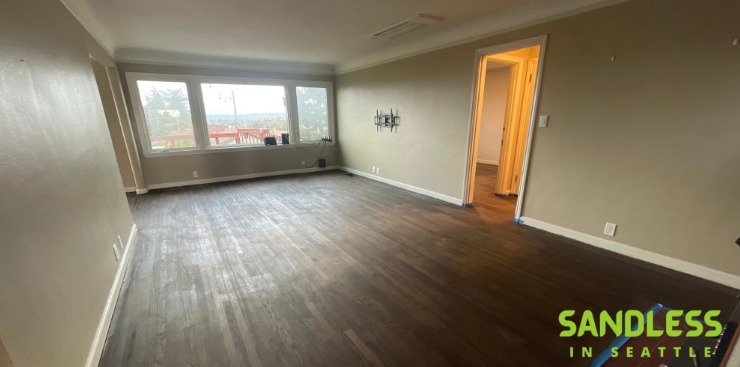
A worn hardwood floor can create a tough question for Seattle homeowners. Does the floor need full sanding, or can a lighter treatment bring it back?
Finding the right hardwood floor refinishing contractor Seattle WA matters because the answer changes from one home to another. A century-old Ballard floor may need careful sanding, while a Capitol Hill living room with light surface wear may only need a screen and recoat.
Seattle’s historic records show that Ballard includes Craftsman, Queen Anne, American Foursquare, and other older home styles. Older floors can have years of past coatings, repairs, stains, and wear that must be checked before work begins.
Sandless in Seattle provides full refinishing, screen and recoat, repair, wax removal, clean and buff, installation, and other floor-care services.
Before hiring a hardwood floor refinishing contractor Seattle WA, ask for a floor assessment that explains what the wood actually needs.
Look for a Contractor Who Diagnoses the Floor First
Good floor work starts with the right diagnosis.
A hardwood floor refinishing contractor Seattle WA should look beyond dull color and scratches before recommending full sanding.
A hallway may look worn because the top finish has lost its shine.
If the stain and wood remain sound, a screen and recoat could be enough.
A screen and recoat scrapes the finish to add a protective topcoat without sanding to bare wood.
Homeowners should ask a contractor to check for:
- Bare or gray wood in walking paths
- Deep scratches that reach the wood
- Water or pet stains
- Wax and polish buildup
- Loose or damaged boards
- Peeling or failing finish
A trustworthy hardwood floor refinishing contractor Seattle WA should explain which layer is damaged.
That keeps homeowners from choosing a larger project simply because a floor has lost its shine.
Ask Which Refinishing Process Fits the Seattle Home
Seattle homes do not all have the same flooring story.
A Ballard Craftsman built in the early 1900s can present very different challenges from a newer South Lake Union condo.
That makes process selection important when hiring a hardwood floor refinishing contractor Seattle WA.
The contractor should be able to explain why sanding, recoating, cleaning, or repair fits that particular floor.
Common options include the following:
- Clean and buff: For surface grime and mild dullness
- Screen and recoat: For worn finish with sound wood underneath
- Wax removal: For cloudy buildup from older floor products
- Full refinishing: For deep scratches, stains, exposed wood, or major color changes
- Floor repair: For damaged or unstable boards
Sandless in Seattle offers this range rather than treating every worn floor as a sanding job.
That choice can be especially important with older Seattle flooring.
A qualified hardwood floor refinishing contractor Seattle WA should focus on preserving good wood whenever the floor condition allows it.
Consider Dust and Disruption Before Work Starts
Seattle houses often place hardwood through connected living rooms, dining rooms, halls, and entryways.
In a compact Queen Anne home or Capitol Hill bungalow, dust from one room can easily reach nearby spaces if the work is not properly controlled.
That makes project setup an important question for any hardwood floor refinishing contractor Seattle WA.
Homeowners can ask:
- How will sanding dust be controlled?
- Which rooms need to be cleared?
- When can the floor handle normal foot traffic?
- Will trim, cabinets, and nearby rooms be protected?
- Does the project require full sanding?
Sandless in Seattle specializes in dustless floor refinishing and states that specialized equipment captures dust during the process.
They also offer one-day screen and recoat work for qualifying floors.
A hardwood floor refinishing contractor Seattle WA should set clear expectations before equipment enters the house.
Check Local Experience, Licensing, and Service Range
Local experience matters because Seattle contains everything from early Ballard cottages to mid-century homes and modern condos.
The contractor should recognize how floor age, previous coatings, room layout, and wood condition affect the plan.
A hardwood floor refinishing contractor Seattle WA should also provide clear business credentials.
Homeowners should also ask whether the contractor can change course after inspecting the floor.
Those that offer only full sanding have fewer options when the floor simply needs maintenance.
Sandless in Seattle provides refinishing, repair, screen and recoat, cleaning, wax removal, installation, and maintenance services.
That wider service range allows the recommended work to follow the floor’s condition.
Choosing a hardwood floor refinishing contractor Seattle WA should be about finding the right treatment, not automatically choosing the biggest project.
Choose the Process Before Choosing the Project
Seattle hardwood deserves more than just one solution.
The right hardwood floor refinishing contractor Seattle WA should identify what the problem is.
Sandless in Seattle brings several levels of hardwood floor care to that decision.
Their 20+ years of experience helps homeowners in Seattle understand what their floors actually need.
Before committing to full refinishing, contact Sandless in Seattle for an in-home floor assessment!
FAQs About Hardwood Floor Refinishing Contractor Seattle WA
1. How can a homeowner tell if hardwood needs full refinishing?
Bare wood, deep scratches, heavy stains, and worn-through finish often point toward deeper refinishing.
Light scratches and a dull finish may qualify for screen and recoat instead.
A hardwood floor refinishing contractor can inspect both the finish and wood before recommending a process.
2. What should homeowners ask before hiring a floor contractor?
Homeowners should ask about licensing, dust control, repairs, finish options, project preparation, and whether sanding is truly required.
The contractor should also explain how existing wax or coatings could affect the new finish.
3. Can an older Seattle hardwood floor be refinished?
Many older floors can be restored, but remaining wood thickness and previous sanding matter.
A professional inspection can determine whether sanding, recoating, or another approach is safer.