
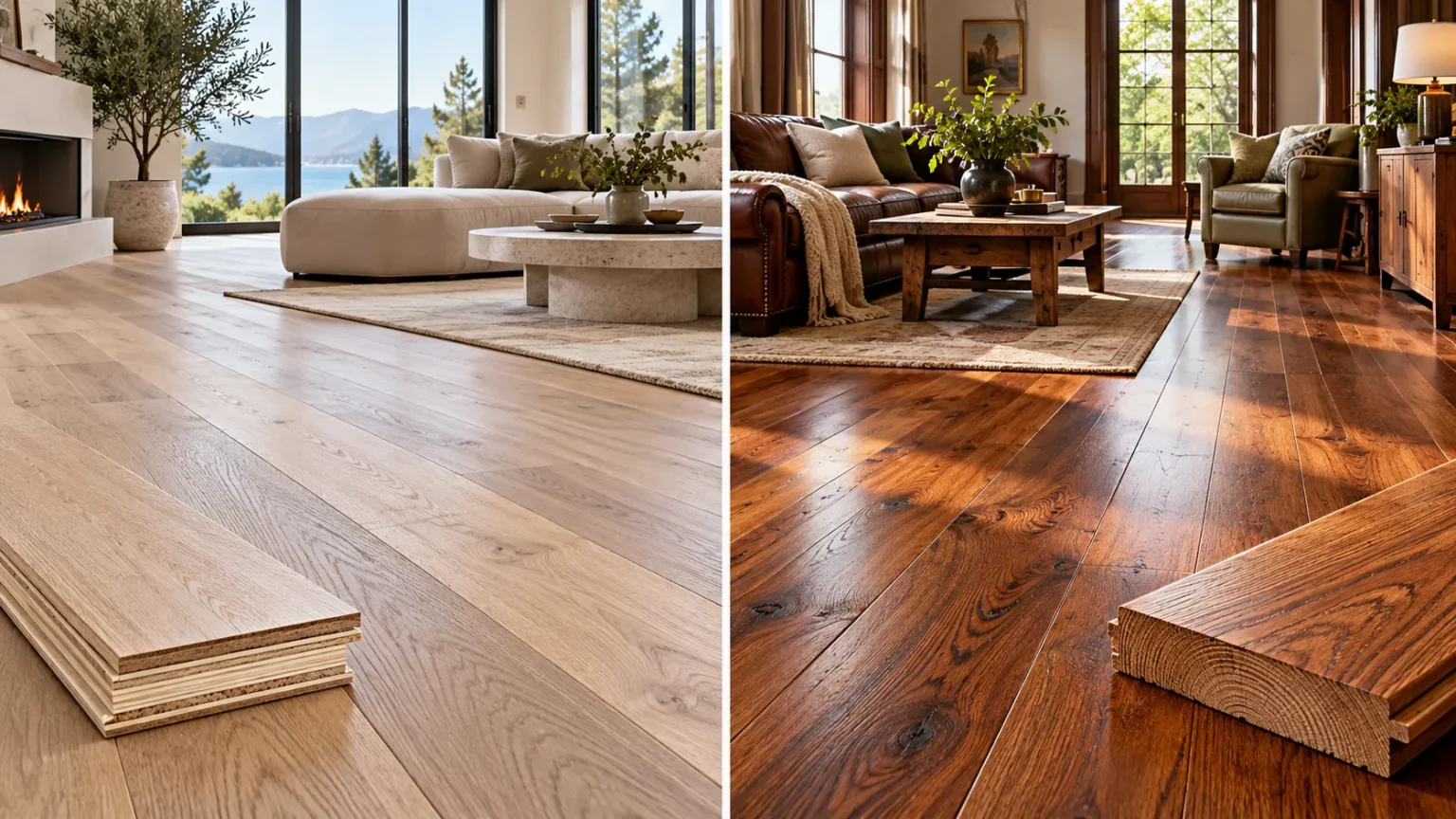
Choosing the right wood flooring can significantly influence your home’s appearance, comfort, and long-term value. Two popular options are engineered wood flooring and solid hardwood flooring, both known for their natural beauty and attractive finishes. However, understanding their structural differences is important before investing in new floors.
Solid hardwood flooring consists of individual planks made from natural wood, while engineered wood features a genuine hardwood surface attached to multiple supporting layers. Both materials offer distinctive advantages depending on room conditions, installation requirements, and household preferences. Their performance can also vary according to wood species, construction quality, and maintenance.
Understanding engineered wood vs. solid hardwood flooring helps homeowners compare durability, moisture resistance, costs, installation methods, and refinishing possibilities. Neither flooring type is automatically better for every room or property. This guide explains their major differences, advantages, disadvantages, and practical considerations to help you make an informed decision.
What Is Engineered Wood Flooring?
Engineered wood flooring is a manufactured product consisting of a genuine hardwood surface attached to a layered structural core. The core may contain plywood, high-density fiberboard, or other engineered materials. This layered construction is designed to provide dimensional stability while maintaining the natural appearance of wood.
The visible hardwood layer can feature popular species such as oak, maple, walnut, or hickory. Depending on the product, the surface may have different thicknesses, textures, and protective finishes. These variations influence the flooring’s appearance, durability, and potential for future refinishing.
Engineered wood flooring is commonly installed in living rooms, bedrooms, hallways, and other residential spaces. Some products are suitable for installation over concrete or compatible underfloor heating systems. However, installation requirements and moisture limitations depend on the manufacturer’s specifications and the conditions of the property.
What Is Solid Hardwood Flooring?
Solid hardwood flooring is manufactured from individual pieces of natural hardwood rather than multiple bonded layers. Each plank consists of wood throughout its thickness, giving it a traditional construction. Common species include oak, maple, cherry, ash, and walnut.
Solid hardwood is valued for its natural grain patterns, durability, and ability to be refinished when suitable conditions allow. Different stains and finishes can create traditional or contemporary appearances. The material is frequently used in living rooms, bedrooms, dining areas, and other relatively dry interior spaces.
However, solid hardwood responds to changes in moisture and humidity by expanding or contracting. Proper acclimation, installation, and indoor environmental conditions are therefore important. Homeowners should understand these requirements before choosing solid hardwood for rooms exposed to significant temperature or moisture fluctuations.
Engineered Wood vs. Solid Hardwood: Main Differences
The primary difference between engineered wood and solid hardwood flooring is their construction. Engineered wood combines a real hardwood surface with a layered core, while solid hardwood consists of natural wood throughout. This structural distinction influences how each material responds to environmental changes.
Engineered wood often provides greater dimensional stability under changing humidity conditions. Solid hardwood may allow more refinishing opportunities because the wood extends through the plank. However, actual performance depends on product specifications, installation quality, and the environment in which the flooring is used.
Both flooring types can provide attractive, long-lasting surfaces when selected and maintained appropriately. Neither is completely waterproof or immune to scratches and damage. Understanding how construction affects everyday performance is more useful than choosing solely based on appearance or marketing claims.
Appearance and Design Options
Engineered wood and solid hardwood flooring can look remarkably similar because both feature genuine wood surfaces. Natural grain patterns, color variation, and distinctive textures contribute to their appearance. The choice between the two does not necessarily determine whether a room looks modern or traditional.
Solid hardwood offers the natural character of a single wood species throughout each plank. Engineered wood provides comparable surface aesthetics while offering different plank dimensions and construction options. Both materials are available in a range of stains, finishes, and textures.
Homeowners should compare physical samples rather than relying entirely on product photographs. Lighting, surrounding furniture, and wall colors can influence how flooring appears after installation. Choosing a suitable finish and plank size helps create a coordinated interior regardless of the underlying construction.
Durability of Engineered Wood Flooring
Engineered wood flooring can provide good durability when manufactured from suitable materials and installed correctly. Its layered core helps reduce certain types of dimensional movement associated with humidity changes. This construction can be particularly useful in environments where solid hardwood installation is less practical.
Surface durability depends largely on the hardwood species, protective finish, and thickness of the visible wood layer. Frequent foot traffic, pet claws, and abrasive particles may cause scratches over time. A strong core does not automatically make the upper surface resistant to every type of wear.
Higher-quality engineered flooring may remain attractive for many years with appropriate care. However, thin surface layers or unsuitable finishes can limit repair options. Reviewing manufacturer specifications helps homeowners understand the expected performance and maintenance requirements of individual products.
Durability of Solid Hardwood Flooring
Solid hardwood flooring is valued for its durability and potential longevity. Because each plank consists of natural wood throughout, many traditional products can be sanded and refinished repeatedly. This feature can extend the useful life of flooring when sufficient material remains.
Actual durability depends on wood species, finish quality, installation, and household activity. Harder wood species may resist certain dents better than softer varieties, although surface scratches remain possible. Moisture exposure can also damage hardwood regardless of its hardness.
Regular cleaning and suitable indoor humidity help maintain solid hardwood flooring. Promptly addressing spills and protecting high-traffic areas can reduce avoidable wear. Properly maintained hardwood may provide long-term service, but its performance depends on the conditions in which it is installed.
Moisture Resistance: Which Flooring Performs Better?
Moisture resistance is an important consideration when comparing engineered wood and solid hardwood. Both materials contain genuine wood and can experience damage from excessive water. Their construction influences how they respond to changing humidity, but neither should be treated as waterproof.
Engineered wood generally offers better dimensional stability because of its layered core. This may reduce certain forms of expansion and contraction under ordinary environmental changes. However, standing water or plumbing leaks can still damage the surface and supporting materials.
Solid hardwood is more sensitive to prolonged humidity changes and may develop gaps, cupping, or other movement-related problems. Maintaining suitable indoor conditions is essential. Homeowners should assess moisture exposure carefully before installing either flooring type in kitchens, basements, or other potentially damp spaces.
Installation Methods and Requirements
Engineered wood flooring offers several installation possibilities depending on the product. Some systems use floating installation methods, while others require adhesive or mechanical fastening. The appropriate method depends on plank construction, subfloor conditions, and manufacturer recommendations.
Solid hardwood is traditionally installed using nails or staples over suitable wooden subfloors. Certain products and circumstances may allow other approved installation methods. Proper acclimation and moisture evaluation remain important before installation begins.
Both flooring types require a clean, level, structurally sound subfloor. Inadequate preparation can create movement, noise, or premature damage. Professional installation may be beneficial when working with concrete, complex layouts, moisture concerns, or unfamiliar flooring systems.
Engineered Wood Flooring Over Concrete
Concrete subfloors can create challenges because moisture may move through the slab and affect wood flooring. Some engineered wood products are designed for installation over appropriately prepared concrete. Their construction and approved installation systems may provide more flexibility than conventional solid hardwood.
Before installation, the concrete should be evaluated for moisture and surface condition according to the flooring manufacturer’s requirements. Suitable moisture barriers or underlayment systems may be necessary. Ignoring these details can lead to adhesive failure, swelling, or other flooring problems.
Not every engineered wood product is suitable for every concrete installation. Product specifications and local building conditions determine compatibility. Homeowners should verify installation requirements rather than assuming that engineered construction eliminates moisture-related risks.
Refinishing Engineered Wood Flooring
Refinishing engineered wood depends on the thickness of its real hardwood surface layer. Products with thicker wear layers may support sanding and refinishing under appropriate conditions. Others may allow only limited surface restoration or no traditional sanding at all.
Aggressive sanding can damage thin wood veneers and expose the underlying core. This makes product identification important before beginning refinishing work. A flooring professional can evaluate whether the remaining hardwood layer is suitable for restoration.
Some engineered floors can be refreshed through approved maintenance or recoating methods instead of full sanding. These options depend on the existing finish and its condition. Homeowners should review manufacturer guidance before attempting repairs that could permanently damage the surface.
Refinishing Solid Hardwood Flooring
Solid hardwood flooring generally offers greater refinishing potential because natural wood extends through the plank. When enough usable material remains, sanding can remove certain surface imperfections and prepare the floor for a new finish. This ability is one of solid hardwood’s major long-term advantages.
However, the number of possible refinishing cycles is not unlimited. Plank thickness, installation style, and previous sanding affect how much material remains. Excessive sanding can damage joints or reduce structural stability.
Professional assessment is useful before refinishing older hardwood floors. Some damage may require individual board replacement rather than surface restoration alone. Proper refinishing can refresh appearance, but the process should match the flooring’s actual condition.
Cost of Engineered Wood Flooring
Engineered wood flooring prices vary according to species, veneer thickness, core quality, and protective finish. Entry-level products may be relatively affordable, while premium engineered planks can be expensive. Installation requirements also influence the overall project budget.
Some engineered products offer cost advantages through compatible floating installation systems or reduced preparation requirements. However, specialized adhesives, moisture barriers, and subfloor repairs may increase expenses. Homeowners should compare total installed prices rather than material costs alone.
Long-term value depends on durability, maintenance, and potential refinishing opportunities. A cheaper product may require earlier replacement if its surface wears quickly. Reviewing construction details and warranty conditions helps identify suitable options for the available budget.
Cost of Solid Hardwood Flooring
Solid hardwood flooring often requires a substantial initial investment, particularly when premium species or wide planks are selected. Material prices depend on wood availability, grade, dimensions, and finish. Professional installation can also contribute significantly to the total cost.
Additional expenses may include subfloor preparation, acclimation requirements, finishing, and removal of existing flooring. Unfinished hardwood can require on-site sanding and coating after installation. These processes may increase project duration and labor costs.
Although solid hardwood can be expensive initially, its refinishing potential may support long-term use. However, homeowners should not assume that higher purchase prices always guarantee better financial value. Product quality and suitability for the property remain essential considerations.
Maintenance and Cleaning Requirements
Both engineered wood and solid hardwood require appropriate cleaning to protect their finishes. Regular removal of dust and abrasive particles helps reduce surface scratches. Homeowners should use cleaning products approved for the specific flooring finish.
Excessive water should generally be avoided because moisture can penetrate joints and affect the wood. Damp cleaning methods should follow manufacturer recommendations rather than saturating the surface. Spills should be addressed promptly to reduce the risk of staining or swelling.
Furniture pads and suitable entrance mats can help reduce everyday wear. Maintaining reasonable indoor humidity also supports wood flooring performance. Consistent care is more useful than relying on occasional intensive cleaning methods that may damage protective coatings.
Comfort and Noise Levels
Both engineered wood and solid hardwood can provide comfortable residential flooring surfaces. Their natural wood appearance creates a warm visual atmosphere in living areas and bedrooms. However, physical comfort depends on installation method, subfloor conditions, and additional materials.
Floating engineered floors may produce different sounds underfoot compared with mechanically fastened solid hardwood. Suitable underlayment can help manage some noise, depending on the product. Poor subfloor preparation may contribute to unwanted movement or hollow sounds.
Neither flooring type automatically guarantees superior acoustic performance. Room furnishings, building construction, and installation details influence how sound travels. Homeowners should consider these factors when choosing flooring for apartments, upper floors, or shared living spaces.
Which Flooring Is Better for Kitchens?
Kitchens experience spills, frequent cleaning, and heavy everyday use. These conditions require careful flooring selection because natural wood can be damaged by prolonged moisture exposure. Both engineered wood and solid hardwood may be used in suitable kitchens when maintenance requirements are understood.
Engineered wood may offer an advantage where changes in indoor humidity are a concern. However, its layered construction does not make it waterproof. Solid hardwood can also perform well when water exposure is limited and spills are cleaned promptly.
Homeowners should evaluate plumbing risks, household habits, and manufacturer guidance before choosing either option. For kitchens with frequent standing water, materials such as porcelain tile may be more practical. The best choice balances appearance with realistic maintenance expectations.
Which Flooring Is Better for Basements?
Basements can experience moisture problems because of their location below or near ground level. Even spaces that appear dry may have humidity or concrete moisture concerns. These conditions make flooring selection particularly important.
Some engineered wood products are approved for installation below grade when suitable moisture controls are used. Traditional solid hardwood is generally less suitable for below-grade environments because of dimensional movement risks. However, engineered wood remains vulnerable to significant water exposure.
Before installing wood flooring in a basement, homeowners should investigate existing moisture conditions. Waterproofing problems and leaks should be addressed first. Manufacturer-approved installation systems and professional evaluation help reduce avoidable flooring damage.
Which Flooring Is Better for Homes With Pets?
Pets can create additional flooring demands through claws, activity, water bowls, and occasional accidents. Both engineered wood and solid hardwood have natural wood surfaces that may scratch or dent. Their performance depends on species, finish, and everyday maintenance.
Harder wood species and appropriate protective finishes may provide better resistance to certain types of wear. However, no wood flooring is completely scratch-proof. Pet-related spills should be cleaned promptly to reduce the likelihood of moisture damage.
Homeowners should also consider traction and comfort when selecting floor finishes. Highly polished surfaces may be slippery for some animals. Choosing suitable textures and maintaining the floor properly helps create a more practical living environment.
Which Flooring Adds More Home Value?
Both engineered wood and solid hardwood may contribute to a property’s visual appeal. Natural wood flooring is often appreciated for its appearance and versatility. However, the effect on resale value depends on local market conditions and buyer preferences.
Solid hardwood may appeal to buyers who value traditional construction and refinishing potential. High-quality engineered flooring can also provide an attractive appearance and practical installation benefits. Product quality and overall home condition influence perceived value.
Homeowners should avoid assuming that either flooring type guarantees a specific financial return. Installation costs, neighborhood expectations, and long-term maintenance matter. Choosing durable flooring that suits the property may provide greater practical value than following resale trends alone.
Environmental Considerations of Wood Flooring
Environmental impact depends on wood sourcing, manufacturing processes, adhesives, transportation, and product lifespan. Engineered wood uses a hardwood surface over a supporting core, potentially reducing the amount of premium hardwood required. However, its manufacturing process also involves bonding materials.
Solid hardwood consists of natural wood throughout and may remain in service for many years when properly maintained. Sustainable sourcing and forest management practices influence its environmental impact. Long-lasting products can reduce the need for frequent replacement.
Homeowners interested in responsible purchasing can look for credible wood sourcing certifications and low-emission product standards. Manufacturing quality and indoor air considerations also deserve attention. No flooring category is automatically environmentally superior in every situation.
Common Mistakes When Choosing Wood Flooring
One common mistake is assuming that engineered wood is the same as laminate flooring. Engineered wood has a genuine hardwood surface, while laminate typically uses a decorative image layer. Understanding this distinction helps homeowners compare products accurately.
Another mistake is selecting flooring without evaluating moisture conditions or installation compatibility. Even premium hardwood products can fail when installed over unsuitable subfloors. Ignoring manufacturer requirements may also affect warranty coverage.
Homeowners should avoid comparing flooring only by appearance or initial price. Veneer thickness, finish quality, construction, and maintenance requirements can influence long-term performance. Reviewing complete product specifications helps prevent costly purchasing decisions.
How to Choose Between Engineered and Solid Hardwood
Choosing between engineered and solid hardwood begins with evaluating the installation location. Rooms with stable indoor conditions and suitable wooden subfloors may accommodate either material. Concrete installations or greater humidity variation may favor certain engineered products.
Budget and long-term maintenance preferences should also influence the decision. Solid hardwood may provide greater refinishing flexibility, while engineered wood offers additional installation possibilities. Premium products in both categories can provide attractive results.
The best flooring choice depends on construction quality, moisture conditions, household activity, and desired appearance. Comparing samples and reviewing manufacturer guidance can clarify differences. A qualified flooring professional can help identify suitable materials for challenging installations.
Conclusion
Engineered wood and solid hardwood flooring both provide the beauty of genuine wood, but their construction and performance differ. Engineered wood uses a layered core beneath a hardwood surface, offering dimensional stability and installation flexibility. Solid hardwood consists of natural wood throughout and often provides greater refinishing potential.
Engineered flooring may be suitable for certain concrete subfloors and environments where humidity changes require additional consideration. Solid hardwood remains appealing for traditional installations and long-term restoration opportunities. Neither material is waterproof, making moisture management important for both options.
Choosing the best flooring requires considering budget, room conditions, maintenance, durability, and installation requirements. High-quality materials and proper installation contribute significantly to long-term satisfaction. By understanding the advantages and limitations of each option, homeowners can select wood flooring that complements their home and lifestyle.
Frequently Asked Questions (FAQs)
Is Engineered Wood Better Than Solid Hardwood?
Neither option is universally better. Engineered wood often offers greater dimensional stability and installation flexibility, while solid hardwood generally provides more refinishing opportunities and traditional wood construction.
Which Lasts Longer, Engineered Wood or Solid Hardwood?
Both can last many years with proper care. Solid hardwood often has greater restoration potential, while engineered wood longevity depends on veneer thickness, core quality, installation, and maintenance.
Is Engineered Wood Flooring Waterproof?
No, engineered wood flooring is not waterproof. Although its layered construction may improve dimensional stability, prolonged moisture exposure can damage the hardwood surface and supporting core.
Can Engineered Hardwood Be Refinished?
Some engineered hardwood products can be refinished when their surface wood layer is sufficiently thick. Thin veneers may not support traditional sanding, so manufacturer specifications and professional assessment are important.
Which Flooring Is More Expensive: Engineered or Solid Hardwood?
Solid hardwood is often more expensive, but premium engineered flooring can cost as much or more than certain solid wood products. Total expenses depend on materials, installation, and subfloor preparation.