
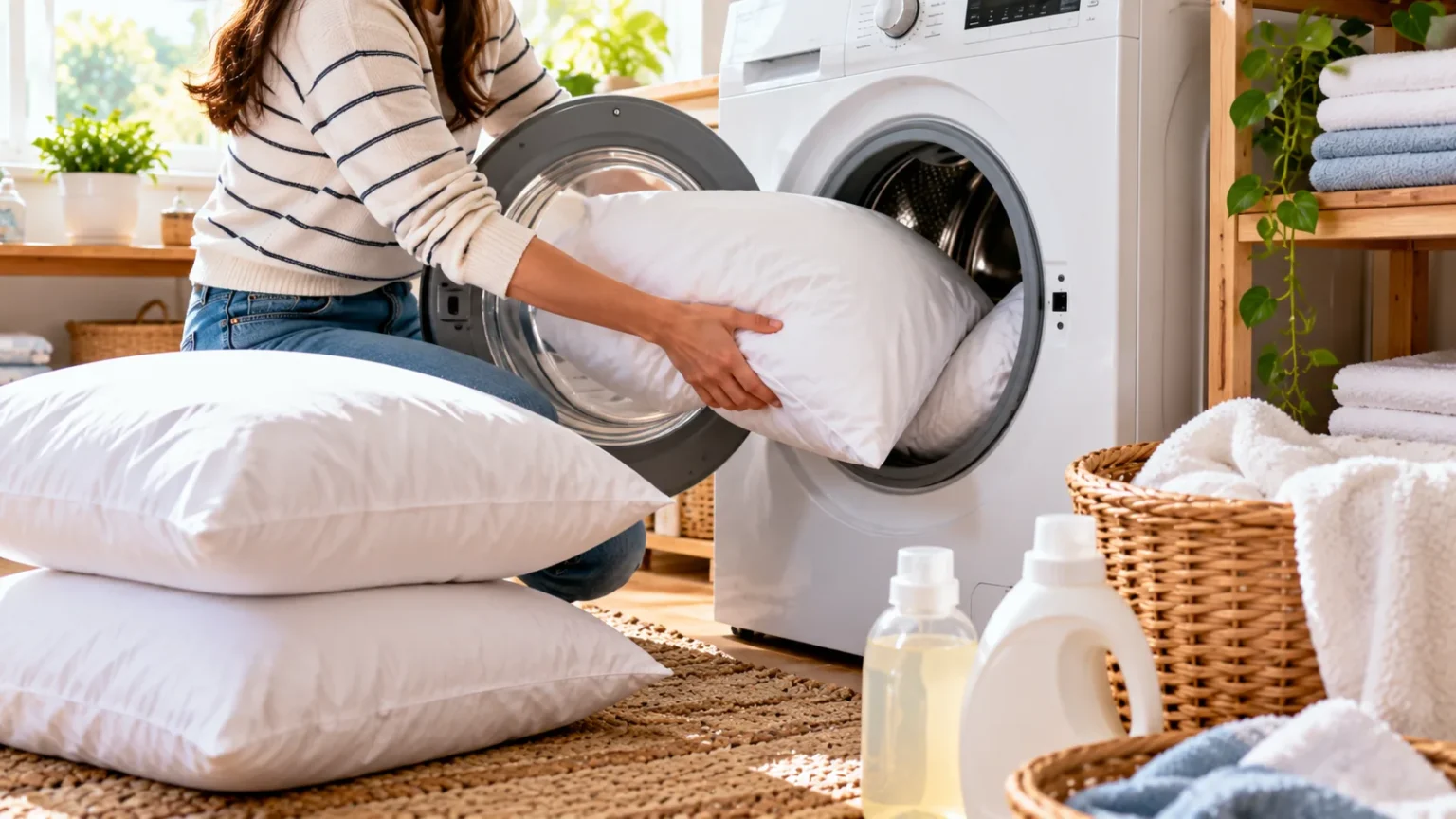
Pillows are an essential part of a comfortable sleeping environment, but they can collect sweat, body oils, dust, and other everyday buildup over time. Even when you regularly wash pillowcases, the pillows underneath may gradually develop stains and unpleasant odors. Learning how to wash pillows properly can help maintain their freshness, cleanliness, and overall condition without causing unnecessary damage.
Different pillow materials require different cleaning methods, making it important to understand the type of pillow you own. While many polyester and down pillows can be washed in a washing machine, memory foam and latex pillows usually require more careful treatment. Using the wrong washing method may damage the filling, change the pillow’s shape, or reduce its comfort.
This guide explains how to wash pillows step by step using practical cleaning methods. You will learn how to prepare pillows for washing, choose suitable detergents, remove stains, and dry different materials correctly. Whether you want to refresh your everyday bed pillows or clean decorative cushions, these tips can help you maintain a cleaner and more comfortable sleeping space.
Why Is It Important to Wash Your Pillows Regularly?
Washing pillows helps remove accumulated sweat, skin oils, dust, and other materials that collect during everyday use. Over time, these substances may create unpleasant odors and visible discoloration. Pillowcases provide some protection, but they cannot completely prevent buildup inside the pillow. Regular cleaning supports a fresher sleeping environment and helps maintain proper bedding hygiene.
Pillows can also collect dust mites and other common indoor allergens, particularly when they are used for extended periods. Appropriate cleaning may help reduce certain allergens, depending on the pillow material and washing instructions. However, washing does not guarantee complete allergen removal. Using washable pillow protectors provides an additional layer of protection against everyday contamination.
Proper pillow maintenance can also help preserve comfort and support. Dirt, moisture, and repeated use may affect the condition of certain pillow fillings. Cleaning according to the manufacturer’s recommendations reduces the likelihood of unnecessary wear. Combining regular washing with suitable drying and storage practices helps maintain pillows in better condition for longer.
Step 1: Check the Pillow’s Care Label Before Washing
Before washing any pillow, examine the manufacturer’s care label carefully. This label usually explains whether the pillow can be machine-washed, hand-washed, or cleaned using another method. It may also provide specific water temperature and drying instructions. Following these recommendations is essential because different pillow materials respond differently to moisture, heat, and mechanical movement.
Polyester-filled pillows are often machine-washable, while many down and feather pillows can also tolerate gentle washing when their labels permit it. Solid memory foam and latex pillows generally should not be placed in washing machines. Their internal structure can become damaged when exposed to excessive water and agitation. Some specialty pillows may require professional cleaning or limited spot treatment.
If the care label is missing, identify the pillow material before choosing a cleaning method. Avoid assuming that all pillows can be washed using the same settings. When the filling cannot be identified, begin with gentle surface cleaning rather than fully soaking the pillow. Taking these precautions helps prevent damage and unnecessary replacement costs.
Step 2: Remove Pillowcases and Inspect for Stains
Start by removing all pillowcases, protective covers, and removable decorative accessories. Wash these items separately according to their fabric care instructions. Pillow protectors often collect much of the visible sweat and skin oil buildup. Cleaning them regularly helps reduce the amount of dirt reaching the pillow itself.
Inspect the pillow carefully for yellow stains, makeup marks, or other visible discoloration. Pay attention to the seams and corners because these areas may collect additional residue. Check for tears or weakened stitching before using a washing machine. Damaged seams can allow filling to escape during washing and potentially affect the appliance.
If the pillow has a removable cover, inspect the filling separately before deciding whether it needs cleaning. Some foam pillows have washable covers but non-washable interiors. Treating only the removable fabric may be the safest option for these products. Careful preparation helps you select an appropriate cleaning method and avoid unnecessary damage.
Step 3: Pre-Treat Yellow Stains and Dirty Areas
Pre-treating visible stains can help improve cleaning results before the main washing cycle. Yellow pillow stains commonly develop from sweat, skin oils, and other everyday substances. A small amount of mild liquid laundry detergent may help loosen these deposits. Always confirm that the pillow fabric can tolerate the chosen cleaning product.
Apply a small amount of suitable detergent to the stained fabric and gently work it into the affected area. Avoid aggressive scrubbing because this may weaken delicate fibers or push stains deeper into the filling. Allow the product to remain for the time recommended on its label. Test delicate materials in an inconspicuous area before treating noticeable stains.
For stubborn discoloration, consider using an oxygen-based laundry stain remover only when the pillow’s care instructions permit it. Avoid mixing cleaning chemicals or combining stain removers with chlorine bleach. Some stains may remain visible even after thorough cleaning. The goal is to remove dirt safely without damaging the fabric or internal filling.
Step 4: Wash Pillows in the Washing Machine
Many polyester, down, and feather pillows can be cleaned in a washing machine when their care labels allow it. Select a gentle washing cycle and use the recommended water temperature. A small amount of mild liquid detergent is usually sufficient. Excess detergent can become trapped inside the filling and make rinsing more difficult.
For suitable washing machines, washing two similar pillows together can help balance the load. However, the pillows must fit comfortably without overcrowding the drum. A front-loading washing machine is often a good choice because it avoids the central agitator found in some top-loading models. High-efficiency machines should be loaded according to the manufacturer’s capacity recommendations.
Start the washing cycle and allow the machine to complete its cleaning process. An additional rinse cycle may help remove leftover detergent from thick pillow fillings. Avoid using excessive fabric softener because it may leave residue and affect certain materials. Once the cycle finishes, inspect the pillows before beginning the drying process.
Step 5: How to Hand-Wash Pillows Safely
Hand-washing may be suitable for certain pillows when the manufacturer’s instructions specifically allow it. This method provides greater control over movement and pressure during cleaning. Use a clean basin or bathtub filled with water at the recommended temperature. Add a small amount of mild detergent and mix it thoroughly before introducing the pillow.
Gently press the washable pillow into the water to help the cleaning solution reach the filling. Avoid harsh twisting, pulling, or wringing because these actions can damage internal materials. Work carefully across the pillow to remove ordinary dirt and residue. Change the water when necessary and continue following the recommended cleaning procedure.
Rinse the pillow thoroughly with clean water until detergent residue has been removed. Gently press out excess water without twisting the filling. Hand-washing can leave a pillow heavily saturated, making thorough drying particularly important. Solid memory foam and latex pillows should not be submerged unless their manufacturer explicitly approves that cleaning method.
Step 6: Dry Pillows Completely After Washing
Drying is one of the most important steps when learning how to wash pillows correctly. Moisture trapped inside pillow filling can create unpleasant odors and encourage unwanted microbial growth. Different pillow materials require different drying methods. Always check the care label before using a tumble dryer or placing the pillow in direct sunlight.
Machine-washable polyester and certain down pillows may be tumble-dried using the temperature recommended by their manufacturer. Low heat is often appropriate, although specific requirements vary by filling. Clean dryer balls can help separate some types of filling and reduce clumping. Stop periodically to check the pillow’s shape and redistribute the filling when needed.
Air-drying may be necessary for pillows that cannot tolerate machine drying. Place the pillow in a clean, well-ventilated location and turn it periodically to encourage even drying. Avoid placing damp pillows directly back onto the bed. Before use, confirm that the interior is completely dry, not merely the outer fabric.
Step 7: Fluff and Restore the Pillow’s Shape
After washing and drying, gently fluff the pillow to restore its original shape. Some fillings become temporarily compressed or uneven during the cleaning process. Lightly squeezing and redistributing the material can help improve comfort. Avoid pulling aggressively on seams or applying unnecessary pressure to delicate pillow structures.
Polyester and down pillows may benefit from gentle fluffing after complete drying. If the filling remains clumped, carefully separate it through the fabric without damaging the cover. Some machine-dryable pillows can undergo a short additional no-heat cycle when permitted by their care instructions. This may help redistribute the filling and improve loft.
Memory foam pillows should be handled differently because their structure does not respond to traditional fluffing methods. Allow the material to regain its normal shape naturally after suitable surface cleaning. Inspect all pillows for unusual odors, persistent dampness, or permanent deformation. A pillow that no longer provides comfortable support may need replacement rather than additional washing.
How to Wash Polyester Pillows Properly
Polyester pillows are among the easiest types of pillows to maintain because many are designed for machine washing. Their synthetic filling generally tolerates gentle cleaning better than some delicate materials. However, washing requirements vary according to the fabric cover and internal construction. Always review the manufacturer’s instructions before placing a polyester pillow in the machine.
Use a mild laundry detergent and select a gentle cycle with the recommended water temperature. Avoid overloading the washing machine because the pillow needs space to move during cleaning. Rinse thoroughly to remove detergent from the filling. Proper rinsing helps prevent residue that might make the pillow feel stiff or uncomfortable.
Dry the pillow according to its care label, using low heat when tumble drying is permitted. Check the interior carefully because polyester filling can retain moisture even when the surface feels dry. Fluff the pillow after drying to redistribute the fibers. Regular maintenance helps polyester pillows remain comfortable and fresh throughout their useful lifespan.
How to Wash Down and Feather Pillows
Down and feather pillows require careful washing to preserve their natural filling. Many can be machine-washed, but some specialty designs have more restrictive care instructions. Washing incorrectly may cause clumping, damaged feathers, or a loss of loft. Using a gentle cleaning process helps protect the filling while removing ordinary dirt.
Choose a mild detergent suitable for down-filled bedding when recommended by the manufacturer. Use an approved gentle wash cycle and avoid excessive detergent. Thorough rinsing is particularly important because soap residue can remain trapped among the feathers. Handle wet pillows carefully because saturated filling may become heavier and place additional strain on seams.
Drying down and feather pillows completely may take considerably longer than drying lightweight synthetic pillows. Use a suitable tumble dryer only when the care label permits it. Periodically remove the pillows and gently separate any filling clumps. Never store or use a down pillow while moisture remains inside its filling.
Can You Wash Memory Foam Pillows?
Memory foam pillows are different from traditional fiber-filled pillows because their internal structure is usually made from solid or shredded polyurethane foam. Solid memory foam generally should not be submerged in water or placed inside a washing machine. Excessive moisture and mechanical movement can damage the material. Cleaning methods should always follow the manufacturer’s specific recommendations.
For routine maintenance, remove the washable cover when one is provided. Clean the cover separately according to its fabric care label. Use a suitable vacuum attachment to remove loose surface dust from the foam if permitted. Small stains may be treated carefully using a lightly damp cloth and an approved mild cleaning solution.
Avoid saturating the foam during spot cleaning because water may become trapped inside the material. Allow the pillow to air-dry completely in a well-ventilated location before replacing its cover. Do not use direct high heat or a tumble dryer unless specifically approved. Proper surface care helps maintain the pillow’s structure and comfort.
How to Clean Latex Pillows Without Damage
Latex pillows are valued for their resilient support and distinctive comfort. However, many latex foam pillows are unsuitable for machine washing or full immersion in water. Strong agitation, excessive moisture, and high temperatures may damage their structure. Reading the care label is essential before beginning any cleaning process.
For most latex pillows, routine maintenance focuses on cleaning the removable cover and removing surface dust. If spot cleaning is permitted, use a lightly damp cloth with an appropriate mild cleaning solution. Gently blot the affected area without soaking the foam. Avoid using bleach, strong solvents, or other products that may damage latex.
After spot cleaning, allow the pillow to dry naturally in a shaded, well-ventilated environment. Direct sunlight and strong heat may accelerate deterioration in some latex materials. Never place the pillow in a tumble dryer unless the manufacturer explicitly approves it. Following these precautions helps preserve the foam’s supportive structure and useful lifespan.
How Often Should You Wash Your Pillows?
The ideal pillow washing frequency depends on the filling material, manufacturer recommendations, and personal use. Many washable bed pillows benefit from cleaning approximately every three to six months. However, pillows exposed to heavier sweating, spills, or other contamination may require more frequent attention. The most important consideration is whether the product can tolerate repeated washing.
Pillowcases should generally be washed more frequently because they come into direct contact with the face and hair. Washing pillowcases weekly is a practical routine for many households. Removable pillow protectors can also be cleaned regularly according to their labels. These protective layers help reduce the amount of dirt and moisture reaching the pillow filling.
Regularly inspect pillows for stains, odors, changes in shape, and signs of wear. Some pillows may become uncomfortable or lose support despite proper cleaning. In these situations, replacement may be more appropriate than additional washing. Maintaining a consistent bedding care routine helps support cleanliness and sleeping comfort over time.
Common Mistakes to Avoid When Washing Pillows
One common mistake is assuming every pillow can be cleaned in a washing machine. Memory foam, latex, and specialty pillows may require different methods. Ignoring the care label can lead to damaged filling, uneven support, or permanent deformation. Always identify the pillow material before choosing a washing method.
Using too much detergent is another frequent problem during pillow cleaning. Excess soap can become trapped inside the filling and may be difficult to rinse away completely. High washing temperatures or strong agitation can also damage certain materials. Selecting suitable settings and using modest detergent amounts generally produces better results.
Putting pillows back on the bed before they are completely dry is another important mistake to avoid. Trapped moisture may produce unpleasant odors and create conditions favorable to mold growth. Check the interior carefully after drying rather than relying only on the fabric surface. Thorough drying is essential for maintaining a clean and comfortable pillow.
When Should You Replace Your Pillows?
Even with proper washing and maintenance, pillows eventually lose their original support and comfort. The useful lifespan depends on the filling material, construction quality, and frequency of use. Some synthetic pillows may need replacing sooner than high-quality latex or other durable designs. Regular inspection helps determine whether a pillow is still suitable.
Common signs of wear include persistent flattening, uneven filling, damaged seams, and a noticeable loss of support. A pillow that remains uncomfortable after fluffing may no longer provide the desired sleeping position. Stains or odors that persist after appropriate cleaning can also indicate deterioration. Replacement decisions should focus on condition rather than age alone.
Using a pillow protector and following manufacturer care instructions may help extend the pillow’s useful lifespan. Avoid excessive washing when the material is not designed for frequent laundering. Store spare pillows in clean, dry locations away from unnecessary moisture. Replacing worn pillows when appropriate helps maintain comfort and overall bedding hygiene.
Conclusion
Learning how to wash pillows correctly is an important part of maintaining a clean and comfortable sleeping environment. Pillows can collect sweat, dust, oils, and other everyday buildup that regular pillowcase washing does not completely remove. Choosing a cleaning method based on the pillow’s filling is essential. Proper washing helps refresh suitable pillows without damaging their internal structure.
Polyester, down, and feather pillows are often machine-washable when their manufacturers permit it. Memory foam and latex pillows generally require gentler surface cleaning methods. Regardless of material, using suitable detergents and following recommended drying instructions is important. Completely drying washable pillows helps prevent moisture-related problems and preserves their comfort.
Regular pillow maintenance does not need to be complicated. Wash removable covers frequently, inspect pillows for stains and wear, and follow their care labels carefully. Replace pillows when they lose their support or become permanently damaged. With consistent care and appropriate cleaning techniques, your pillows can stay fresher and more comfortable for everyday use.
Frequently Asked Questions
Can you wash pillows in a washing machine?
Yes, many polyester, down, and feather pillows can be machine-washed when their care labels allow it. Solid memory foam and latex pillows generally require surface cleaning instead of machine washing.
How often should you wash your pillows?
Many washable pillows can be cleaned approximately every three to six months, depending on their care instructions and use. Pillowcases and removable protective covers should generally be washed more frequently.
How do you wash pillows without ruining them?
Check the care label, use suitable water temperatures and mild detergent, and select a gentle washing method. Most importantly, follow the recommended drying instructions and avoid soaking moisture-sensitive materials.
Can you put pillows in the dryer?
Some polyester, down, and feather pillows can be tumble-dried when their care labels permit it. Use the recommended heat setting and ensure the filling is completely dry before use.
How do you remove yellow stains from pillows?
Pre-treat suitable washable pillow fabrics with a small amount of mild laundry detergent or an approved stain remover. Follow the pillow’s care instructions, rinse thoroughly, and dry completely.