
The best way to improve comfort, cut down energy costs and raise the value of your property is to replace those old, drafty windows. But with so many types of window frames, glass options and energy ratings, it can be difficult to know which windows to choose.
Spending time learning about replacement windows can help you make the best choice for your home improvement project. With the help of websites, such as Window Pros, homeowners have access to information about the products so they can assess how different types of window glass, frames and technology can benefit their homes.
Window Pros Tx provides helpful insight about the different aspects of windows so that homeowners can make educated choices when replacing their windows.
Understanding How to Read Energy Ratings
When shopping around for new replacement windows, it is important to understand how to read technical descriptions and energy ratings.
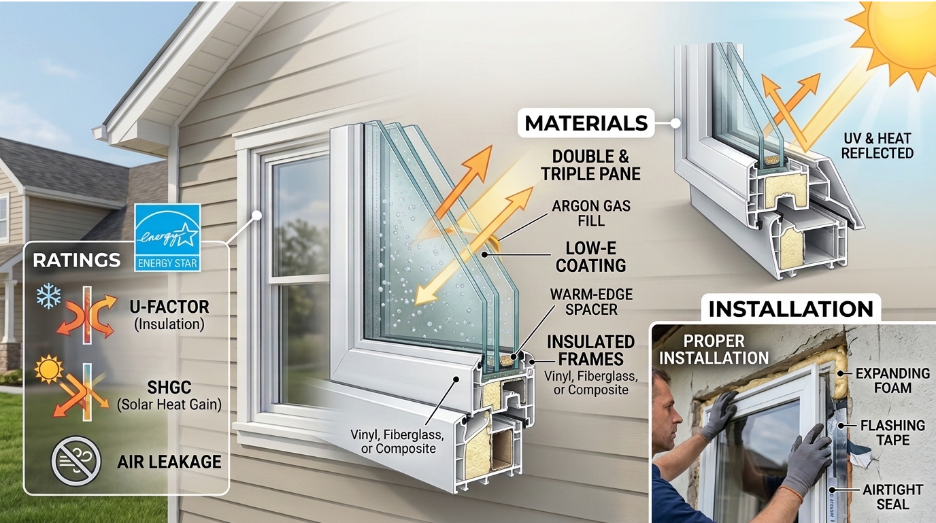
- U-Factor Determines how well the window prevents heat from escaping the home in the winter time. The majority of replacement windows will have a U-Factor between 0.2 and 1.2. The lower the factor is, the more efficient it is at insulating the home from the cold.
Solar Heat Gain Coefficient (SHGC) measures how much of the sun’s heat is gained through the window glass. The number ranges between 0 and 1. This means that windows with an SHGC of 0 will not allow any solar heat in and windows with an SHGC of 1 will allow all solar heat in. For warm climates that require air conditioning in the summer, windows with SHGC below .25 are a good choice.
Visible Transmittance (VT) is the amount of light that is transmitted through the glass. It is measured on a scale of 0-1. The higher the number is, the more light is able to come through the panes. - Air Leakage (AL) measures the amount of air that infiltrates around the window. The lower the AL number is, the better insulated the house will be.
Comparing Different Frame Materials
When it comes to window frames, there are a variety of materials to choose from each with its own benefits and drawbacks.
Vinyl Frames are one of the most common materials used for frames because of their water resistance, low maintenance and excellent insulating characteristics. The inside chambers of vinyl frames can be filled with foam insulation for added efficiency. With wood, it is also important to remember that wood frames require regular maintenance to protect it from rot and insects.
Clad-wood windows have the same advantages as wood frames, but with the addition of an aluminum or vinyl cladding on the exterior of the window. This protects the wood from the elements while still allowing the natural beauty of the wood to remain on the inside of the home.
Aluminum frames are another common type of window frame. They are very strong and lightweight. However, since aluminum is an excellent conductor of heat, aluminum windows need thermal breaks to break up the flow of heat.
Composite frames are made from a combination of wood fibers and special resins. These frames retain the beauty of real wood with the durability and low maintenance of vinyl.
Glass Options and Glazing Technologies
Single-pane glass windows are a thing of the past. Most new energy efficient windows have multiple panes of glass that are separated by special insulating gas and have special metallic coatings to prevent heat loss.
Double-pane windows are windows with two panes of glass separated by an air (or gas) pocket. Triple-pane windows have three panes of glass with two air (or gas) pockets.
Triple-pane windows may cost more than double-pane windows, but the added benefit of extra soundproofing and insulation may be worth the extra cost. Next, low emissivity (Low-E) coatings are another useful way to prevent heat gain and loss through the glass window panes.
Low-E coatings are applied to the glass panes as microscopic metallic films. Low-E coatings block infrared light (heat), but allow visible light (the light we see) to pass through the window. In the winter, the Low-E coating reflects the heat back into the house, while in the summer it reflects the sun’s rays out of the house.
Argon and krypton gases can also be used to fill the space between the panes of glass to help reduce the amount of heat that escapes through the window.
Common Window Styles
When purchasing replacement windows, it is important to think about which styles will provide the most ventilation and the amount of style each window has.
- Single and Double-Hung Windows have two movable sashes: Double-hung windows are versatile and have lots of ventilation, but they are a little more difficult to clean.
- Casement Windows open like an outward swinging hinged door: They are operated by a crank and provide lots of fresh air. Casement windows are also known for having the tightest seal of any operable window.
- Sliding windows open horizontally and have lots of unobstructed visibility: Sliding windows are good for short window openings.
Picture Windows are fixed windows with no operable sashes, but they provide the best energy efficient coverage since they have no place for air to escape the home.
Installation Help
It is very important to note that even the best performing windows will perform inadequately if they are not properly installed.
Proper installation of windows requires measuring each window properly and making sure the new installation squares correctly. It is also important to make sure that the weather stripping is correctly placed around the window and that the flashing is properly installed to prevent water leaks. Poorly installed flashing or weather stripping can allow water to get behind siding and rot wood or drywall.
Hiring professional installers for your new windows helps to ensure that they are properly flashed, caulked and maintained for years of efficient performance. The professionals also know how to handle the windows in a way that will not damage the glass when installing and operating them.
Conclusion
It is important to remember that upgrading to more energy efficient replacement windows is an important investment in the comfort of your home, improvement of curb appeal and financial savings. With a better understanding of how to read energy performance numbers, the pros and cons of different materials, the value of multiple pane glass and the importance of professional installation, you are now equipped to make the best choice for your home improvement project and enjoy decades of energy efficient comfort.