
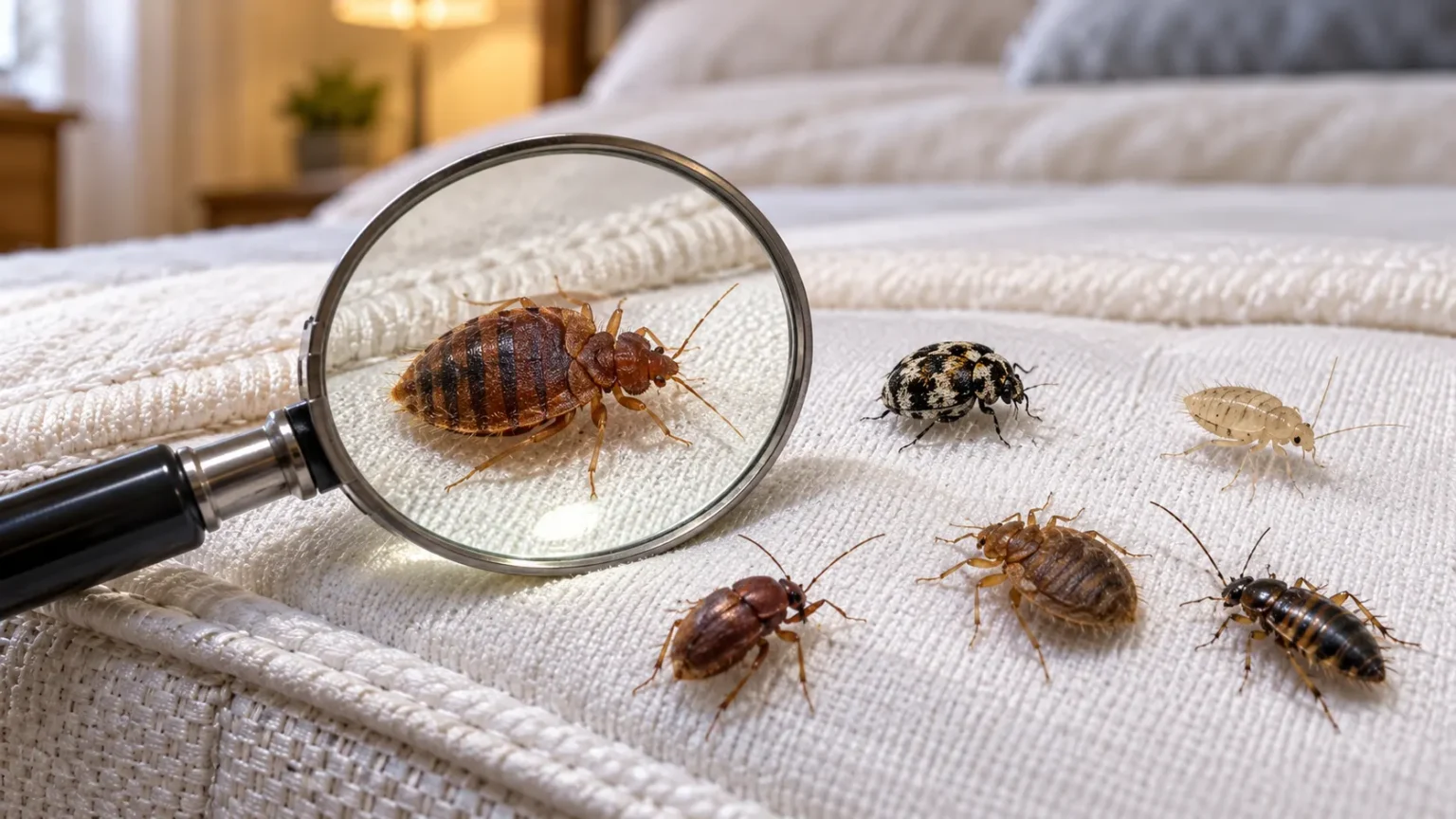
What Are Bugs That Look Like Bed Bugs?
Finding small brown insects around your mattress, furniture, or bedroom can raise concerns about a possible bed bug infestation. However, several common household pests closely resemble bed bugs in size, shape, and color. Understanding the differences between these insects helps homeowners identify potential problems accurately and avoid unnecessary pest control treatments or expensive purchases.
Bed bugs are small, flat, oval-shaped insects that typically have reddish-brown bodies and six legs. Adult bed bugs are approximately the size of an apple seed, while younger insects are smaller and lighter in color. They feed on blood and often hide in mattress seams, bed frames, furniture joints, and other narrow spaces near sleeping areas.
Many insects mistaken for bed bugs have completely different feeding habits, habitats, and effects on households. Carpet beetles, spider beetles, bat bugs, fleas, and cockroach nymphs are among the most common lookalikes. This guide explains their identifying characteristics, the environments where they appear, and useful inspection tools to consider before purchasing pest control products.
How to Identify a Real Bed Bug
Recognizing a real bed bug is the first step toward distinguishing it from other small household insects. Adult bed bugs have flattened, oval bodies that are generally reddish-brown, although their appearance changes after feeding. They do not have functional wings and cannot fly or jump, but they can crawl quickly across furniture, walls, and other surfaces.
Younger bed bugs, known as nymphs, are smaller and may appear pale yellow or almost translucent before feeding. Their bodies gradually become larger as they develop through several growth stages. Bed bug eggs are tiny, whitish, and difficult to identify without magnification, making careful inspection important when investigating suspicious insects around sleeping areas.
Physical evidence can provide useful clues when determining whether bed bugs are present. Look for dark fecal spots, shed insect skins, or small reddish stains along mattress seams and nearby furniture. Skin reactions alone cannot confirm a bed bug infestation because other insects and unrelated skin conditions can produce similar symptoms in different individuals.
Carpet Beetles: Common Bed Bug Lookalikes
Carpet beetles are among the most frequently mistaken insects because their small size and rounded bodies can resemble bed bugs at first glance. Adult carpet beetles may appear black, brown, or patterned with lighter scales, depending on the species. Unlike bed bugs, they have hard wing coverings and generally possess a more rounded or dome-shaped appearance.
Carpet beetle larvae look different from adults because they have elongated bodies covered with small hairs or bristles. These larvae feed on certain natural materials, including wool, feathers, and other animal-based fibers. They may appear in carpets, closets, upholstered furniture, or stored fabrics where suitable food sources are available.
Carpet beetles do not feed on human blood, although contact with larval hairs can cause skin irritation in some people. Their presence may indicate a need to inspect natural-fiber clothing, rugs, and stored textiles. Regular cleaning and careful storage can help reduce suitable habitats while preserving household belongings from potential damage.
Spider Beetles: Small Brown Insects Mistaken for Bed Bugs
Spider beetles are small household insects that sometimes resemble bed bugs because of their reddish-brown color and compact bodies. Their rounded abdomens and relatively long legs create an appearance that may also resemble tiny spiders. Unlike the flattened body of a bed bug, spider beetles usually have a noticeably rounded or bulbous shape.
These insects often appear in storage areas where dried foods, grains, pet food, or organic materials are available. Some species can also develop around bird nests or accumulated debris inside buildings. Their presence near a bedroom does not automatically indicate a bed bug problem, particularly when nearby storage areas contain suitable food sources.
Spider beetles do not normally feed on people and are primarily associated with stored materials. Identifying the insect correctly can prevent unnecessary treatment of mattresses or bedroom furniture. If you discover several spider beetles, inspect nearby storage areas and remove contaminated materials while maintaining clean, appropriately sealed containers for dry household products.
Bat Bugs and Swallow Bugs: The Closest Bed Bug Relatives
Bat bugs are among the most convincing bed bug lookalikes because they belong to the same insect family and share similar physical characteristics. Their flat bodies, brown coloring, and general appearance make identification difficult without magnification. Important differences often involve the length and arrangement of small hairs, requiring examination by someone familiar with insect identification.
Bat bugs are typically associated with bats and may appear in buildings where bats have established roosting areas. Swallow bugs are similar relatives commonly associated with certain birds and their nests. These insects can occasionally enter living spaces from nearby nesting or roosting locations, creating confusion when they are discovered around furniture or bedrooms.
Because these species closely resemble ordinary bed bugs, visual identification from an unclear photograph may be unreliable. An experienced pest professional or entomologist can examine a specimen to determine the species. Correct identification matters because addressing the associated animal habitat may be necessary, and wildlife concerns should be handled through appropriate humane professional services.
Fleas: Tiny Jumping Insects That Resemble Bed Bugs
Fleas are small, wingless insects that can appear dark brown or reddish-brown, making them easy to confuse with young bed bugs. However, fleas have narrow bodies compressed from side to side rather than broad, flattened oval shapes. Their powerful hind legs allow them to jump considerable distances relative to their body size.
Fleas are often associated with cats, dogs, and other animals, although they can also appear in homes without resident pets. They may be found around carpets, pet bedding, upholstered furniture, and floor surfaces. Unlike bed bugs, which usually crawl, fleas may suddenly jump when disturbed, providing an important clue during identification.
Flea bites and bed bug bites can sometimes produce similar skin reactions, so appearance alone is not enough to identify the cause. Observing the insect’s movement and examining nearby animal resting areas can provide better evidence. Households with pets should consult a veterinarian about appropriate flea prevention instead of using unsuitable household treatments on animals.
Ticks and Mites: How They Differ From Bed Bugs
Ticks sometimes resemble bed bugs because they can have rounded, brown bodies that become larger after feeding. However, ticks are arachnids rather than insects, and adult ticks have eight legs instead of six. Their body shape and feeding behavior also differ, making careful examination useful when identifying suspicious pests found indoors.
Ticks are commonly associated with outdoor environments and may enter homes attached to people, pets, or clothing. They can remain attached while feeding, unlike bed bugs, which typically feed briefly and return to hiding places. Certain tick species can transmit illnesses, making appropriate identification and prompt attention especially important after possible exposure.
Mites are another group of tiny arachnids that may occasionally be confused with young insects. Many species are too small to identify confidently without magnification, and their habits vary considerably. Because mites, ticks, and bed bugs require different responses, avoid assuming that every small dark insect discovered near bedding belongs to the same pest group.
Cockroach Nymphs: Young Roaches That Look Like Bed Bugs
Young cockroaches, known as nymphs, are another common source of confusion during household pest identification. Some species have small, brown, wingless bodies during their early development stages. At a quick glance, their compact appearance can resemble bed bugs, particularly when discovered under furniture or near baseboards in poorly illuminated areas.
Cockroach nymphs generally have longer antennae, a different body outline, and two small appendages called cerci near the rear of the abdomen. They are often found in kitchens, bathrooms, storage areas, and other locations offering shelter, moisture, or food. Their movement patterns and preferred environments can provide useful clues when examining an unfamiliar insect.
Unlike bed bugs, cockroaches do not normally feed on human blood and are mainly associated with scavenging behavior. Their presence may indicate moisture problems, accessible food waste, or hidden indoor nesting areas. Accurate identification helps homeowners focus on sanitation, structural maintenance, and appropriate pest management rather than unnecessary mattress treatments.
Booklice and Other Tiny Household Beetles
Booklice are extremely small insects that sometimes appear around bedrooms, bookshelves, and stored materials. Their pale brown or translucent coloring may resemble very young bed bugs, although their bodies and head proportions differ. Booklice are commonly associated with humid environments and microscopic fungi growing on surfaces or stored items.
Other small beetles, including certain drugstore beetles and cigarette beetles, can also be mistaken for bed bugs. These insects generally have rounded or cylindrical bodies and hard wing coverings rather than the flattened appearance of true bed bugs. They may occur around packaged foods, dried plant materials, or storage areas instead of concentrating near sleeping people.
Recognizing these differences helps determine whether the issue involves stored products, excess indoor humidity, or an actual bed bug infestation. Reducing moisture and inspecting potentially affected materials may help address some household pests. However, finding several unfamiliar insects should encourage proper identification rather than immediate use of broad pest control treatments.
How to Inspect Your Bedroom for Bed Bugs and Similar Insects
A careful bedroom inspection can help identify insects and determine whether additional investigation is necessary. Begin by examining mattress seams, bed frames, headboards, and nearby furniture with a bright flashlight. Look for live insects, shed skins, dark spotting, or other unusual evidence, paying particular attention to narrow gaps where small pests may hide.
Check upholstered furniture, curtains, baseboards, and nearby storage spaces if the initial inspection reveals nothing conclusive. Consider where the insects were found because their location may provide clues about their feeding habits and likely sources. For example, insects concentrated near stored fabrics may require a different investigation from those repeatedly discovered around mattress seams.
If you find an unfamiliar insect, photograph it clearly and preserve a specimen safely when practical. A small sealed container can help protect the specimen for examination by a qualified professional. Avoid moving potentially infested furniture between rooms or discarding belongings immediately, because unnecessary handling can complicate identification and create additional expenses.
Useful Bed Bug Identification Tools and Buying Tips
A bright flashlight is one of the simplest tools for inspecting mattresses, furniture joints, and dark corners. A handheld magnifying glass can also help reveal body shape, legs, antennae, and other identifying features. When purchasing inspection tools, prioritize clear visibility, comfortable handling, and reliable construction rather than expensive features that offer little practical benefit.
Bed bug interceptor traps can provide additional information by catching insects moving around certain bed legs. These devices are designed for monitoring and may help indicate pest activity, although an empty trap does not guarantee a room is free from bed bugs. Choose appropriately sized interceptors that fit the furniture and can remain securely positioned during everyday use.
Mattress encasements are another option when genuine bed bug concerns exist, particularly as part of a broader management strategy. Look for durable, properly fitted designs specifically intended to contain bed bugs. Avoid purchasing unverified pesticides or relying on products promising guaranteed elimination, and obtain professional identification before selecting pest-specific treatment methods.
How to Prevent Household Bugs From Becoming a Problem
Maintaining clean and organized living spaces helps reduce conditions that support several common household pests. Regular vacuuming, appropriate food storage, and inspecting natural-fiber fabrics can make certain environments less attractive to insects. However, cleanliness alone cannot prevent bed bugs, which may enter homes through luggage, furniture, or other transported belongings.
When traveling, inspect sleeping areas for suspicious insects or physical evidence before settling in. Keep luggage organized and examine belongings after returning from places where pest exposure is suspected. If used furniture is brought into a home, inspect seams, joints, and upholstered surfaces carefully before placing the items in bedrooms or other living areas.
Preventive measures should also address moisture problems, damaged seals, and unnecessary clutter where appropriate. Different pests require different approaches, making correct identification more useful than applying the same treatment everywhere. If signs persist or insects remain difficult to identify, a qualified pest management professional can recommend an appropriate assessment and response.
Conclusion
Several common household insects closely resemble bed bugs, including carpet beetles, spider beetles, bat bugs, fleas, ticks, and cockroach nymphs. Although some share similar colors or body shapes, their feeding habits and preferred environments differ significantly. Learning these characteristics helps homeowners recognize potential problems without immediately assuming that every small brown insect is a bed bug.
Accurate identification is essential because unnecessary pest treatments can waste money and fail to address the actual problem. Simple inspection tools, clear photographs, and careful examination of likely hiding places can provide valuable information. When uncertainty remains, professional identification offers a more dependable approach than relying exclusively on internet photographs or unusual skin reactions.
Understanding bugs that look like bed bugs also helps homeowners make better decisions about prevention and pest management products. Focus on practical inspection equipment, suitable household maintenance, and evidence-based recommendations rather than expensive treatments without confirmed need. With careful observation and appropriate assistance, many confusing household pest discoveries can be investigated more confidently.
Frequently Asked Questions
What bugs are most commonly mistaken for bed bugs?
Carpet beetles, spider beetles, bat bugs, cockroach nymphs, fleas, and certain ticks are commonly mistaken for bed bugs. Their size or coloring may appear similar, but body structure and behavior help distinguish them.
How can I tell if a bug is a bed bug?
Adult bed bugs are flat, oval, reddish-brown insects with six legs that cannot jump or fly. Check mattress seams and furniture for live insects, shed skins, and dark fecal spots.
What tiny brown bugs look like bed bugs but do not bite?
Spider beetles, adult carpet beetles, and certain stored-product beetles may resemble bed bugs but do not feed on human blood. Their habitats, body shapes, and feeding habits help identify them.
What should I buy to identify possible bed bugs?
A bright flashlight, magnifying glass, and suitable monitoring interceptors can support basic inspections. Choose reliable products and seek professional identification when insects are difficult to distinguish from similar household pests.
Can bed bug lookalikes be found in mattresses?
Yes, certain insects may occasionally appear on or near mattresses without being bed bugs. Their presence alone does not confirm an infestation, so examine physical characteristics and surrounding evidence carefully.