
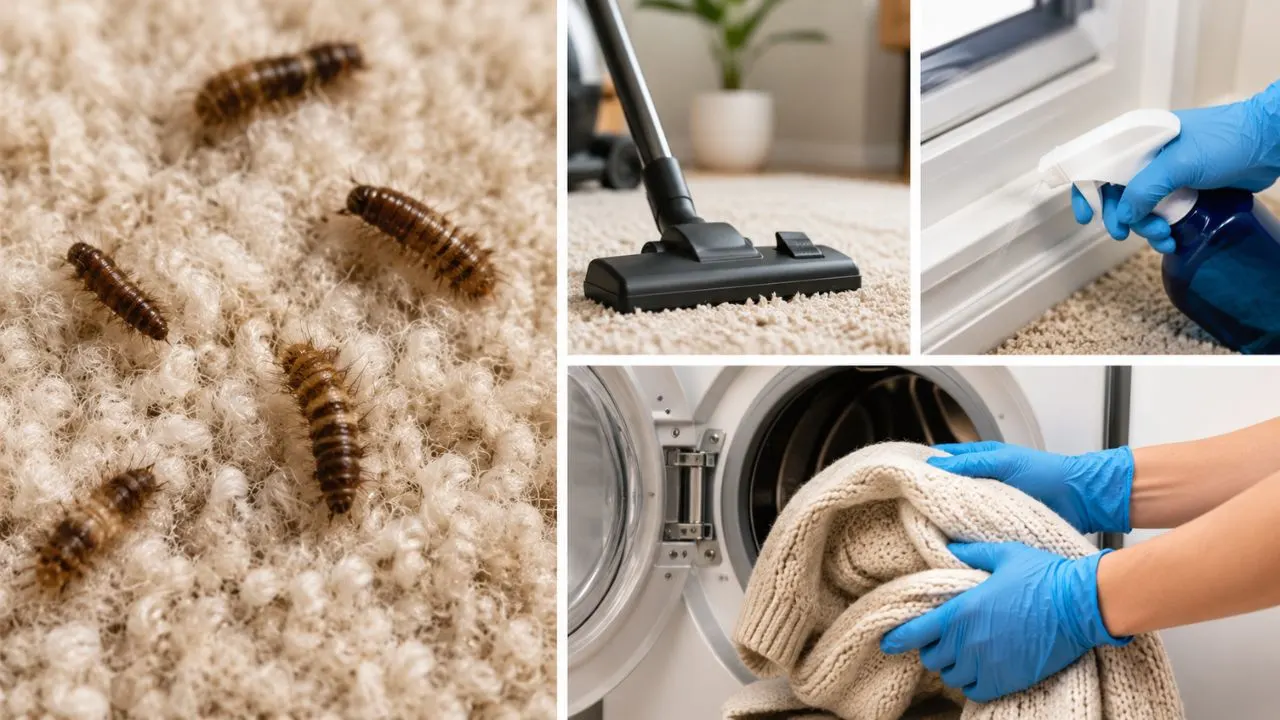
Introduction to carpet beetle larvae
Carpet beetle larvae can be a homeowner’s worst nightmare. These tiny pests may not seem threatening at first glance, but they can wreak havoc on your precious fabrics and textiles. Unlike their adult counterparts, which are often drawn to light and flowers, the larvae prefer dark, hidden spaces where they can munch away on your carpets, clothing, and upholstery without being noticed. If you’ve spotted these little creatures or have a nagging suspicion that your home is harboring an infestation, it’s time to take action. This guide will help you understand how to get rid of carpet beetle larvae effectively and reclaim your living space from these unwelcome guests.
Identifying the signs of a carpet beetle infestation
Spotting carpet beetle larvae can be tricky. These tiny pests often go unnoticed until they’ve caused damage. Knowing the signs is key to catching an infestation early.
Look for small, round holes in fabrics or furniture. Carpet beetles feed on natural fibers like wool and silk, leaving behind telltale signs of their munching habits.
Shedding skin is another clue you shouldn’t overlook. Larvae grow by shedding their exoskeletons, which may appear as tiny brown casings around infested areas.
You might also notice frass—small specks resembling pepper or sawdust near potential nesting sites. This waste indicates that these hungry critters have made your home their playground.
Keep an eye out for adult beetles flying around; they’re typically oval-shaped with distinct patterns on their wings. Recognizing these indicators helps tackle a carpet beetle issue before it spirals out of control.
Prevention methods for carpet beetle larvae
Preventing carpet beetle larvae from infesting your home is essential in maintaining a pest-free environment. Start by regularly vacuuming carpets, rugs, and upholstered furniture. This not only removes potential food sources but also traps any lurking larvae.
Next, ensure that all clothing and textiles are stored properly. Use airtight containers for woolens or other natural fibers. This limits access to the materials that attract these pests.
Seal any gaps around windows and doors where beetles might enter. A thorough inspection of your home can help identify problem areas.
Be mindful of using mothballs or cedar chips in closets as they deter insects effectively without causing harm to fabrics.
Consider reducing indoor clutter; it creates hiding spots for beetles and their larvae while promoting easier cleaning routines throughout your living space.
Natural ways to get rid of carpet beetle larvae
Carpet beetle larvae can be a nuisance, but there are natural methods to combat them. Start by vacuuming your carpets and upholstery regularly. This helps remove larvae as well as their food sources, like hair and fibers.
Diatomaceous earth is another effective solution. Sprinkle it in areas where you suspect infestations. The fine powder damages the larvae’s exoskeletons, leading to dehydration.
Essential oils can also play a part in pest control. Oils like lavender, peppermint, or tea tree have properties that repel carpet beetles. Mix these oils with water in a spray bottle and apply them to affected areas.
Consider using cedar chips or blocks around your home; their scent deters many pests including carpet beetles. These methods not only help eliminate existing larvae but also create an unfriendly environment for future invaders without harsh chemicals.
Chemical treatments for severe infestations
When faced with a severe carpet beetle larvae infestation, chemical treatments can be effective. These products usually contain insecticides specifically designed to target pests while minimizing harm to humans and pets.
Before applying any chemicals, it’s crucial to read the label carefully. Some formulations require protective gear during application, while others might suggest vacating the area temporarily.
Spray applications are common for carpets and upholstery. Focus on crevices and dark corners where larvae tend to hide. A thorough application ensures that every potential hiding spot is treated effectively.
In extreme cases, foggers may provide broader coverage in larger spaces. They release a mist that penetrates hard-to-reach areas but requires careful preparation of your home prior to use.
Always follow up with regular inspections after treatment. This ongoing vigilance helps catch any resurgence early before they become a full-blown problem again.
Cleaning and maintenance tips to keep carpet beetles away
Regular cleaning is your first line of defense against carpet beetle larvae. Vacuuming carpets, rugs, and upholstery at least once a week can help eliminate eggs and larvae hiding in fibers.
Don’t forget to pay attention to corners and under furniture where dirt tends to accumulate. Empty the vacuum cleaner immediately after use; otherwise, you might accidentally reintroduce pests back into your home.
Washing bedding, curtains, and other fabrics in hot water also helps kill any hidden larvae or eggs. Make this part of your routine every few weeks.
Store off-season clothes in airtight containers or bags to prevent infestations. This protects them from unwanted guests while they’re tucked away.
Maintain low humidity levels indoors. Carpet beetles thrive in damp conditions, so using dehumidifiers can significantly reduce their presence. Regular maintenance will keep your home pest-free for good!
Conclusion: living pest-free with proper prevention and treatment
Carpet beetle larvae can be a nuisance, but with the right approach, you can successfully eliminate them from your home. By identifying the signs of an infestation early and implementing prevention methods, you’ll create an environment that discourages these pests.
Utilizing natural remedies provides a safe and effective way to combat larvae without resorting to harsh chemicals. For more severe cases, chemical treatments may be necessary; however, always prioritize safety for both your family and pets when using such products.
Regular cleaning and maintenance play vital roles in keeping carpet beetles at bay. Thoroughly vacuuming carpets, rugs, and upholstery will help remove any existing larvae or eggs while also preventing future infestations.
By combining these strategies—diligent observation, proactive measures for prevention, eco-friendly solutions or targeted chemical applications as needed—you pave the way to living pest-free in your space. Embracing this comprehensive approach ensures that your home remains comfortable and free from unwanted guests like carpet beetle larvae.