
A media wall can transform a plain living room into something that looks straight out of a design magazine. But when homeowners start asking for quotes, the numbers can seem all over the place. One company says a few thousand dollars, another says five figures, and it is not always clear what is included.
The reason for the spread is simple: a media wall is not a single product. It is a small construction project that combines framing, electrical, a fireplace, finish carpentry, a TV mount and lighting. Understanding each line item helps you compare quotes fairly and decide where your money matters most.

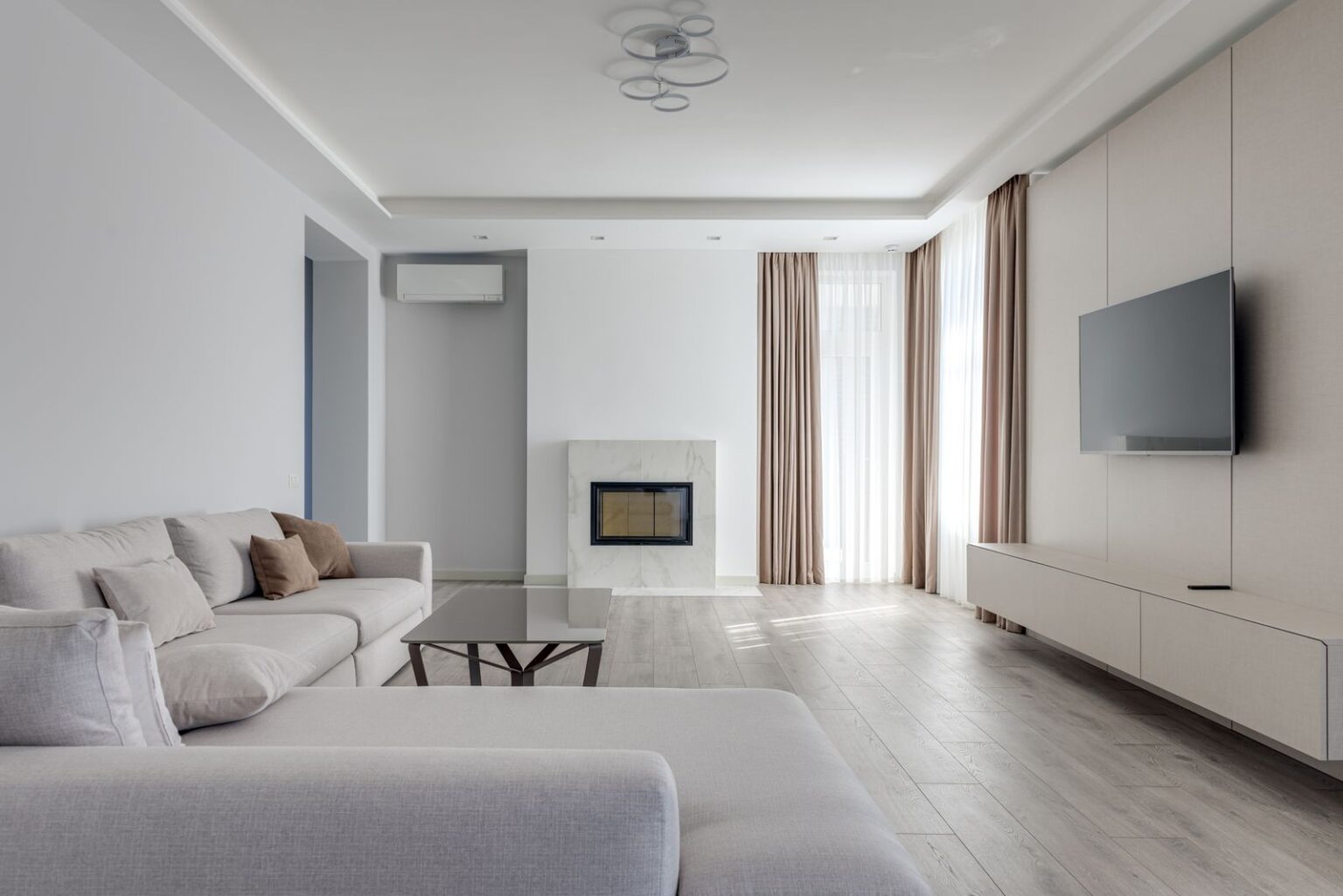
A minimal painted wall with a flush fireplace keeps the budget lean without looking basic.
The typical price tiers
While every home is different, most media wall projects fall into three broad bands. Published 2026 pricing from specialist installers gives a useful reference point:
- Basic TV feature wall, about $2,500 to $4,500: a framed wall with a painted or shiplap finish, a mounted TV and hidden wiring, but no fireplace.
- Media wall with an electric fireplace, about $4,500 to $9,000: the most common build, with a recessed fireplace, a premium finish such as stone, fluted wood or tile, LED lighting and clean TV integration.
- Floor-to-ceiling built-in, about $9,000 to $15,000 and up: large statement walls in porcelain slab or stone with built-in cabinetry and integrated audio-visual equipment.
Local labor rates, wall size and site conditions can move a project up or down, so treat these as planning ranges rather than a quote.
Line item 1: framing and structure
Most modern media walls are built out from the existing wall to create depth for a recessed fireplace, a TV niche and hidden cables. The larger and more complex the build-out, with niches, soffits or floating ledges, the more lumber, drywall and labor it takes. Framing and drywall typically run about $500 to $2,500. Adding solid blocking for the TV mount is a small cost that is always worth it.
Line item 2: the electric fireplace
The fireplace unit itself can range from an entry-level insert to a large, high-end linear model with realistic flames, multiple color settings and a built-in heater. Expect roughly $250 to $2,500 for the insert itself. Wider units and premium flame technology cost more, and so does the framing needed to recess them flush.
Line item 3: electrical work
A clean wall needs recessed power behind the TV, a dedicated outlet for the fireplace and in-wall rated cabling for HDMI and network connections. If a new circuit is required, or if your area requires permits and inspection for the work, expect that to show up in the quote. Electrical scope alone can range from about $200 for recessed power to $3,000 when new circuits are involved. This is not the place to cut corners, because it affects both safety and whether your wall passes inspection.
Line item 4: the finish material
Finish is usually the biggest swing factor. For the finish material alone, shiplap runs about $2 to $7 per square foot, stone about $5 to $15 and wood slat paneling around $18 to $25, with porcelain slab at the premium end. From least to most expensive overall:
- Painted drywall and shiplap: budget to mid-range
- Board and batten: budget to mid-range
- Fluted or slat wood: mid-range
- Tile: budget to premium, depending on the tile
- Stacked stone, limewash and plaster: mid to premium
- Porcelain slab and marble: premium
Materials that require mortar, grout or multiple plaster coats also add calendar time because they need to cure, which can add labor days.
Line item 5: TV mounting
A fixed flush mount is the simplest and cheapest option. Tilting, articulating or pull-down mounts cost more but can solve viewing-height problems when a TV sits above a fireplace. Large screens may also need two installers to lift safely.
Line item 6: lighting
LED strip lighting in a ceiling cove, behind floating shelves or around the TV adds a high-end look for a relatively modest cost, typically about $300 to $1,500. Dimmers, smart controls and multiple zones add to the price but make the wall far more versatile.
Line item 7: built-ins and storage
Cabinets, open shelving and hidden media storage are what push many projects into the upper tiers. Built-in cabinetry commonly adds $2,000 to $6,000. It is labor-intensive, but it also does the most to make the wall feel like part of the architecture rather than an add-on.
Storage is also where the wall earns its keep day to day. A closed cabinet with ventilation can hide a cable box, game console and router, while open shelves give you room for books and decor that soften all the hard surfaces.
Hidden costs to ask about
- Moving or removing existing outlets, switches or thermostats
- Patching and painting adjacent walls and ceilings
- Disposal of old furniture or debris
- Permit and inspection fees where required
- Cleanup: dust control matters in a lived-in home
How to compare quotes fairly
Ask every contractor for a line-by-line scope: wall dimensions, fireplace model, finish material, mount type, lighting and electrical work. A fixed-price quote that lists everything is easier to compare than an hourly estimate. Ask whether the price can change once work starts, and what would trigger that.
If you want a realistic benchmark before you start calling around, a published media wall cost breakdown from a specialist installer shows what each package includes and helps you spot quotes that are missing key items.
Smart ways to save
- Keep the textured finish to one zone, such as the fireplace surround, and paint the rest
- Choose a mid-size linear fireplace instead of the largest model
- Use open floating shelves instead of full custom cabinetry
- Reuse your existing TV and add a better mount
- Plan all electrical work at once so the wall is opened only one time
The takeaway
A media wall can cost a few thousand dollars or well over $10,000, and the difference comes down to the fireplace, the finish and the built-ins. Decide which of those matter most to you, get a detailed fixed-price quote and you will know exactly what you are paying for.