
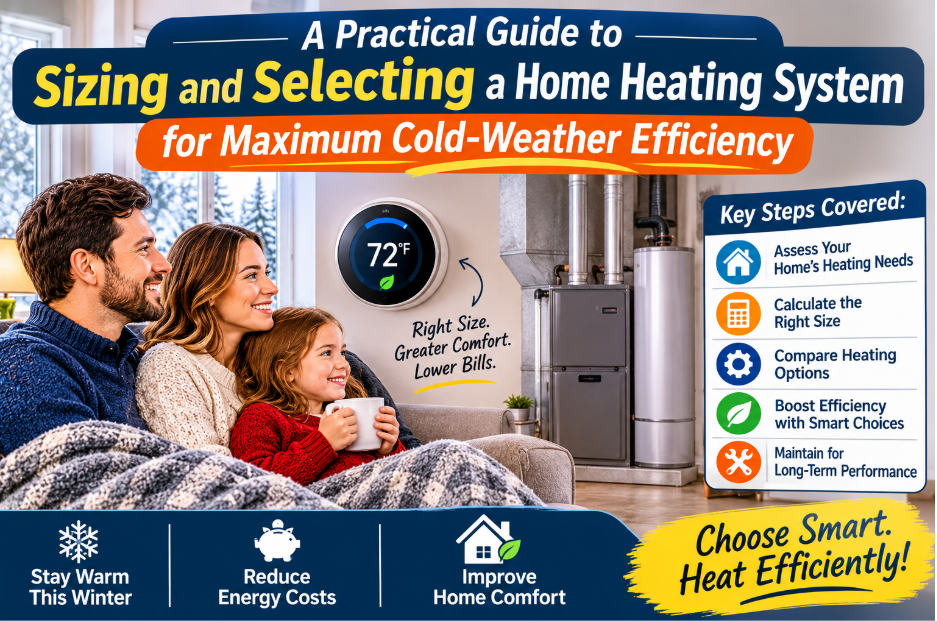
If you want to prepare your house for really harsh winter weather, paying close attention to your central heating setup is something you cannot skip. The moment outside temperatures fall way below freezing, your furnace or heat pump is what stands between you and freezing indoor air or damaged pipes and walls. Even so, lots of homeowners still believe that swapping out an old heating system just means buying a new unit with the exact same capacity. Because insulation, window seals, building codes, and machine designs have all changed over time, you actually need to look at system evaluation with fresh eyes if real comfort and lower energy bills are what you are after.
What picking the right heating system really comes down to is matching the machine’s power with the specific layout of your house. Industry rules for home climate control point out that doing a proper load calculation makes sure your new unit heats your rooms nicely without burning through extra fuel for no reason. As shown in field tests shared by Browns Plumbing and Heating, following good sizing steps—like checking square footage, ceiling height, and insulation thickness—stops usual setup mistakes such as short-cycling and rooms that are way hotter or colder than others. Taking a little time to see how these systems get sized and checked will let you make much better choices when you renovate your home or upgrade your gear.
Understanding the Mechanics of Heating System Sizing
Putting in a furnace that is too big is one of the most common errors people make in home heating design. Even though it feels like common sense that a bigger heating unit will warm your place up faster, having too much heating power actually causes clear comfort and reliability headaches.
The Problem with Oversized Furnaces
When a furnace is way too large for a house, it blasts out a sudden rush of hot air, making the inside temperature shoot up far too quickly. Because the room gets warm so fast, the thermostat turns the machine off almost right away. Technicians call this habit short-cycling, and it brings about a few different issues:
- Frequent temperature swings: You end up feeling uncomfortable since rooms heat up fast and then turn chilly just as quickly.
- Increased energy bills: Right during those startup moments is when heating gear burns through the biggest amount of fuel and electricity.
- Premature component wear: Turning on and off over and over puts heavy mechanical strain on igniters, blower motors, and heat exchangers.
- Poor humidity control: Simply because the unit does not stay running long enough, it never manages to spread air evenly around the whole house.
The Consequences of Undersized Systems
On the flip side, a furnace that is too small has a hard time keeping your chosen temperature when days get bitterly cold. Even if the blower fan stays running nonstop, the machine just cannot make enough British Thermal Units (BTUs) of heat to make up for the warmth escaping naturally through your walls and windows. Back bedrooms end up staying chilly because of this, and running without a break slowly wears the whole unit down.
Comparing Primary Residential Heating Options
Modern houses rely on a handful of different heating methods. Once you get how each choice operates, picking the right fit for your building style and local utility hookups becomes much simpler.
High-Efficiency Gas Furnaces
For houses that already have connections to city gas lines, natural gas furnaces stay a very popular pick. Having Annual Fuel Utilization Efficiency (AFUE) ratings of 96 percent or even higher is normal for today’s high-efficiency units. Out of every bit of fuel the furnace burns, 96 percent changes straight into helpful heat inside your house, while just 4 percent goes out through the exhaust pipe.
Electric Furnaces
In country areas or houses that do not have natural gas access, electric furnaces give you a very simple backup choice. Even though paying for electricity per unit of heat can cost more than using natural gas, these machines have less complicated parts, make very little noise, and cost less money upfront to buy.
Cold-Climate Heat Pumps and Dual-Fuel Systems
Rather than creating heat by burning fuel or using electric resistance, heat pumps pull warmth from the outside air and move it into your house. Even when the weather outside is freezing, newer cold-climate heat pumps can still work efficiently. In places where winter gets severely cold, putting a heat pump together with a backup gas furnace gives you what is called a dual-fuel setup. On milder winter days, the heat pump takes care of warming the house efficiently, and the second outside temperatures drop sharply, the gas furnace kicks in to take over.
Hydronic Boiler Systems
Boiler systems send heated water moving through pipes under the floor or radiators mounted on the walls. What hydronic heating gives you is quiet warmth with zero dust and no blowing air drafts at all. People who have breathing sensitivities or bad allergies usually find this choice extra helpful.
Step-by-Step Installation Evaluation Process
Going down a clear checklist when you replace a central heating unit makes sure no vital mechanical details get overlooked:
- Conduct a room-by-room load calculation: Rather than guessing based on rough square-footage numbers, see to it that your installer measures window sizes, how thick the wall insulation is, and the ceiling volume.
- Inspect existing ductwork: Because loose joints, air leaks, or squished flexible ducts block airflow and hurt overall efficiency, check for them carefully.
- Verify venting requirements: Instead of using old-style metal chimneys, high-efficiency gas units must have special plastic PVC vent pipes running out to the exterior of the house.
- Evaluate electrical panel capacity: Make sure your breaker box can actually send out enough electric power to handle new blower motors or extra heating parts.
- Calibrate the thermostat: Hook your new heating setup up to a programmable or smart thermostat so keeping steady temperature schedules is easy.
Comparing Heating System Specifications
Looking closely at technical details makes figuring out which exact features add the highest value to your house layout much easier.
| System Type | Efficiency Metric | Ideal Application | Key Advantage |
| High-Efficiency Gas | 96%+ AFUE | Homes with natural gas service | Lowest seasonal operating costs |
| Electric Furnace | 100% AFUE (at unit) | Properties lacking gas lines | Simple mechanics and low maintenance |
| Cold-Climate Heat Pump | High HSPF2 / COP | Mild to moderate cold climates | Provides both heating and cooling |
| Hydronic Boiler | 90%+ AFUE | Homes with radiant floor tubing | Quiet, draft-free, consistent warmth |
Simple Maintenance Steps to Protect Your Heating Investment
Simple Maintenance Steps to Protect Your Heating Investment
Sticking to basic routine care after your new heating gear goes in helps it run well for many years:
- Change air filters regularly: Swap out disposable furnace filters every 30 to 90 days so airflow stays steady and inside parts stay safe from dust buildup.
- Keep supply and return vents clear: Make sure heavy furniture, long curtains, or thick rugs never cover up floor registers or wall grills.
- Inspect outdoor intake pipes: Check outside PVC vent ends often to be sure snow, ice, leaves, or bird nests are not blocking them up.
Keeping a warm, energy-saving house all through the long winter season is simple once you pick gear sized specifically for how your home loses heat and stay on top of easy filter swaps.