
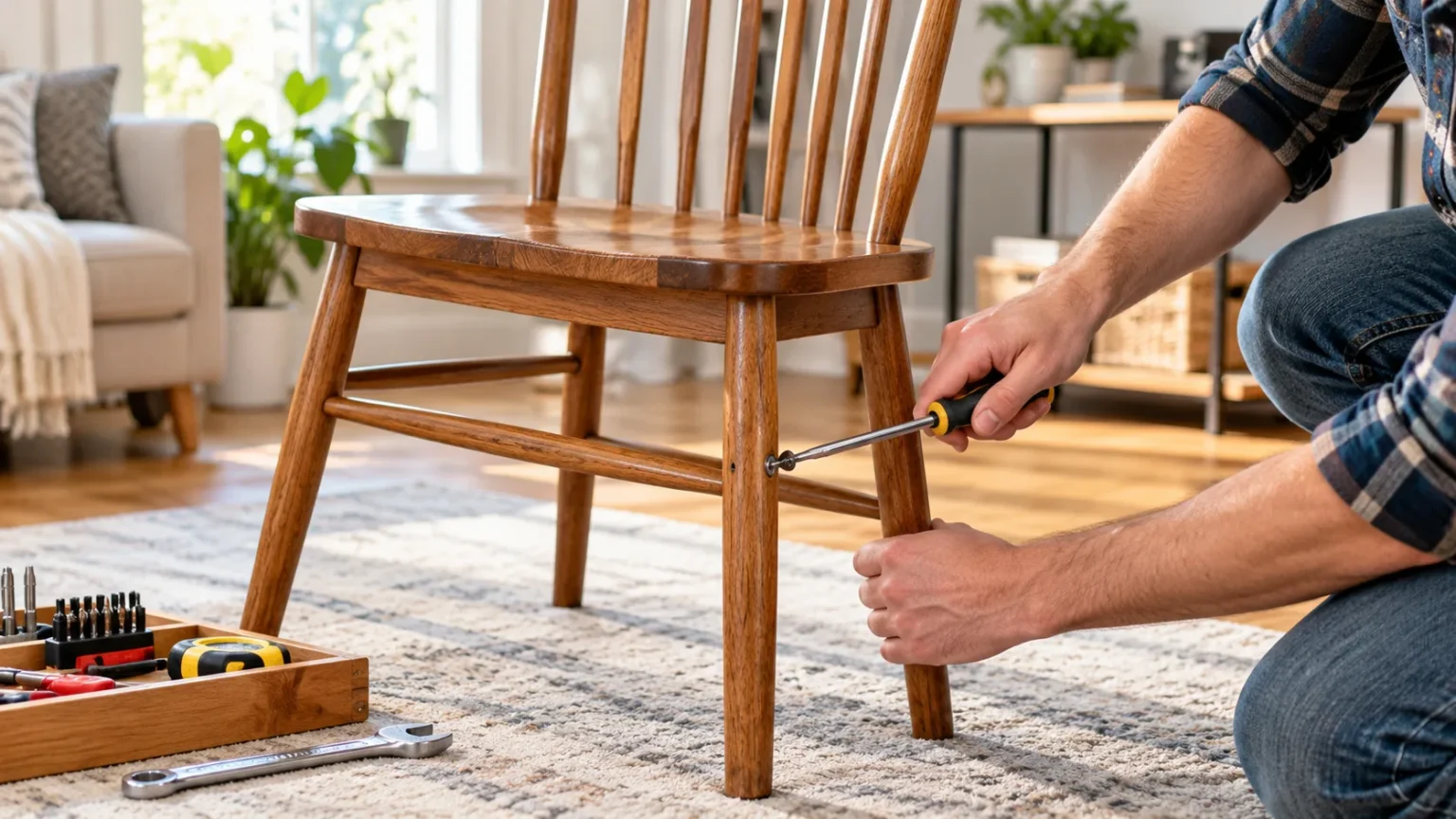
A wobbly chair can make sitting uncomfortable and frustrating, especially when it rocks from side to side or feels unstable. Whether you have a wooden dining chair, office chair, or kitchen stool, an uneven chair can interrupt everyday activities. Fortunately, many common chair problems can be fixed at home using simple tools and basic repair techniques.
Learning how to fix a wobbly chair can help you restore stability without immediately replacing your furniture. Loose screws, uneven legs, weakened joints, and damaged hardware are among the most common reasons chairs become unstable. Identifying the exact problem is the first step toward choosing an effective and lasting repair.
This guide explains how to identify why your chair wobbles, fix different types of chairs, and prevent similar problems in the future. You will also learn when a simple adjustment is enough and when professional furniture repair or replacement is the safer option.
Why Does a Chair Become Wobbly?
A chair can become wobbly for several reasons, including loose joints, uneven legs, damaged hardware, and regular wear. Over time, repeated sitting, shifting, and moving can gradually loosen the connections holding the chair together. Wooden chairs may also experience changes in their joints because of indoor humidity. Understanding these common causes makes it easier to identify the source of instability.
Loose screws and bolts are particularly common in dining chairs, office chairs, and furniture assembled at home. As the chair experiences movement and pressure, fasteners may gradually lose their original tightness. This can cause the frame or legs to shift slightly whenever someone sits down. Tightening the affected connections may restore stability if the components remain undamaged.
Uneven chair legs are another frequent reason furniture rocks on a flat surface. One leg may be slightly shorter, a protective foot pad may be missing, or the floor itself may be uneven. In some cases, the chair frame has become twisted or weakened. Identifying whether the problem comes from the chair or the floor helps prevent unnecessary repairs.
How to Identify the Cause of a Wobbly Chair
Before repairing a chair, examine it carefully to determine where the unwanted movement begins. Place the chair on a firm, level surface and gently test whether it rocks in different directions. Look for visible gaps between wooden joints, loose screws, damaged legs, or missing protective feet. Avoid sitting on a chair that appears severely unstable during your inspection.
Next, move the chair to another level section of flooring to see whether the wobbling continues. If the chair becomes stable in a different position, the original floor may be uneven. If it continues rocking, inspect the legs and supporting frame more closely. This simple comparison helps distinguish furniture problems from irregular floor surfaces.
You can also gently test each leg and frame connection while the chair is unoccupied. Watch for movement where the legs connect to the seat or where supporting rails join the frame. Creaking sounds, visible separation, and shifting components may indicate weakened connections. Identifying the exact location of the movement allows you to choose the right repair method.
What Tools Do You Need to Fix a Wobbly Chair?
Most simple chair repairs require only a few common household tools and inexpensive materials. A screwdriver, appropriately sized wrench, measuring tape, and protective floor pads are useful for basic adjustments. Wooden chairs may require suitable wood glue and clamps when joints become loose. The tools you need will depend on the chair’s construction and the specific problem.
For chairs assembled with screws or bolts, matching screwdriver bits and hex keys are particularly important. Using the correct tool helps prevent stripped screw heads and damaged fasteners during tightening. Some chairs also have manufacturer-specific hardware that should not be replaced with unsuitable parts. Checking the original assembly instructions can help identify compatible components.
Keep a clean cloth and a small container nearby when inspecting removable hardware. The cloth can protect the furniture surface, while the container helps prevent screws and fittings from getting lost. Work on a clear, stable surface with enough space to examine the chair safely. Having the correct materials ready makes repairs more organized and reduces unnecessary damage.
How to Fix a Wobbly Chair by Tightening Loose Screws
Loose screws are among the easiest causes of chair instability to address. Start by checking the connections underneath the seat, around the legs, and along any supporting rails. Locate screws that appear loose or allow parts of the frame to move. Use the correctly sized screwdriver to tighten each accessible fastener carefully.
Turn the screws gradually until the connected parts fit securely together without unnecessary movement. Avoid overtightening, especially when working with wooden furniture, because excessive force can damage the threads or surrounding material. If a screw continues turning without becoming secure, the screw hole may be stripped. In that situation, tightening alone will not provide a reliable repair.
After checking the fasteners, place the chair upright on a level surface and gently test its stability. Observe whether the original movement has disappeared or whether another joint remains loose. If the chair still rocks, inspect the legs and supporting structure for additional problems. Repeatedly tightening damaged hardware is not a substitute for replacing or repairing defective components.
How to Fix a Wobbly Wooden Chair
Wooden chairs commonly become unstable when their glued joints loosen after years of regular use. Temperature changes, humidity, and everyday movement can gradually weaken connections between legs, stretchers, and the seat frame. You may notice gaps around the joints or hear creaking when the chair moves. These symptoms suggest that the wooden connections need closer examination.
If a glued joint has separated, a proper repair usually involves carefully separating the loose connection where possible. Old glue and debris should be removed before applying fresh woodworking glue to suitable, clean surfaces. The components must fit correctly and remain aligned during reassembly. A clamp can hold the joint securely while the adhesive cures according to its instructions.
Wooden chairs with cracked legs, broken stretchers, or severely weakened joints require more than a basic glue application. Structural components may need professional repair or replacement to restore safe load-bearing strength. Applying glue around the outside of a loose joint rarely creates a lasting repair. Always confirm that the repaired connections are secure before returning the chair to normal use.
How to Fix a Chair With Uneven Legs
Uneven chair legs can cause noticeable rocking even when all screws and joints remain secure. Begin by placing the chair on a reliably flat surface and checking whether every leg touches the floor. A missing furniture foot or worn protective pad can sometimes explain the imbalance. Replacing the missing component may solve the problem without altering the chair itself.
If a small difference remains, suitable furniture levelers or properly fitted replacement pads may help balance the chair. Choose products designed for the chair’s leg shape, material, and expected weight. Adjustable levelers are particularly useful for certain metal or wooden furniture designs. Make sure any added component is attached securely and does not introduce additional instability.
Avoid immediately cutting or sanding a chair leg to make the chair level. Removing material from the wrong leg can permanently worsen the problem, especially if the floor is uneven. A twisted frame or weakened joint may also create the appearance of different leg lengths. Permanent changes are best considered only after the chair’s structural condition has been properly assessed.
How to Fix a Wobbly Dining Chair
Dining chairs experience frequent movement because they are regularly pulled away from tables and pushed back into place. This repeated activity can loosen hardware and place stress on wooden joints over time. The first step is to examine the underside of the seat and inspect each leg connection. Pay particular attention to corners where the supporting frame meets the legs.
For dining chairs assembled with bolts, gently tighten loose connections using the correct tool. If the frame uses glued wooden joints, inspect the connections for visible gaps or separation. Loose glued joints may require careful disassembly and proper re-gluing rather than additional screws. Using a repair method suited to the chair’s construction helps preserve its strength and appearance.
Once the repair is complete, check the chair on a level floor before anyone sits on it. Test for side-to-side movement and observe whether the legs remain firmly connected to the frame. If the backrest also moves independently, inspect its joints before using the chair. A stable seat alone does not guarantee that the entire chair is safe.
How to Fix a Wobbly Office Chair
Office chairs have several mechanical parts that can create an unstable or uncomfortable sitting experience. The seat plate, central gas lift, caster wheels, and five-star base all contribute to stability. A loose mounting bolt may cause the seat to shift, while a damaged base can produce more serious movement. Identifying the affected component is essential before attempting repairs.
Check the accessible bolts connecting the seat to its mounting mechanism, following the manufacturer’s instructions. You can also inspect caster wheels to determine whether they are properly installed or visibly damaged. Some uneven movement may come from a defective wheel or an unstable floor surface. Replace damaged external components only with parts approved for the specific chair model.
A cracked base, failing tilt mechanism, or damaged gas lift should not be treated as a simple tightening problem. Gas-lift cylinders are pressurized and should never be opened, punctured, heated, or improvisedly repaired. Contact the chair manufacturer or a qualified furniture technician for appropriate replacement parts. Stop using the chair if its supporting mechanism appears structurally unsafe.
How to Fix a Wobbly Chair Without Replacing It
Replacing an entire chair is not always necessary when the problem involves minor looseness or missing hardware. Small repairs such as tightening bolts, replacing damaged floor pads, or restoring suitable wooden joints may improve stability. The best solution depends on the chair’s materials and the condition of its supporting frame. Minor adjustments are generally more practical than extensive reconstruction.
For example, a dining chair with a missing leg pad may only need a matching replacement. A chair with loose assembly bolts may become stable after the connections are properly tightened. Similarly, a wooden chair with an otherwise sound frame may benefit from professional joint restoration. These targeted repairs can extend the useful life of furniture without unnecessary replacement.
However, repair is not always the safest or most economical option for every chair. Severe cracks, broken support structures, and extensive corrosion can compromise load-bearing strength. Furniture with multiple damaged components may require specialist assessment before continued use. Comparing repair costs with replacement costs helps you make a practical decision without sacrificing safety.
How to Fix a Wobbly Chair on an Uneven Floor
Sometimes a chair appears unstable even though its legs and joints are in good condition. Uneven flooring, raised tile edges, or irregular wooden boards can prevent all four chair legs from making consistent contact. This creates a rocking movement when pressure shifts from one side to another. Testing the chair on a different surface helps confirm the cause.
Furniture levelers and protective pads can sometimes compensate for minor differences in floor height. Adjustable feet are particularly useful when the chair design allows them to be installed securely. Choose materials that are suitable for the flooring and will not slide unexpectedly. Avoid stacking loose objects underneath chair legs because they can shift during use.
If several pieces of furniture wobble in the same area, the floor itself may need attention. Damaged tiles, loose floorboards, or uneven surfaces can affect both furniture stability and general walking safety. Addressing the flooring problem may provide a better long-term solution than repeatedly modifying individual chairs. Significant floor defects should be evaluated by an appropriate professional.
How to Repair Loose Chair Joints
Loose chair joints are common in older wooden furniture and can gradually reduce structural stability. Traditional wooden chairs often use mortise-and-tenon or dowel joints to connect legs and supporting rails. When adhesive weakens, these fitted pieces can begin moving against each other. Early symptoms include creaking sounds and small gaps around connected parts.
An effective joint repair requires properly fitted wooden components and clean bonding surfaces. Where safe and appropriate, a loose joint can be separated, cleaned, and reassembled using suitable woodworking adhesive. Clamps help keep the pieces aligned while the glue reaches its recommended curing time. The furniture should remain unused until the repaired joint is fully secure.
If the wooden connection is cracked, badly worn, or no longer fits properly, adhesive alone may not restore strength. Replacement components or specialist woodworking techniques may be necessary to rebuild the connection. Avoid adding random nails or screws that could split the surrounding wood. A furniture repair professional can assess whether the existing joint can be restored safely.
How to Stop a Chair From Wobbling Permanently
A lasting chair repair begins with identifying and correcting the actual source of instability. Tightening loose screws may solve one problem, while replacing damaged joints or missing feet may solve another. Temporary adjustments are less effective when the supporting structure remains weakened. Repairing the underlying cause reduces the likelihood of the same movement returning soon.
Regular maintenance can help keep chairs stable for longer periods. Periodically inspect accessible fasteners, supporting rails, and protective pads for signs of wear. Clean accumulated dirt from moving components and follow the manufacturer’s maintenance recommendations. Addressing minor looseness early may prevent additional movement from damaging nearby connections.
It is also important to use furniture within its intended design and weight capacity. Avoid rocking backward on ordinary dining chairs or dragging heavy furniture across rough surfaces. These activities can place unnecessary stress on legs and frame joints. Careful everyday use, combined with timely maintenance, helps preserve both chair stability and furniture lifespan.
Common Mistakes to Avoid When Fixing a Wobbly Chair
One common mistake is tightening every screw excessively in an attempt to eliminate movement. Overtightening can strip screw holes, damage threads, or crack wooden components, creating additional problems. Another mistake is assuming that all wobbling comes from loose hardware. Some chairs have damaged joints, uneven legs, or structural defects that require different solutions.
Using unsuitable adhesives and improvised materials can also reduce the durability of a repair. Not every type of glue is appropriate for furniture joints, particularly when surfaces contain old adhesive or finishes. Likewise, placing loose cardboard or other unsecured objects underneath a chair leg can create a slipping hazard. Properly fitted components provide a more dependable solution.
A particularly important mistake is using the chair before confirming that the repair is complete. Glue may require an extended curing period, and replacement hardware needs to be installed correctly. A chair that appears stable without weight may still contain weakened structural connections. If you cannot confirm the repair is safe, seek professional assistance before sitting on it.
When Should You Replace a Wobbly Chair?
Although many wobbly chairs can be repaired, some become too damaged for dependable everyday use. Deep cracks in legs, broken support rails, and severely weakened frames can affect the chair’s load-bearing strength. Extensive damage may be difficult to assess through a basic visual inspection. Continuing to use an unstable chair increases the risk of it failing unexpectedly.
Replacement may also be practical when several components need expensive repairs or compatible parts are unavailable. Some office chairs use specialized mechanical assemblies that cannot be safely restored with ordinary household tools. Older furniture may have worn joints requiring extensive professional woodworking. Comparing the overall condition with the cost of safe restoration helps guide your decision.
If a chair repeatedly becomes loose after appropriate repairs, this may indicate an underlying structural problem. Recurrent wobbling should not be ignored simply because the fasteners can be tightened again. A qualified repair technician can help determine whether further work is worthwhile. When structural safety cannot be restored reliably, replacing the chair is usually the better choice.
Conclusion
Learning how to fix a wobbly chair starts with identifying whether the problem comes from loose screws, uneven legs, weakened joints, or damaged components. Many minor issues can be addressed using basic tools and appropriate replacement parts. Careful inspection helps prevent unnecessary work and makes it easier to select a repair suited to the chair’s construction.
Wooden dining chairs, office chairs, and other seating designs may require different solutions depending on their materials and supporting structures. Tightening hardware, restoring suitable joints, and installing properly fitted levelers can often improve stability. However, structural damage and defective mechanical components require additional care. The goal is a chair that is both comfortable and safe to use.
Regular maintenance and sensible everyday use can help prevent chairs from becoming unstable again. Checking fasteners, protecting furniture legs, and avoiding unnecessary strain may extend the lifespan of your seating. If a chair remains unstable despite appropriate repairs, professional assessment or replacement is the safest option. A properly maintained chair should provide dependable support without unwanted rocking or movement.
Frequently Asked Questions
What is the easiest way to fix a wobbly chair?
The easiest solution is to check for loose screws, bolts, or missing leg pads. Tighten accessible hardware carefully and test the chair on a level surface to identify any remaining problems.
Can you fix a wobbly chair without tools?
Minor wobbling caused by uneven flooring may improve by repositioning the chair or replacing a suitable removable foot pad. Loose joints and structural problems generally require proper tools or professional repair.
What causes wooden chairs to become wobbly?
Wooden chairs often develop wobbling because of weakened glue joints, loose fasteners, humidity changes, or everyday wear. Repeated movement can gradually loosen the connections between chair legs and supporting rails.
Can wood glue fix a loose chair leg?
Wood glue may restore a loose wooden joint when the parts fit correctly and the surfaces are properly prepared. Cracked, damaged, or badly worn joints may require additional professional repair.
Is it safe to sit on a wobbly chair?
A wobbly chair may not provide reliable support, especially if its joints or legs are damaged. Avoid using it until the cause is identified and any necessary repairs are completed.