
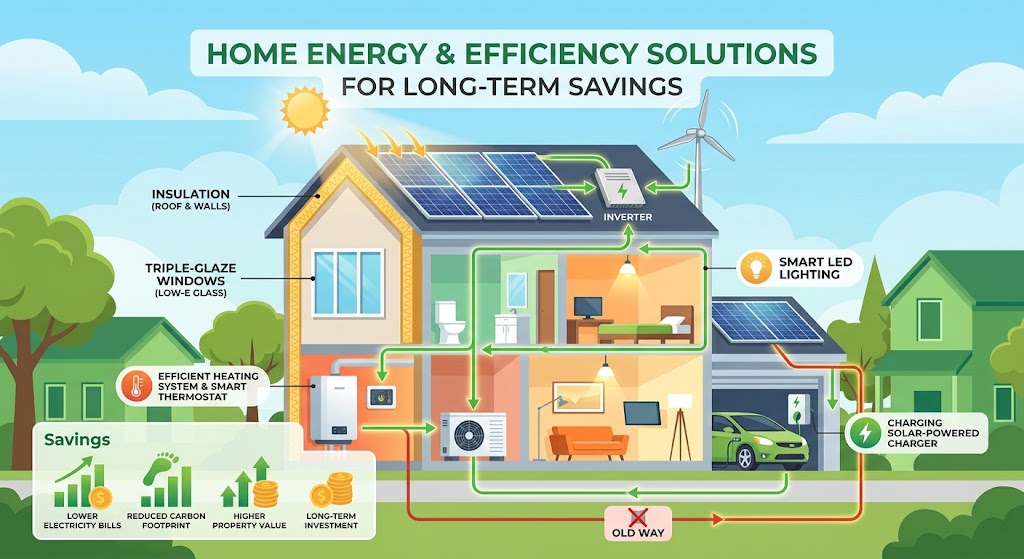
Improving home energy efficiency is one of the most effective ways to reduce utility bills, enhance indoor comfort, and support a more sustainable lifestyle. From upgrading insulation to investing in heat pump installation, homeowners can make practical improvements that deliver long-term value. Companies such as Baker Home Energy provide integrated solutions, including solar panel and battery installation, HVAC systems, roofing, water filtration, and electrical services. By bringing these services together, they help homeowners and businesses improve energy efficiency, maintain comfortable indoor environments, and achieve lasting savings through reliable energy solutions.
Why Home Energy Efficiency Matters
Energy efficiency involves using less electricity and fuel to maintain a comfortable, functional property. Inefficient heating and cooling systems, outdated electrical equipment, poor insulation, and aging roofing can all contribute to unnecessary energy consumption.
Making targeted improvements can help property owners lower monthly expenses while reducing the strain on heating, cooling, and electrical systems. Energy-efficient upgrades can also improve indoor air quality, increase property value, and make homes more resilient to changing energy costs.
The Benefits of Modern HVAC Systems
Heating, ventilation, and air conditioning systems play a significant role in residential energy consumption. Older systems may require more electricity to maintain comfortable temperatures, particularly during periods of extreme heat or cold.
Professional heat pump installation offers an energy-efficient alternative for many properties. Heat pumps transfer heat rather than generating it directly, allowing them to provide both heating and cooling. Depending on the climate, equipment selection, and installation quality, they can significantly reduce energy use compared with conventional heating systems.
Routine maintenance is equally important. Cleaning filters, inspecting components, checking refrigerant levels, and maintaining proper airflow can help HVAC systems operate efficiently. Choosing appropriately sized equipment and using a programmable or smart thermostat can further improve performance.
Solar Panels and Battery Storage
Solar energy is another valuable component of an efficient home energy strategy. Solar panels convert sunlight into electricity, helping households and businesses reduce their dependence on grid power and potentially lower electricity bills.
Battery storage can make a solar installation more versatile by storing surplus electricity for later use. Depending on the system configuration and local utility policies, stored energy may help supply power during peak-rate periods or outages.
Before installing solar panels, property owners should evaluate roof condition, available sunlight, electricity consumption, and installation costs. A properly designed system can help maximize energy production and improve the long-term return on investment.
Maintaining Solar System Performance
Solar panels require relatively little maintenance, but regular inspections can help identify issues that affect energy production. Dust, debris, damaged wiring, inverter faults, and equipment deterioration may reduce system performance over time.
Professional Solar Service and Repair can help diagnose electrical problems, inspect system components, restore performance, and address damaged equipment. Monitoring energy production also allows property owners to identify unexpected drops in output and arrange inspections when necessary.
Working with experienced technicians helps ensure that repairs are completed safely and that the solar system continues operating as intended.
Roofing and Electrical Improvements
Roofing and electrical systems are important parts of an overall energy efficiency plan. A damaged roof can contribute to moisture problems, air leakage, and insulation issues, while inadequate attic insulation can increase heating and cooling demands.
Repairing roof damage, sealing air leaks, and improving insulation can help maintain stable indoor temperatures. When installing solar panels, assessing the roof’s condition beforehand can also prevent the need for costly removal and reinstallation later.
Electrical inspections provide additional benefits by identifying outdated wiring, overloaded circuits, and other potential hazards. Properly installed electrical equipment supports reliable operation of HVAC systems, solar installations, battery storage, and modern appliances.
Water Filtration and Everyday Efficiency
Water quality is another consideration for comfortable and functional homes. Water filtration systems can help address specific water quality concerns by reducing targeted contaminants, depending on the filtration technology and the source water.
Although water filtration does not automatically reduce household energy consumption, it can complement other home improvement projects by supporting cleaner water and more convenient daily routines. Selecting an appropriate system requires understanding local water conditions, maintenance requirements, and the contaminants that need to be addressed.
Combining water filtration with efficient plumbing fixtures, leak repairs, and properly maintained water heaters can contribute to a more practical and resource-conscious household.
Practical Ways to Improve Home Energy Efficiency
Property owners can take several steps to reduce energy waste without immediately investing in major upgrades.
- Seal air leaks: Inspect doors, windows, and other openings to prevent unwanted heat transfer.
- Maintain HVAC equipment: Replace filters regularly and schedule professional servicing.
- Consider solar energy: Evaluate whether solar panels and battery storage suit your electricity usage and budget.
- Upgrade lighting: Replace older bulbs with energy-efficient LED lighting.
- Improve insulation: Insulate attics, walls, and other areas where heat loss or heat gain is significant.
- Monitor electricity usage: Use utility bills or energy monitoring tools to identify unusually high consumption.
- Schedule electrical inspections: Address safety concerns and ensure equipment is suitable for household demands.
Small improvements can deliver meaningful benefits, especially when combined with larger upgrades selected according to the property’s needs.
Choosing an Integrated Home Energy Provider
Managing multiple contractors for solar panels, HVAC systems, roofing, and electrical work can make home improvement projects more complicated. An integrated provider can help property owners coordinate these services and develop a more consistent approach to energy management.
Baker Home Energy is an example of a company offering multiple home energy services under one roof. Its range of solutions allows homeowners and businesses to consider solar power, battery storage, heating and cooling, roofing, water filtration, and electrical improvements as connected parts of their property maintenance strategy.
When comparing providers, consider their relevant experience, licensing, warranties, equipment options, maintenance support, and project estimates. It is also helpful to ask how proposed upgrades will work together and what energy savings can reasonably be expected.
Conclusion
Home energy and efficiency solutions can help property owners reduce unnecessary energy consumption, improve indoor comfort, and manage long-term operating costs. From heat pump installation and solar battery storage to roofing improvements, electrical upgrades, and Solar Service and Repair, each investment can address a different aspect of property performance.
The most effective approach begins with understanding a building’s current energy use and prioritizing improvements that offer practical benefits. By combining regular maintenance with carefully selected upgrades and reliable professional support, homeowners and businesses can build more efficient, comfortable, and cost-effective properties for years to come.