
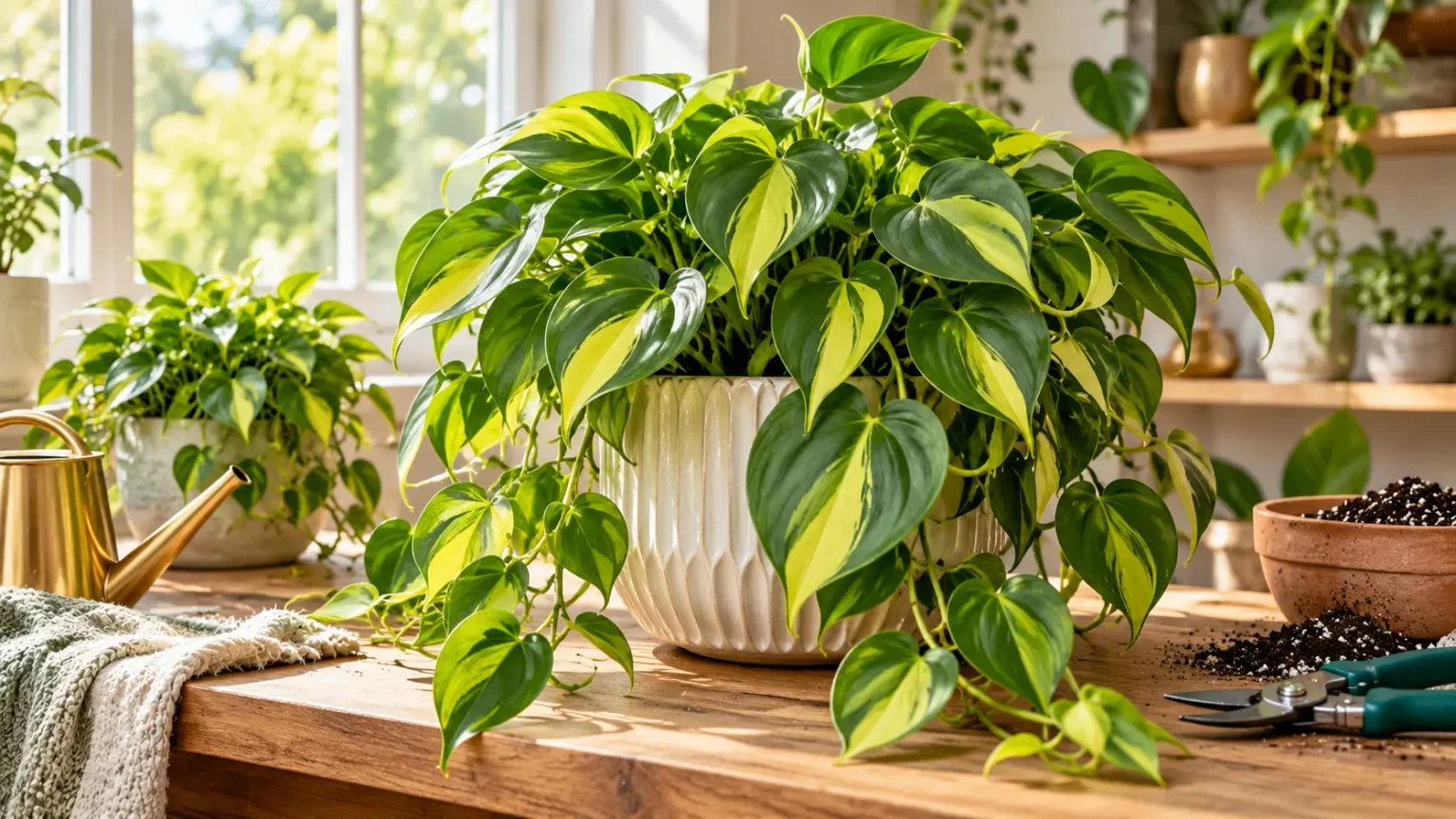
Philodendron Brasil is a beautiful tropical houseplant known for its heart-shaped leaves, vibrant green colors, and attractive yellow-green variegation. Its trailing vines and easy-growing nature make it a popular choice for indoor gardens, hanging baskets, and decorative shelves. Whether you are a beginner or an experienced plant enthusiast, this colorful variety can bring a refreshing tropical appearance to your living space.
Growing a healthy Philodendron Brasil requires understanding its basic needs, including proper watering, indirect sunlight, suitable soil, and occasional pruning. With the right care routine, this plant can develop lush foliage and long, attractive vines. This guide explains everything you need to know about Philodendron Brasil care, propagation, growing conditions, common problems, and related varieties.
What Is Philodendron Brasil?
Philodendron Brasil, scientifically known as Philodendron hederaceum ‘Brasil’, is a colorful cultivar of the heartleaf philodendron. It belongs to the Araceae family and is appreciated for its glossy, heart-shaped foliage. Each leaf displays a unique combination of deep green, lime green, and yellowish-green shades, creating an attractive appearance that complements different indoor decorating styles.
The plant originates from the tropical heartleaf philodendron species native to parts of Central America and South America. Its naturally climbing growth habit allows it to trail from hanging containers or climb suitable supports. Unlike many demanding tropical plants, Philodendron Brasil adapts well to ordinary indoor environments when its basic growing requirements are consistently maintained.
One distinguishing feature is the irregular variegation that appears across its leaves. Some leaves develop broad light-green stripes, while others show smaller patches of contrasting colors. This natural variation makes every vine visually interesting, and healthy mature plants can produce impressive trailing foliage that enhances shelves, plant stands, and indoor garden displays.
Best Light Conditions for Philodendron Brasil
Philodendron Brasil grows best in bright, indirect sunlight, which helps maintain healthy leaves and attractive variegation. Positioning the plant near an east-facing window often provides gentle morning light without excessive exposure. A location near a brighter window can also work when sheer curtains protect the foliage from intense afternoon sunlight throughout the day.
Although this houseplant tolerates lower light conditions, insufficient sunlight can affect its appearance and growth. Leaves may become smaller, stems can stretch toward available light, and colorful patterns may become less noticeable. Providing consistent filtered daylight supports balanced development and encourages the plant to maintain its characteristic green and yellow foliage.
Direct sunlight, particularly during hot afternoons, can damage delicate leaves and cause faded patches or brown areas. If the plant receives harsh sunlight, move it farther from the window or provide additional shade. Rotating the container occasionally also encourages more even growth by allowing different sides of the plant to receive available light.
How Often Should You Water Philodendron Brasil?
Proper watering is one of the most important parts of maintaining a healthy Philodendron Brasil. Water the plant when the upper inch or two of potting soil feels dry, rather than following a fixed daily schedule. Checking moisture with your finger helps determine when the roots need water and prevents unnecessary watering that can damage the plant.
During warmer months, the soil may dry faster because of increased temperatures, brighter light, and active plant growth. In cooler seasons, watering usually becomes less frequent as the plant uses moisture more slowly. Always consider the container size, soil composition, and surrounding environment before deciding whether additional moisture is necessary for healthy root development.
When watering, apply enough water to moisten the soil thoroughly until excess liquid escapes through the drainage holes. Allow the container to drain completely before returning it to a decorative outer pot or saucer. Leaving roots in standing water increases the risk of root rot, yellow leaves, and weakened growth over time.
Best Soil and Potting Mix for Healthy Growth
Philodendron Brasil prefers loose, nutrient-containing soil that holds some moisture while allowing excess water to drain easily. A quality indoor potting mix amended with perlite and orchid bark can provide an excellent growing environment. These ingredients improve aeration around the roots and reduce the likelihood of compacted soil restricting healthy plant development.
A practical potting mixture can include two parts indoor potting soil, one part perlite, and one part orchid bark. This combination supports moisture retention without keeping the roots constantly wet. Different commercial aroid mixes can also work well, provided they contain enough coarse material to maintain airflow and prevent poor drainage.
Choosing the right container is equally important for long-term plant health and successful indoor cultivation. Select a pot with drainage holes that allow surplus water to escape after every thorough watering. Decorative pots without drainage should hold a separate nursery container, making it easier to remove the plant and empty accumulated water.
Ideal Temperature and Humidity Requirements
Philodendron Brasil thrives in comfortable indoor temperatures that resemble the warmth of tropical environments. A temperature range of approximately 65–85°F, or 18–29°C, generally supports healthy foliage and consistent growth. Protecting the plant from cold windows, sudden temperature changes, and strong air-conditioning drafts helps prevent unnecessary stress and damage to delicate leaves.
Although this tropical houseplant appreciates humid air, it usually adapts successfully to moderate household humidity. Humidity levels around 40–60 percent can provide comfortable growing conditions for many indoor plants. Extremely dry air may contribute to crispy leaf edges, especially when the plant also experiences inconsistent watering or excessive exposure to warm heating systems.
If your home has very dry air, consider using a room humidifier or grouping compatible houseplants together. These approaches can increase local moisture without leaving the foliage constantly wet. Maintaining reasonable airflow around the leaves is also important, particularly in humid rooms where stagnant conditions can encourage unwanted fungal problems.
How to Fertilize Philodendron Brasil
Philodendron Brasil benefits from occasional feeding during periods of active growth, particularly in spring and summer. A balanced liquid houseplant fertilizer diluted according to the manufacturer’s recommendations can supply nutrients that support healthy leaves and vine development. Fertilizer should supplement suitable light, moisture, and soil conditions rather than replace these essential growing requirements.
For many indoor plants, feeding approximately once every four to six weeks during active growth is sufficient. Plants growing slowly or in low-light environments may require less frequent applications because their nutrient needs are lower. Applying fertilizer to already moist soil can also help reduce the risk of concentrated fertilizer affecting sensitive roots.
Overfertilization can cause brown leaf tips, weakened roots, and an accumulation of mineral salts in the potting mixture. If you notice these symptoms, stop feeding temporarily and review your fertilizing routine. During winter, when growth often slows, reducing or pausing fertilizer applications allows the plant to rest without receiving unnecessary nutrients.
Pruning Philodendron Brasil for Fuller Growth
Regular pruning helps maintain an attractive shape and encourages Philodendron Brasil to develop a fuller appearance. Long vines can become uneven over time, particularly when they receive light from only one direction. Trimming excessively long stems allows you to manage the plant’s size while encouraging branching from suitable growing points along the remaining vines.
Use clean, sharp pruning scissors to make cuts just above a leaf node on the main plant. A node is the small section of stem where leaves and roots can develop. Cutting above this area may encourage new growth from a nearby bud, although the exact response depends on plant health and growing conditions.
You can also improve the appearance of a sparse plant by propagating healthy stem cuttings and planting them back into the original container. This method gradually creates additional stems near the soil surface. Combining occasional pruning with appropriate lighting, balanced watering, and sufficient nutrients helps maintain compact growth and attractive trailing foliage.
How to Propagate Philodendron Brasil Successfully
Philodendron Brasil propagation is relatively simple because healthy stem cuttings can develop roots from their nodes. Select a strong vine with several healthy leaves and identify a section containing at least one node. Using clean scissors, cut below the node and remove any lower leaf that would otherwise remain submerged or buried during propagation.
For water propagation, place the cutting in a clean container with the node submerged and the leaves above the waterline. Keep the container in bright, indirect light and replace the water regularly to maintain cleanliness. Roots often begin developing within a few weeks, although the actual timing depends on temperature, light, and cutting health.
Alternatively, place the stem cutting directly into lightly moist, well-draining potting mix with its node beneath the soil surface. Maintain gentle moisture while roots establish, but avoid keeping the mixture waterlogged. Once cuttings develop healthy roots and begin producing new leaves, they can continue growing in individual pots or alongside the parent plant.
Repotting Philodendron Brasil and Supporting Vines
Repotting becomes necessary when Philodendron Brasil outgrows its container or the existing soil loses its structure. Common signs include roots emerging through drainage holes, unusually rapid drying, and restricted growth despite suitable conditions. Spring or early summer is often a convenient time to repot because the plant is entering a period of stronger growth.
Choose a new container only slightly larger than the previous one, usually about one to two inches wider. An excessively large pot can retain more moisture than the root system can use, increasing the risk of overwatering. Gently loosen crowded roots, remove severely damaged sections when necessary, and refill the container with fresh, airy potting mix.
Philodendron Brasil can grow as a trailing plant or climb when given appropriate support. Hanging baskets allow long vines to fall naturally, creating a decorative cascading effect. A moss pole or suitable trellis can encourage upward growth, while proper attachment and gentle maintenance help the stems remain supported as the plant becomes larger.
Philodendron Brasil Varieties and Similar Cultivars
Philodendron Brasil is itself a cultivar of the heartleaf philodendron rather than a separate botanical species. Its distinctive green and yellow-green markings make it recognizable among other climbing philodendrons. Individual plants can display different variegation patterns, but these differences do not automatically mean that each leaf pattern represents a separate recognized variety.
Several related cultivars share a similar growth habit while displaying different foliage patterns and colors. Philodendron ‘Rio’ is appreciated for its silvery or pale central markings, while ‘Cream Splash’ features creamy variegation mixed with green. ‘Silver Stripe’ is another related selection known for distinctive pale striping across its attractive heart-shaped leaves.
The standard green heartleaf philodendron is another popular choice for indoor growing, particularly in spaces with moderate lighting. Unlike the colorful Brasil cultivar, its leaves are usually solid green without pronounced decorative striping. Although these plants share broadly similar care requirements, their individual growth rates and variegation can differ according to genetics and environmental conditions.
How to Maintain Philodendron Brasil Variegation
Maintaining attractive variegation requires consistent lighting and overall healthy growing conditions. Philodendron Brasil develops its colorful patterns because different sections of the leaves contain varying amounts of chlorophyll. Bright, indirect light generally supports healthy growth and helps the foliage display its characteristic contrast without exposing delicate leaves to damaging direct sunlight.
Some vines may gradually produce leaves with more solid green coloring, a change commonly described as reversion. This can occur because of natural growth variation and is not always caused by incorrect care. If an entire stem consistently produces green leaves, pruning it back to a previously variegated section may help encourage more colorful growth.
Not every new leaf will display the same pattern, and occasional differences are normal for this cultivar. Some foliage may appear particularly bright when young before the colors settle with maturity. Instead of expecting perfectly identical leaves, focus on providing stable growing conditions that allow the plant to produce healthy foliage over time.
Common Philodendron Brasil Problems and Solutions
Yellow leaves are among the most frequently reported Philodendron Brasil problems and can develop for several reasons. Excessive watering, poorly draining soil, insufficient light, and natural leaf aging are all possible causes. Inspect soil moisture and growing conditions before adjusting your routine, since removing a yellow leaf alone does not address an underlying problem.
Brown leaf tips may result from dry air, inconsistent watering, fertilizer buildup, or excessive sunlight. Soft stems, persistent wet soil, and an unpleasant smell from the potting mix can suggest root damage or rot. When these symptoms occur, inspect the roots carefully, remove damaged tissue with clean tools, and repot into suitable fresh soil if needed.
Common indoor pests include spider mites, mealybugs, scale insects, and thrips, which can affect foliage and weaken plant growth. Check the undersides of leaves and stem joints regularly for insects, webbing, or unusual discoloration. Isolate affected plants and use an appropriate houseplant pest treatment according to its label, repeating applications only as directed.
Keeping Philodendron Brasil Healthy Throughout the Year
Seasonal changes influence how quickly Philodendron Brasil grows and how much water it requires. During spring and summer, longer daylight hours and warmer temperatures often encourage new leaves and extended vines. This is generally a suitable time for propagation, repotting, and moderate fertilization because the plant can recover more readily during active growth.
Autumn and winter may bring slower growth, particularly in homes with shorter days and reduced natural sunlight. Adjust watering according to actual soil moisture rather than continuing the same summer routine. Keep the plant away from cold drafts and heating vents, and avoid major changes in growing conditions unless problems make adjustments necessary.
Regular observation is one of the simplest ways to keep this tropical houseplant looking attractive. Check new leaves, soil moisture, root growth, and possible pest activity as part of ordinary plant maintenance. Also remember that philodendrons contain irritating calcium oxalate crystals and should remain out of reach of pets and young children.
Conclusion
Philodendron Brasil is an excellent choice for plant enthusiasts who appreciate colorful foliage and manageable indoor growing requirements. Its heart-shaped leaves, trailing vines, and distinctive variegation create an attractive addition to many living spaces. Providing bright, indirect light, suitable soil, and careful watering gives this tropical houseplant a strong foundation for healthy growth.
Consistent maintenance also plays an important role in keeping the plant attractive throughout the year. Occasional pruning, seasonal feeding, and appropriate repotting support balanced development and prevent common growing problems. Understanding changes in leaf color, moisture requirements, and environmental conditions allows you to adjust your care routine before minor issues become more serious.
Whether you display Philodendron Brasil in a hanging basket, on a bookshelf, or climbing a support, it can become a beautiful part of your indoor garden. With patience and regular observation, even beginners can successfully grow this colorful houseplant. Following these practical care tips will help you enjoy its distinctive foliage and graceful vines for years to come.
Frequently Asked Questions (FAQs)
Is Philodendron Brasil easy to care for?
Yes, Philodendron Brasil is considered a beginner-friendly houseplant. It adapts to typical indoor temperatures and moderate humidity, provided it receives suitable indirect light, well-draining soil, and watering based on soil moisture.
How fast does Philodendron Brasil grow?
Philodendron Brasil can grow relatively quickly under favorable conditions, especially during spring and summer. Its growth rate depends on available light, temperature, nutrients, watering practices, and the overall health of the plant.
Can Philodendron Brasil grow in water permanently?
Yes, Philodendron Brasil can grow in water for extended periods when its roots receive appropriate nutrients and regular care. However, long-term water cultivation requires suitable fertilization, clean water, and attention to root health.
Why is my Philodendron Brasil turning green?
Some Philodendron Brasil vines naturally produce greener leaves through reversion or changes in variegation. Low light can also affect growth and appearance, so provide bright, indirect light and monitor new foliage.
Is Philodendron Brasil toxic to cats and dogs?
Yes, Philodendron Brasil is toxic to cats and dogs if chewed or swallowed because it contains insoluble calcium oxalate crystals. Keep it out of reach and contact a veterinarian if a pet ingests any part.