
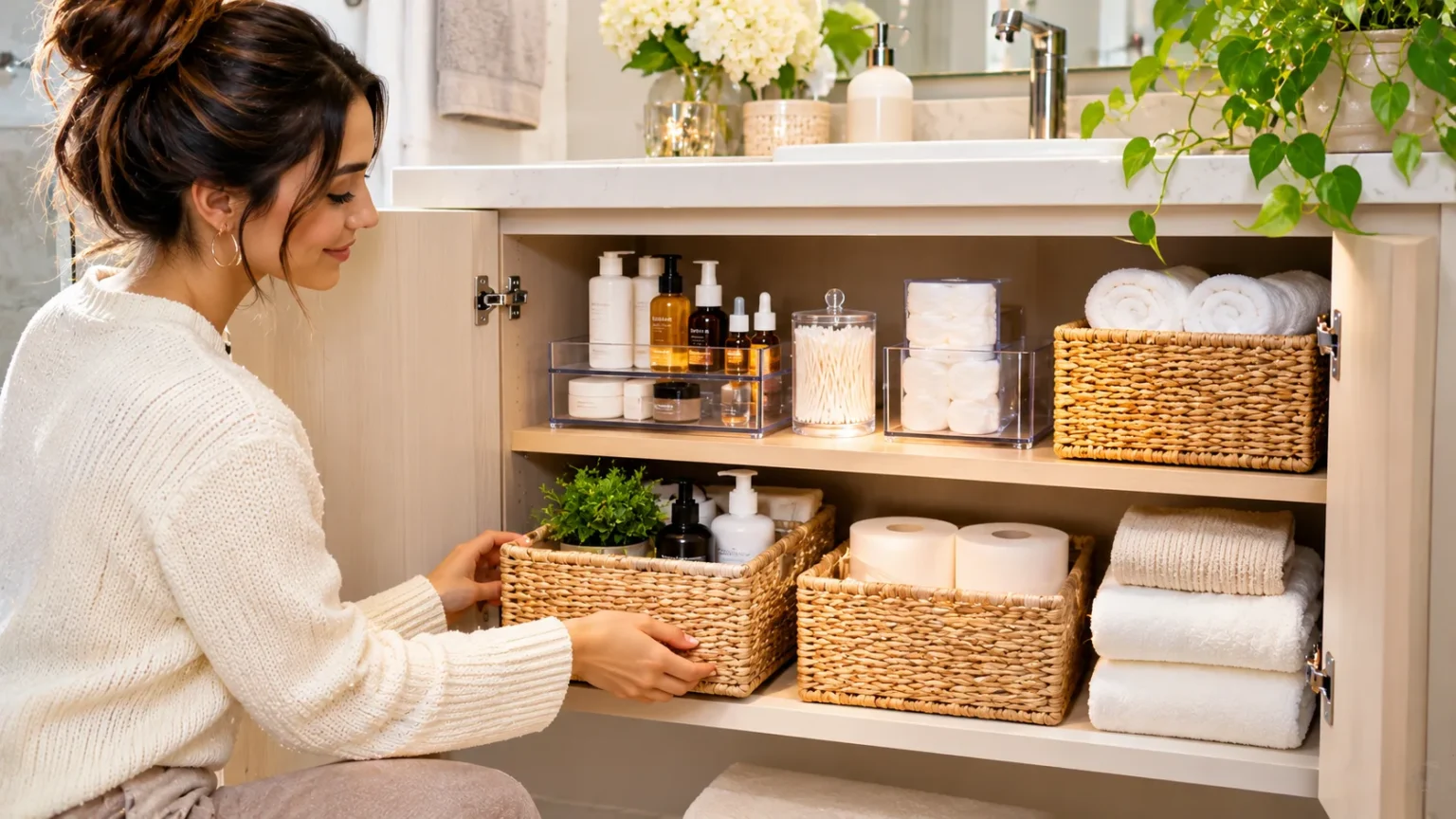
A messy bathroom cabinet can make even the simplest morning routine frustrating. When toiletries, skincare products, cleaning supplies, and extra towels are mixed together, finding what you need becomes difficult. Limited storage space makes the problem worse, especially in smaller bathrooms where every shelf matters. Without a practical organization system, clutter quickly returns after cleaning.
Learning how to organize a bathroom cabinet can help you create a cleaner, more functional space without expensive renovations. Simple changes such as using storage bins, adjusting shelves, and grouping similar products can make a noticeable difference. Whether you have a small vanity cabinet or a large bathroom cupboard, these practical organization tips will help you use your available space more effectively.
Why Bathroom Cabinet Organization Matters
An organized bathroom cabinet makes everyday routines easier by keeping essential products accessible. When each item has a designated place, you spend less time searching for toiletries or cleaning supplies. Organized storage also makes it easier to notice when products are running low. This simple improvement can reduce unnecessary frustration during busy mornings.
Bathroom cabinets often contain products with different storage requirements, including skincare items, medicines, towels, and cleaning supplies. Keeping everything together without a clear system may create clutter and increase the risk of spills. Proper organization helps separate incompatible items and protects products from unnecessary moisture exposure. It also makes routine cabinet cleaning more manageable.
A well-arranged cabinet does not need to look like a showroom to be useful. The goal is creating a practical setup that matches your household’s needs and available space. Clear categories, accessible shelves, and suitable containers can make a small cabinet feel more efficient. Consistent maintenance helps preserve these improvements over time.
Empty Your Bathroom Cabinet Before Organizing
The first step in organizing a bathroom cabinet is removing everything from its shelves and drawers. This allows you to see the entire storage space and understand how much room is available. Place the contents on a clean, dry surface where you can inspect them. Emptying the cabinet also reveals forgotten products hidden behind larger items.
As you remove products, separate them into broad categories such as toiletries, skincare, haircare, and cleaning supplies. Keep towels and other fabric items in their own group. This initial sorting makes it easier to identify duplicates and determine which categories need more space. Avoid immediately returning products to their original positions.
Once the cabinet is empty, examine the shelves, hinges, and interior surfaces. Look for leaks, damaged materials, or areas where moisture has accumulated. These issues should be addressed before adding storage organizers. Starting with a completely empty space makes planning easier and helps you create a more functional arrangement.
Declutter Unused and Expired Bathroom Products
Decluttering is an important part of bathroom cabinet organization because unnecessary products occupy valuable storage space. Check skincare, cosmetics, and personal care items for expiration dates or signs of deterioration. Products that have changed significantly in smell, texture, or appearance may no longer be suitable. Follow the manufacturer’s guidance when deciding whether to keep them.
Separate frequently used essentials from products that have remained untouched for a long time. Consider whether each item still serves a practical purpose in your routine. Avoid keeping multiple opened products simply because they were inexpensive or might be useful someday. Reducing unnecessary duplicates creates more space for items you regularly need.
Dispose of unwanted products according to their packaging instructions and local disposal requirements. Medicines may require pharmacy take-back services or other approved disposal methods rather than being thrown into ordinary household waste. Do not combine leftover chemicals or pour them together. Responsible decluttering creates a safer, cleaner storage environment.
Clean and Dry Your Bathroom Cabinet Thoroughly
Cleaning the cabinet before reorganizing helps remove dust, spills, and accumulated residue. Use a cleaning method appropriate for the cabinet’s material, whether it is painted wood, laminate, metal, or plastic. Wipe shelves, corners, and interior walls carefully. Avoid soaking surfaces that may become damaged by excessive moisture.
Pay particular attention to areas beneath sinks because plumbing connections can sometimes develop leaks. Look for water stains, damp patches, or swelling around cabinet panels. Persistent moisture should be addressed before installing new organizers. Placing storage containers over an unresolved leak may hide damage rather than solve the underlying problem.
Allow every surface to dry completely before returning products to the cabinet. Moisture trapped beneath containers can contribute to unpleasant odors or material deterioration. Once dry, consider using a removable, water-resistant shelf liner if suitable for the cabinet. A clean foundation makes future maintenance easier and helps protect your storage space.
Measure Cabinet Space Before Buying Organizers
One common bathroom organization mistake is purchasing storage products before measuring the available space. A container may look perfect online but fail to fit inside a narrow cabinet. Measure the interior width, depth, and height before shopping. Remember to account for shelves, hinges, pipes, and other obstacles.
Bathroom vanity cabinets often have irregular spaces because plumbing takes up part of the interior. These areas may require narrow baskets or organizers designed to fit around pipes. Measure the usable space rather than the cabinet’s overall exterior dimensions. This approach helps prevent wasted purchases and makes installation easier.
Consider the height of your tallest bottles and cleaning products when planning shelf arrangements. Some items need more vertical clearance than standard storage baskets provide. Leave enough room to remove containers comfortably without tipping nearby products. Accurate measurements help you select storage solutions that are practical for everyday use.
Group Similar Bathroom Essentials Together
Grouping similar items is one of the simplest ways to organize bathroom cabinets efficiently. Keep skincare products together, place haircare supplies in another section, and create separate spaces for oral care essentials. This system makes products easier to locate. It also prevents unrelated items from becoming mixed together.
You can organize items further according to how frequently they are used. Daily essentials should remain within easy reach, while occasional supplies can occupy less accessible shelves. Backup toiletries may be stored behind frequently used products or in dedicated containers. This arrangement reduces unnecessary searching during everyday routines.
Choose categories that reflect your household’s habits rather than following a complicated organizational system. For example, a shared bathroom may benefit from separate containers for different family members. Another household might prefer categories based on product function. The most effective arrangement is one that everyone can understand and maintain.
Use Clear Storage Bins for Better Visibility
Clear storage bins are useful because they allow you to identify products without removing every container. They can hold skincare bottles, toothpaste, hair accessories, and other small bathroom essentials. Transparent organizers also help prevent forgotten items from accumulating at the back. This makes them practical for both large and small cabinets.
Choose bins that fit comfortably on your shelves and allow easy access to their contents. Rectangular containers often use cabinet space more efficiently than oversized decorative baskets. Handles can make deeper storage areas easier to manage. Avoid filling containers so tightly that products become difficult to remove.
Clear bins work particularly well when combined with simple product categories. Keep daily skincare in one container and spare toiletries in another. If several containers look similar, small labels can make identification easier. This approach creates an organized cabinet without requiring expensive custom storage furniture.
Add Stackable Organizers to Save Space
Stackable storage organizers can help you use vertical cabinet space that would otherwise remain empty. They are especially useful for smaller toiletries, soap bars, and lightweight personal care items. Creating multiple storage levels reduces the need to place everything in one crowded row. However, the organizers must remain stable when stacked.
Choose stackable containers with secure connections or designs intended for vertical use. Avoid placing heavy glass bottles on unstable upper levels. Frequently used items should remain easy to access without moving several containers. The purpose is improving convenience rather than creating a difficult storage arrangement.
Stacking works best when containers hold similar products and have sufficient clearance. You might store extra toothpaste on one level and backup skincare products on another. Check that cabinet doors can close without pressing against the organizers. Properly selected stackable storage can increase capacity while keeping items visible.
Install Adjustable Shelves for Flexible Storage
Adjustable shelves provide flexibility when bathroom products vary in height and size. Tall shampoo bottles may require more space than small skincare containers or folded washcloths. Being able to move shelf positions helps reduce wasted vertical space. This can make a basic bathroom cabinet more functional without major changes.
Before changing shelf heights, check the cabinet’s construction and the manufacturer’s recommendations. Some cabinets include adjustable shelf supports, while others have fixed shelving. Use suitable hardware and avoid overloading shelves beyond their intended capacity. Stable support is especially important when storing heavier products.
Arrange frequently used products at comfortable reaching heights and place occasional supplies on higher or lower shelves. Keep enough clearance for removing bottles without knocking over nearby items. Adjustable shelving also makes it easier to reorganize when your storage needs change. This flexibility helps the cabinet remain useful over time.
Organize the Space Under the Bathroom Sink
The area beneath a bathroom sink can be challenging because plumbing pipes divide the available storage space. However, careful planning can make this section useful for selected supplies. Narrow bins, sliding baskets, and low-profile organizers may fit around the plumbing. Choose products that allow easy access to shutoff valves and connections.
Start by identifying which items are suitable for this location. Extra toilet paper, certain cleaning tools, and sealed household supplies may fit well when the area remains dry. Avoid storing moisture-sensitive products where leaks could damage them. Medicines are generally better kept in a cool, dry location outside the humid bathroom.
If you use sliding organizers, check that their movement does not interfere with pipes or cabinet doors. Removable containers can make cleaning and leak inspections easier. Keep household chemicals securely closed and inaccessible to children and pets. A practical under-sink arrangement should improve storage without compromising safety or plumbing access.
Use Drawer Dividers for Small Bathroom Items
Bathroom drawers often collect small items such as hair ties, clips, cotton pads, and grooming accessories. Without dividers, these products can become mixed together and difficult to find. Drawer organizers create separate compartments for different categories. They also help prevent small objects from sliding around whenever the drawer opens.
Measure the drawer’s interior dimensions before choosing dividers. Adjustable designs may work well when you have items of different sizes. Small removable trays are another useful option for organizing compact accessories. Avoid purchasing organizers that consume too much space through thick walls or unnecessary decorative features.
Place frequently used products near the front of the drawer for convenient access. Store occasional accessories toward the back while keeping related items grouped together. Clean the compartments occasionally to remove dust and loose debris. A simple drawer system can make everyday bathroom routines noticeably easier.
Keep Skincare and Makeup Products Organized
Skincare and makeup products are easier to manage when arranged according to their use and storage requirements. Group cleansers, moisturizers, and other daily essentials together. Keep occasional treatments and backup products in separate containers. This reduces clutter and makes it easier to follow your normal routine.
Some skincare formulas are sensitive to heat, light, or excessive humidity. Check product labels before deciding where to store them. A bathroom cabinet may not be suitable for every formula, especially when temperatures and moisture levels fluctuate significantly. Follow manufacturer recommendations to help maintain product quality.
For makeup, use small trays or compartment organizers to separate different product types. Brushes should be stored clean and allowed to dry thoroughly after washing. Avoid overcrowding containers with items you rarely use. Organizing by function helps maintain a practical collection without unnecessary accessories.
Store Haircare Products and Styling Tools Safely
Haircare products can take up considerable cabinet space because many come in tall bottles or bulky containers. Group shampoos, conditioners, treatments, and styling products according to frequency of use. Store backup bottles separately from everyday essentials. This keeps the main storage area easier to navigate.
Hairdryers, straighteners, and curling tools require special attention because they may retain heat after use. Allow heated appliances to cool completely before placing them in enclosed storage. Follow the manufacturer’s instructions for safe handling and storage. Never store hot appliances against towels, paper, or other materials that could be damaged by heat.
Use a suitable basket or designated compartment for cords and accessories. Avoid tightly wrapping electrical cords around appliances if the manufacturer advises against it. Keep electrical items away from leaks and standing water. Safe storage helps protect equipment while reducing clutter inside the bathroom cabinet.
Organize Towels and Extra Bathroom Supplies
Extra towels and washcloths can occupy significant space in a bathroom cupboard. Folding them consistently makes shelves easier to use and creates a more predictable arrangement. Group similar items together, such as hand towels, face cloths, and bath towels. This helps family members find what they need without disturbing other supplies.
Store clean towels only when they are completely dry. Damp fabrics placed inside enclosed cabinets may develop unpleasant odors and encourage mildew. If your bathroom has poor ventilation, consider keeping larger towel supplies in a dry linen closet. The storage location should protect fabrics from unnecessary moisture.
Backup toilet paper, tissue boxes, and other paper products also need dry storage. Use suitable bins or shelves to keep them away from plumbing leaks. Avoid storing excessive quantities in a small cabinet if they prevent access to everyday essentials. Practical organization balances available space with household needs.
Use Cabinet Door Space for Extra Storage
The inside of bathroom cabinet doors can provide additional storage when shelves are already crowded. Small door-mounted organizers may hold lightweight products such as brushes, hair accessories, and selected toiletries. This approach uses space that might otherwise remain empty. It can be particularly helpful in compact bathroom cabinets.
Choose organizers designed for the cabinet material and suitable for the weight of their contents. Adhesive hooks may work for very light accessories, while other organizers require appropriate hardware. Make sure installation does not damage the cabinet or interfere with hinges. Stability matters more than maximizing the number of items attached.
Check that the cabinet door closes freely after adding storage. Deep baskets or bulky containers may collide with shelves inside. Keep heavier items on stable shelves rather than hanging them from weak attachments. When planned carefully, door storage can improve accessibility without overcrowding the cabinet interior.
Label Bathroom Storage Containers Clearly
Labels can make bathroom organization easier, particularly in shared households. They help everyone understand where products belong and where to return them after use. Simple categories such as skincare, haircare, and extra toiletries are often enough. Clear labels reduce confusion without creating a complicated storage system.
Choose labels that remain readable in a humid environment and can be removed when categories change. Waterproof or moisture-resistant options may last longer than ordinary paper labels. Keep wording short so containers can be identified quickly. Avoid unnecessary decorative details that make the labels harder to read.
Labels are most useful when paired with sensible product grouping. A container marked for hair accessories should hold items that naturally belong together. Review categories when household routines change or new products are introduced. A flexible labeling system helps maintain order without requiring constant rearrangement.
Store Cleaning Supplies Separately and Safely
Bathroom cleaning products should have a designated storage area separate from personal care items. Keeping them apart helps prevent confusion, spills, and accidental contact. Whenever possible, use a secure storage location inaccessible to children and pets. Follow product labels for storage conditions and safety precautions.
Keep cleaning chemicals in their original labeled containers with lids tightly closed. Never transfer them into drink bottles or other containers that could be mistaken for food or beverages. Do not mix different cleaning products because some combinations can release dangerous fumes. Store incompatible chemicals separately according to their instructions.
If cleaning supplies are kept beneath the sink, make sure the cabinet is secure and remains dry. Inspect bottles periodically for leaks or damage. Avoid overcrowding the area with unnecessary chemicals. A dedicated, properly maintained storage section supports both organization and household safety.
Bathroom Cabinet Organization Ideas for Small Spaces
Small bathrooms require storage solutions that make efficient use of limited space. Narrow bins, adjustable shelves, and compact drawer organizers can improve functionality without expanding the cabinet. Prioritize products that you use regularly. Keeping unnecessary items elsewhere helps prevent the storage area from becoming overcrowded.
Vertical space is especially valuable when cabinet width is limited. Small shelf risers may create another level for lightweight items. Door-mounted organizers can also provide additional compartments when suitable. However, every storage addition should allow cabinet doors and drawers to operate normally.
Consider keeping bulk supplies outside the bathroom if another suitable storage area is available. Extra towels, large refill bottles, and occasional toiletries may not require immediate access. This allows the main cabinet to hold everyday essentials. A small space can function well when every item has a practical storage location.
Create an Easy Daily Bathroom Organization Routine
Maintaining an organized cabinet is easier when you develop a few simple habits. Return products to their designated containers after each use. Wipe up spills promptly and avoid leaving loose items on shelves. These small actions prevent clutter from accumulating between deeper cleaning sessions.
Set aside a few minutes each week to review frequently used storage areas. Check whether products are running low and move misplaced items back into their categories. Remove empty packaging and clean minor spills before they become difficult to manage. Regular attention reduces the need for major reorganizing projects.
Review the entire cabinet occasionally to identify products that are no longer useful. Storage needs may change as household routines and product preferences evolve. Adjust containers or categories when necessary rather than forcing everything into an outdated arrangement. A flexible routine helps keep the bathroom organized over time.
Common Bathroom Cabinet Organization Mistakes
One common mistake is purchasing too many organizers before understanding the available space. Multiple baskets and trays may reduce usable storage instead of increasing it. Start by measuring the cabinet and sorting existing products. Buy only the containers that solve a clear organization problem.
Another mistake is storing every bathroom-related item in the same cabinet. Medicines, electrical appliances, cleaning chemicals, and paper supplies have different storage requirements. Some items may be safer or better preserved elsewhere. Considering humidity, temperature, accessibility, and household safety helps prevent unsuitable storage decisions.
Overcrowding shelves is another problem that can make an organized cabinet difficult to use. When containers are packed tightly, removing one item may disturb several others. Leave enough space for comfortable access and occasional cleaning. A practical system should make daily routines easier rather than require constant rearranging.
Conclusion
Learning how to organize bathroom cabinets begins with decluttering, cleaning, and understanding the available storage space. Grouping similar products and using suitable organizers can make everyday essentials easier to find. Simple changes such as adjustable shelves, clear bins, and drawer dividers often provide noticeable improvements without major expenses.
Effective bathroom organization also requires attention to storage safety and product care. Medicines, cleaning chemicals, electrical tools, and moisture-sensitive items may need separate locations. Keeping cabinets dry and avoiding overcrowding helps protect both products and storage materials. A thoughtful arrangement combines convenience with practical household needs.
Whether your bathroom has a small vanity cabinet or a spacious storage cupboard, consistency is the key to maintaining order. Start with a simple arrangement that fits your routine and adjust it when necessary. With regular maintenance and sensible storage choices, your bathroom cabinet can remain clean, accessible, and organized.
Frequently Asked Questions
What is the best way to organize a bathroom cabinet?
Start by emptying and cleaning the cabinet, then remove expired or unused products. Group similar essentials together and use appropriately sized bins, shelves, or dividers to keep everything accessible.
How do I organize a small bathroom cabinet?
Use narrow storage bins, adjustable shelves, and suitable door-mounted organizers to maximize available space. Keep daily essentials accessible and move bulk supplies to another dry storage area when possible.
What should not be stored in a bathroom cabinet?
Medicines, moisture-sensitive products, and certain electrical items may be better stored elsewhere. Avoid keeping incompatible cleaning chemicals together, and always follow manufacturer instructions for safe storage.
Are clear storage bins good for bathroom cabinets?
Yes, clear bins make products easier to identify and help prevent forgotten items from accumulating. Choose containers that fit your cabinet dimensions and provide convenient access to their contents.
How often should I organize my bathroom cabinet?
A quick weekly check can help prevent clutter and identify empty products. Review the entire cabinet every few months or whenever storage needs change to maintain a practical organization system.