
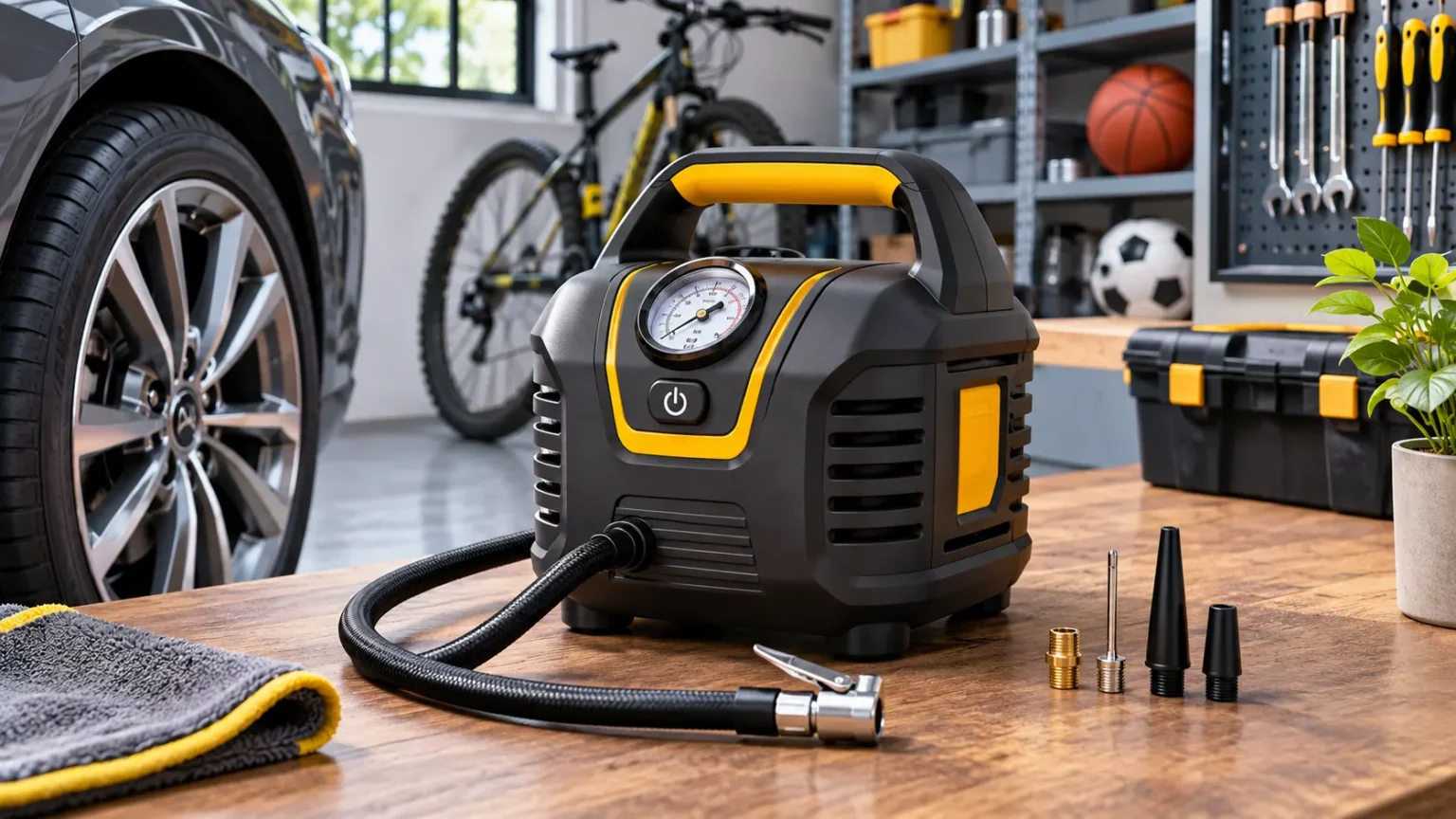
A portable air compressor is a practical tool that provides compressed air for inflating tires, operating pneumatic tools, and completing various household projects. Unlike large stationary compressors, portable models are designed for easy movement and convenient storage. They are available in different sizes, power options, and pressure capacities to match specific tasks.
Whether you need to inflate car tires, use a nail gun, or complete DIY projects, choosing the right portable air compressor can make your work easier. Some models are small enough to fit inside a vehicle, while others feature tanks and wheels for workshop use. Each type offers different advantages.
However, not every air compressor can handle every application. Important factors include airflow, pressure, tank capacity, noise level, and power source. This guide explains how portable air compressors work, their main types, common uses, and practical buying tips to help you make an informed decision.
What Is a Portable Air Compressor?
A portable air compressor is a machine that compresses air and delivers it at a controlled pressure. Depending on its design, it may store compressed air inside a tank or supply air directly through a hose. Portable models are smaller and easier to transport than industrial stationary compressors.
These machines are commonly used for tire inflation, pneumatic tools, cleaning equipment, and light workshop tasks. Their compact construction makes them useful for homeowners, mechanics, contractors, and DIY enthusiasts. Some units are designed for occasional use, while others support more demanding applications.
Portable air compressors come in corded electric, battery-powered, and gasoline-powered versions. They also vary in tank size, airflow capacity, and operating pressure. Understanding these differences is important because selecting an undersized compressor can lead to poor performance and unnecessary equipment wear.
How Does a Portable Air Compressor Work?
A portable air compressor uses a motor or engine to drive a mechanism that compresses air. In many common models, a piston moves inside a cylinder to increase air pressure. The compressed air is then directed into a storage tank or delivered through an outlet.
Tank-style compressors usually operate with a pressure switch that controls when the motor starts and stops. The motor fills the tank until it reaches a preset pressure. As compressed air is used and tank pressure decreases, the motor automatically restarts to replenish the supply.
Tankless tire inflators work somewhat differently because they usually provide air directly without a large storage tank. Their performance depends on motor capacity, pressure capability, and airflow output. Both designs can be useful, but they are intended for different tasks and operating conditions.
Different Types of Portable Air Compressors
Pancake air compressors feature a round, flat tank positioned beneath the motor. This compact design provides a stable base and makes the equipment relatively easy to carry. Pancake compressors are commonly used for finish nailers, tire inflation, and other light-duty tasks.
Hot dog air compressors use a horizontal cylindrical tank and often include a carrying handle. They are available in several capacities and can support a range of household and workshop applications. Larger models may include wheels to improve mobility around garages and job sites.
Twin-stack, cordless, and tankless compressors are also popular portable options. Twin-stack models use two connected tanks, while cordless inflators prioritize convenience and easy storage. The best type depends on how much compressed air your tools require and where you plan to use the equipment.
Portable Air Compressor vs Stationary Air Compressor
Portable air compressors are designed for mobility and convenience. They typically feature compact motors, carrying handles, smaller tanks, or wheels. These characteristics make them useful for vehicle maintenance, household repairs, and projects that require moving between different locations.
Stationary air compressors are generally larger and intended for permanent installation in workshops or industrial facilities. They may offer greater tank capacity, higher continuous airflow, and longer operating cycles. This makes them suitable for demanding pneumatic equipment and repeated professional applications.
The main difference is not simply physical size but the amount of compressed air each machine can deliver. A portable compressor may be ideal for occasional tasks but insufficient for continuous sanding or heavy spray painting. Choosing between them requires understanding your actual airflow needs.
Common Uses of a Portable Air Compressor
Tire inflation is one of the most common uses of a portable air compressor. Compact inflators can help maintain recommended tire pressure on cars, motorcycles, bicycles, and certain other vehicles. Using the correct pressure supports proper tire performance and everyday vehicle maintenance.
Portable compressors are also useful for operating pneumatic tools such as finish nailers, brad nailers, and some staplers. These tools use compressed air to perform tasks efficiently. However, each tool has specific pressure and airflow requirements that must match the compressor’s capabilities.
Other applications include inflating sports equipment, air mattresses, and recreational items when suitable attachments are available. Some compressors can also support airbrushing and light cleaning tasks with approved accessories. Always use the correct fittings and follow manufacturer instructions for each application.
Understanding PSI in Portable Air Compressors
PSI stands for pounds per square inch and measures air pressure. It indicates how much pressure a compressor can generate or deliver to connected equipment. Most portable air compressors list a maximum PSI rating as part of their technical specifications.
However, maximum pressure does not tell you how quickly a compressor can supply air. A small tire inflator may produce relatively high pressure while delivering limited airflow. This is why pressure ratings should not be used as the only factor when comparing compressors.
Before buying, check the recommended operating pressure of your intended tools or equipment. A compressor should provide the required pressure through a suitable regulator. Never exceed the maximum pressure ratings of tires, hoses, fittings, tanks, or connected accessories.
What Does CFM Mean on an Air Compressor?
CFM stands for cubic feet per minute and describes the volume of air delivered over time. It is one of the most important specifications when selecting a compressor for pneumatic tools. Equipment that consumes more air requires a compressor with a higher airflow capacity.
Many manufacturers list airflow as SCFM, or standard cubic feet per minute, at a specified pressure such as 90 PSI. Comparing SCFM ratings at the same pressure gives a more useful picture of performance. Different measurement standards and operating conditions can affect published ratings.
For example, a small finish nailer may work well with a low-airflow compressor because it uses air intermittently. A pneumatic sander generally requires substantially more continuous airflow. Always compare your tool’s stated air consumption with the compressor’s rated output.
How Much CFM Do You Need?
The amount of airflow you need depends on the equipment connected to your compressor. Small inflation tasks usually require less sustained airflow than professional pneumatic tools. Intermittent tools also have different demands from equipment that runs continuously.
The following table shows illustrative airflow ranges for common applications. Actual requirements vary by equipment model, operating pressure, and duty cycle.
| Application | Approximate Airflow Requirement |
|---|---|
| Car tire inflation | Low airflow; check inflator specifications |
| Brad nailer | Around 0.3–1 SCFM |
| Finish nailer | Around 1–2 SCFM |
| Airbrush | Around 0.5–2 SCFM |
| Impact wrench | Around 3–8 SCFM |
| Pneumatic sander | Around 6–12+ SCFM |
| Spray painting | Varies widely by spray gun |
These figures are general examples rather than universal equipment specifications. Always use the actual tool manufacturer’s airflow rating at its recommended working pressure. For continuous applications, selecting a compressor with additional airflow capacity can help maintain more consistent operation.
Choosing the Right Air Compressor Tank Size
Air compressor tank capacity determines how much compressed air can be stored before the motor needs to replenish it. Smaller tanks make portable compressors easier to carry and store. However, they provide a limited reserve of air for demanding tasks.
A compressor with a one- to three-gallon tank may suit light inflation work and some intermittent pneumatic tools. Four- to six-gallon models are commonly used for nailers and household projects. Larger portable tanks may provide additional operating time for equipment with greater air demand.
Tank size should not be confused with continuous airflow performance. A large tank can temporarily support a tool that consumes air quickly, but it cannot compensate indefinitely for an undersized compressor pump. Consider tank capacity and SCFM together before selecting a model.
Oil-Free vs Oil-Lubricated Air Compressors
Oil-free air compressors use components designed to operate without regular pump oil changes. They are popular for household tasks because of their relatively simple maintenance requirements. Many compact portable compressors use this design to reduce weight and make everyday operation more convenient.
Oil-lubricated compressors use oil to reduce friction and wear inside the pump. Certain models are designed for demanding operating conditions and may offer long service lives with proper maintenance. However, they require periodic oil checks and changes according to manufacturer instructions.
Neither design is automatically better for every application. Oil-free compressors are often convenient for occasional household use, while oil-lubricated models may suit particular workshop requirements. Compare durability, maintenance schedules, operating noise, and manufacturer specifications rather than relying only on lubrication type.
Electric vs Battery-Powered Portable Air Compressors
Corded electric air compressors are widely used in garages, workshops, and residential environments. They operate through a compatible electrical outlet and generally provide consistent power while connected. Many tank-style portable compressors use electric motors because they are convenient for indoor applications.
Battery-powered air compressors and inflators offer greater flexibility when electrical outlets are unavailable. Compact cordless models are especially useful for topping up tires or inflating recreational equipment. Their operating time depends on battery capacity, motor efficiency, and the amount of air required.
The right power source depends on your intended use. Corded compressors are usually more suitable for extended work where dependable electrical power is available. Battery-powered models prioritize mobility, but charging requirements and limited runtime should be considered before purchasing.
Portable Air Compressor for Car Tires
A portable tire inflator is a useful accessory for vehicle maintenance and roadside situations. It allows drivers to check and adjust tire pressure without visiting a service station. Compact models are designed for storage in a vehicle’s trunk or another convenient compartment.
When choosing an inflator, look for a clear pressure display, suitable hose length, and reliable power connections. Some models include automatic shutoff features that stop inflation after reaching the selected pressure. These features can make routine tire maintenance more convenient.
Always follow the vehicle manufacturer’s recommended cold tire pressure, usually found on the driver’s door-jamb label or in the owner’s manual. Do not use the maximum pressure printed on the tire sidewall as the normal inflation target. Check pressure when the tires are cold for more accurate results.
Portable Air Compressor for Home and DIY Projects
Homeowners can use portable air compressors for various maintenance and improvement projects. Small models can support compatible nailers, staplers, and inflation accessories. These tools may be useful for furniture assembly, trim installation, and selected home repair tasks.
For occasional household projects, a compact oil-free compressor may provide enough performance without taking up much storage space. A carrying handle and manageable weight make transportation easier. However, tools that require sustained airflow may need a larger compressor.
Before purchasing, make a list of the pneumatic tools you expect to use. Compare their pressure and airflow specifications with the compressor’s rated output. This approach helps prevent overspending on unnecessary capacity or choosing a machine that cannot support your planned projects.
Portable Air Compressor for Spray Painting
Spray painting requires careful compressor selection because different spray guns have widely varying air demands. Small airbrushes generally consume less air than full-size automotive spray guns. The required airflow also depends on the gun design, nozzle, and recommended operating pressure.
A compressor with insufficient airflow may struggle to maintain consistent pressure during continuous spraying. This can affect paint application and the quality of the finished surface. A larger tank can help temporarily, but the pump must still provide enough sustained airflow.
When selecting a compressor for painting, compare its SCFM rating with the spray gun manufacturer’s requirements. Use appropriate filtration and moisture control components where specified. Painting also requires suitable ventilation and protective equipment based on the coating manufacturer’s safety instructions.
How Loud Are Portable Air Compressors?
Portable air compressors produce noise from their motors, pumps, and moving components. Noise levels vary considerably depending on compressor type, construction, and operating speed. Some compact models are designed specifically for quieter indoor operation.
Manufacturers often express noise levels in decibels, abbreviated as dB. A lower decibel rating generally indicates quieter operation when measurements use comparable testing methods. Because decibels use a logarithmic scale, even relatively small numerical differences can represent noticeable changes in sound intensity.
If you plan to use a compressor inside a garage or shared residential space, noise level may be an important consideration. Compare published sound ratings and check how the equipment performs during normal use. Hearing protection may be necessary when operating louder models.
Important Safety Features to Look For
A pressure relief valve is an important safety component on tank-style air compressors. It is designed to release excess pressure if abnormal conditions develop. Never disable, block, or modify this valve, and ensure the compressor meets applicable safety requirements.
Automatic pressure switches and thermal overload protection are also useful features. A pressure switch controls the motor based on tank pressure, while overload protection may help prevent motor damage from overheating. Some inflators include automatic shutoff to reduce the risk of overinflation.
Always inspect hoses, fittings, electrical connections, and the air tank before use. Damaged pressure components can create serious hazards and should not be repaired using improvised methods. Follow the manufacturer’s operating limits and disconnect the power before performing maintenance.
How to Choose the Best Portable Air Compressor
Start by identifying the tasks you plan to perform most frequently. Tire inflation, occasional nail gun use, and continuous pneumatic sanding all require different capabilities. Choosing based on intended applications helps narrow the available options.
Next, compare airflow, maximum pressure, tank capacity, and duty cycle. Check the compressor’s SCFM at the pressure required by your tools. Also consider the machine’s weight, dimensions, noise level, and power requirements to ensure it fits your working environment.
Finally, examine construction quality, warranty coverage, and the availability of replacement accessories. A dependable portable air compressor should provide clear specifications and appropriate safety features. Customer feedback about durability and long-term performance can also help identify potential problems before purchasing.
Common Portable Air Compressor Buying Mistakes
One common mistake is choosing a compressor based only on its maximum PSI rating. High pressure does not necessarily mean high airflow capacity. A compressor may reach the required pressure but still struggle to operate a demanding pneumatic tool continuously.
Another mistake is assuming that a larger tank automatically means better performance. Tank capacity determines stored air volume, while pump output determines how quickly that air can be replaced. Both measurements matter, but their importance depends on the application.
Buyers sometimes overlook noise, portability, and maintenance requirements. A powerful compressor may be inconvenient if it is difficult to transport or too loud for the intended environment. Comparing practical features alongside performance specifications leads to a more suitable purchase.
How to Maintain a Portable Air Compressor
Regular maintenance helps keep a portable air compressor operating safely and efficiently. Check the manufacturer’s instructions for inspection schedules and service requirements. Oil-free models generally require less routine pump maintenance, while oil-lubricated compressors need appropriate oil checks and changes.
For tank-style compressors, drain accumulated moisture according to the manufacturer’s instructions after use or at the recommended intervals. Moisture can contribute to internal corrosion if left inside the tank. Follow the specified shutdown and depressurization procedure before opening the drain valve.
Inspect air hoses, connections, filters, and power cords for visible damage. Keep ventilation openings clear and avoid operating the compressor in unsuitable environments. If the tank shows corrosion, damage, or signs of leakage, stop using the equipment and seek professional assessment.
How Long Does a Portable Air Compressor Last?
The lifespan of a portable air compressor depends on its construction, operating conditions, and maintenance. Light-duty models used occasionally may remain functional for years when properly cared for. Heavy use beyond the manufacturer’s intended duty cycle can shorten equipment life.
Motor quality, pump design, operating temperature, and environmental conditions all affect durability. Dust, moisture, inadequate ventilation, and neglected maintenance can contribute to premature wear. Choosing equipment designed for the expected workload is important for dependable long-term operation.
Proper storage also helps protect portable compressors between uses. Keep the machine in a clean, dry location and follow the manufacturer’s recommendations for draining moisture and maintaining components. Regular inspections can identify small problems before they develop into more serious failures.
Is a Portable Air Compressor Worth Buying?
A portable air compressor can be a worthwhile investment for homeowners, vehicle owners, and people who regularly use pneumatic equipment. It provides convenient access to compressed air without requiring a large stationary installation. The right model can support many routine tasks.
However, the value depends on how frequently you need compressed air. Someone who occasionally inflates tires may find a compact cordless inflator sufficient. A person using nailers, airbrushes, or multiple pneumatic tools may benefit from a more capable tank-style compressor.
Before purchasing, compare the machine’s capabilities with your actual needs and available budget. Consider operating costs, storage space, maintenance, and safety features. Selecting an appropriately sized compressor can provide practical value without unnecessary complexity.
Conclusion
A portable air compressor is a versatile tool for tire inflation, household repairs, and compatible pneumatic equipment. Different models offer various combinations of portability, pressure, airflow, and tank capacity. Understanding these specifications makes it easier to select equipment that performs reliably.
The most important buying factors are intended use, SCFM, PSI, tank size, and power source. Additional considerations include noise, maintenance requirements, construction quality, and safety features. Comparing these details helps prevent common purchasing mistakes and ensures the compressor matches your working conditions.
Whether you need a compact tire inflator or a portable workshop compressor, choose a model designed for your specific applications. Follow manufacturer instructions, maintain the equipment regularly, and respect pressure limits. A carefully selected compressor can become a dependable addition to your home, garage, or workshop.
Frequently Asked Questions
What is the best portable air compressor for home use?
The best portable air compressor depends on your intended tasks. A compact oil-free pancake compressor often works well for household inflation and compatible nailers, while demanding pneumatic tools require greater airflow capacity.
How much PSI should a portable air compressor have?
Many portable tank-style compressors offer maximum pressures around 120–150 PSI or higher. However, the correct choice depends on your tools’ working pressure and airflow requirements rather than maximum PSI alone.
Can a portable air compressor inflate car tires?
Yes, many portable air compressors and cordless tire inflators can inflate car tires. Choose a model compatible with your vehicle’s tires and follow the recommended cold inflation pressure listed by the vehicle manufacturer.
Is a tankless air compressor better than one with a tank?
A tankless compressor is usually more compact and convenient for inflation tasks. Tank-style compressors store compressed air and are generally more suitable for pneumatic tools that require intermittent or sustained airflow.
How long can a portable air compressor run continuously?
Continuous operating time depends on the compressor’s duty cycle, motor design, and cooling system. Always follow the manufacturer’s specifications because running a light-duty compressor beyond its limits can cause overheating or premature wear.