
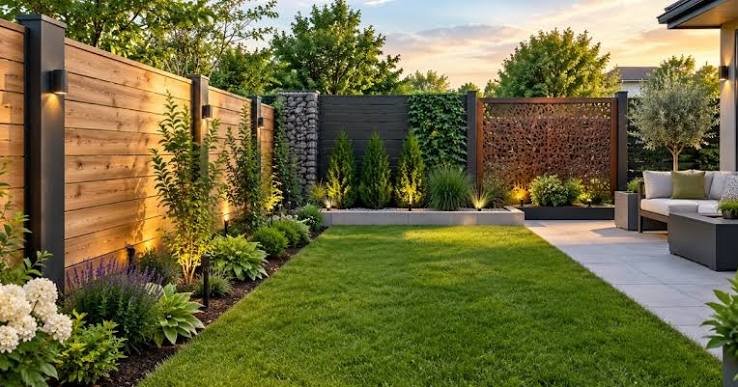
When people redesign their gardens, they tend to start with the fun parts: the patio, the planting, the lighting. The fence often comes last, if it’s considered at all. Yet it’s the one feature that runs the full length of your outdoor space, so it shapes how the whole garden looks and feels. Get it right and everything else benefits.
Look at Your Garden Honestly
Before you buy anything, walk the boundary and note what bothers you. Is there a spot where neighbours can see straight into your seating area? Does the wind whip through a gap near the back? Are existing panels leaning, rotting or patched together?
Those observations tell you what to prioritise. A garden that needs privacy calls for a different solution than one that mainly needs tidying up. Measure each run carefully too, so you know how many panels and posts you’ll need.
The Practical Case for Panels
For most projects, fence panels strike the best balance between cost, speed and appearance. They come ready to fit between posts, which means a weekend of work rather than a week, and they deliver a consistent look from one end of the garden to the other. If something goes wrong later, replacing a single panel is quick and inexpensive.
Quality varies, so check the timber thickness, the strength of the frame and whether the wood has been pressure treated. Better materials last longer and look better as they age.
A Modern Look With Real Substance
Traditional designs still have their place, but many homeowners now want something more contemporary. Double slatted fence panels deliver exactly that. The slats sit on both sides of the frame, so the fence looks smart from your side and your neighbour’s, with no exposed framework to spoil the finish.
The result is a boundary that feels designed rather than simply installed. Strong horizontal lines make a small garden seem wider, while the layered construction gives good privacy and adds solid, sturdy character. They work well alongside composite decking, gravel paths and modern planters, but warm timber tones keep them friendly enough for more traditional homes too.
Build It to Last
Posts do most of the work in any fence, so don’t cut corners. Set them deep, check they’re plumb, and use concrete where the ground is soft or exposed. Space them to match your panel width so everything lines up neatly.
Add gravel boards along the base to keep timber away from wet soil. This simple step prevents the rot that typically strikes first at ground level, and it means you only replace a cheap board rather than a whole panel down the line. Use galvanised or coated fixings, which resist rust far better than untreated screws.
Make the Fence Part of the Garden
Once the structure is in place, think about colour and decoration. A treatment in soft grey or sage helps a fence recede behind planting, while black or deep green makes a bolder, more dramatic statement. Re-treat every year or two to keep the finish fresh.
Then make the fence work harder. Climbing roses, ivy or star jasmine soften hard lines, trellis toppers add height without blocking light, and wall-mounted planters add colour at eye level. Outdoor string lights or small solar lamps turn the boundary into an evening feature.
Where to Buy
Good materials make a big difference, and so does a supplier who makes ordering simple. G&G Fencing & Landscape Supplies offers a broad range of fencing and landscaping products, so you can compare styles and gather everything for your project in one place.
Final Thoughts
A well-chosen fence adds privacy, security and style, often for less than people expect. Know what you need, pick panels that suit your home, and invest in solid foundations and regular care. Do that, and you’ll enjoy a garden that looks better and feels more private for years.