
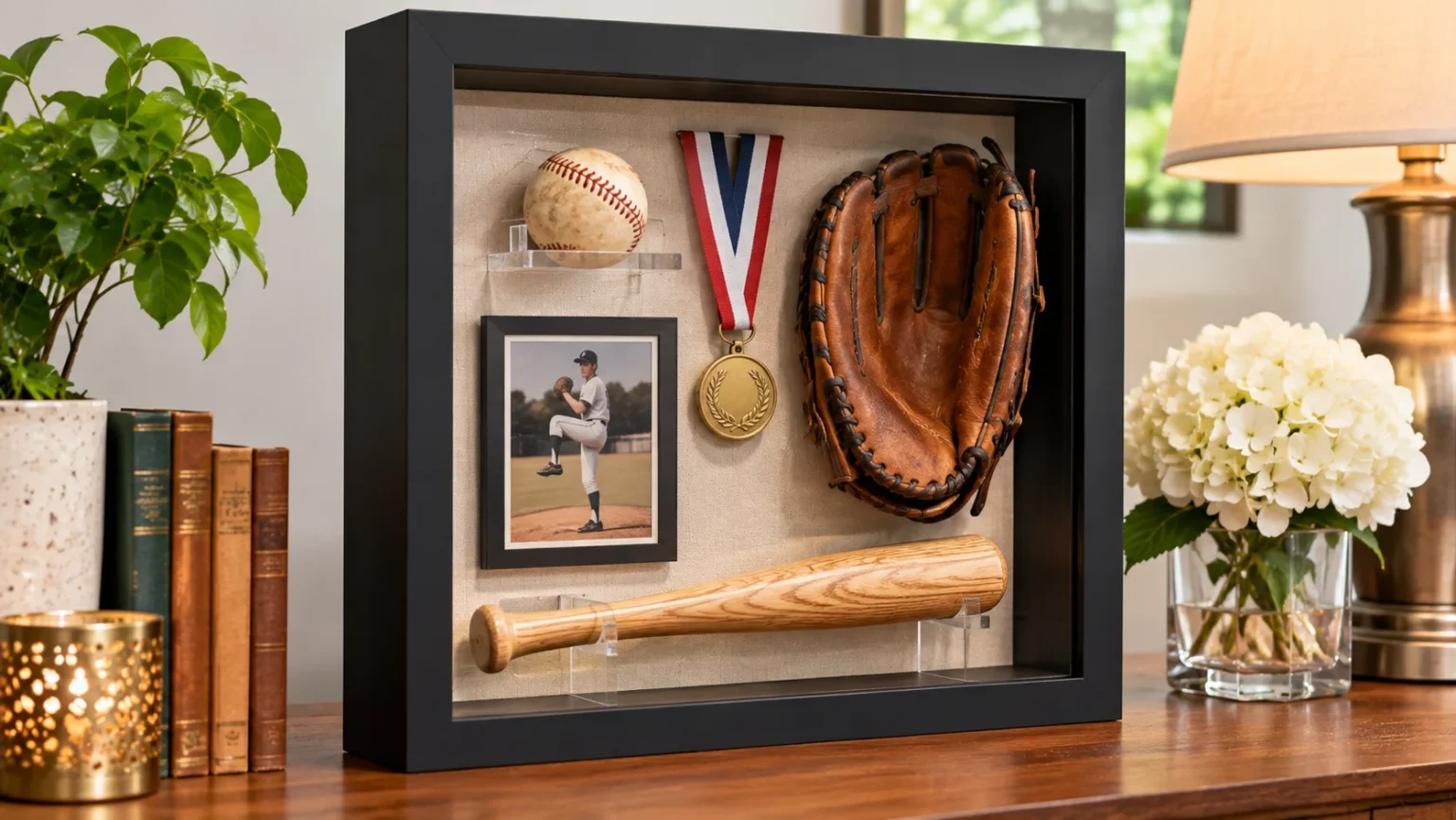
What Is a Shadow Box Frame?
A shadow box frame is a deep display frame designed to hold three-dimensional objects, photographs, artwork, and meaningful keepsakes. Unlike traditional picture frames, it provides additional space between the backing board and the front panel. This extra depth allows you to display objects while protecting them from ordinary dust and accidental contact.
Shadow box frames are popular for displaying graduation certificates, wedding keepsakes, travel souvenirs, handmade crafts, and family photographs. They help transform meaningful belongings into decorative pieces that can complement different interior styles. Their enclosed design also makes them useful for organizing small collections that might otherwise remain stored inside drawers or cupboards.
Choosing the right shadow box frame involves understanding its size, depth, construction materials, and mounting options. Different objects require different levels of support and protection, making thoughtful selection important. Whether you want to preserve special memories or create personalized wall decorations, a shadow box offers a practical and creative display solution.
How Does a Shadow Box Frame Work?
A shadow box frame contains a recessed interior that creates space for displaying objects with different thicknesses. The frame typically consists of an outer border, a transparent front panel, a backing board, and mounting hardware. Together, these components create an enclosed display area that helps keep selected items organized and visible.
The backing board provides a surface where lightweight objects, photographs, and decorative materials can be arranged. Some frames feature fabric-covered backing boards, while others use cardboard, wood, or specialized mounting materials. The appropriate backing depends on the weight, texture, and preservation requirements of the objects you intend to display.
The transparent front panel allows viewers to appreciate the displayed items without directly handling them. Glass and acrylic are common materials used for this protective surface. Although shadow boxes reduce ordinary dust exposure, most are not completely airtight and may not provide sufficient protection against humidity, sunlight, or other environmental conditions.
Different Types of Shadow Box Frames
Traditional wooden shadow box frames are popular because they offer a classic appearance that complements various home decoration styles. They are available in natural wood finishes, painted colors, and decorative designs. Wooden frames can work particularly well for family photographs, historical keepsakes, artwork, and displays that benefit from a warm appearance.
Metal shadow box frames provide a more modern alternative with clean lines and simple finishes. Aluminum designs are often relatively lightweight, making them convenient for contemporary interiors and office spaces. Their understated appearance allows the displayed objects to remain the main focus without introducing excessive decorative details around the display area.
Other options include tabletop shadow boxes, hinged display cases, and customizable frames with adjustable interior arrangements. Hinged designs allow easier access when you need to change displayed items regularly. Choosing between these frame types depends on your preferred decorating style, available space, and the particular objects you want to showcase.
Shadow Box Frame vs Traditional Picture Frame
The main difference between a shadow box frame and a traditional picture frame is the amount of interior depth. Standard picture frames are designed primarily for flat items such as photographs, posters, and printed artwork. Shadow boxes provide additional room for thicker objects that cannot fit comfortably inside conventional frames.
Traditional picture frames are generally lighter and occupy less space when mounted on walls or placed on furniture. They are suitable for displaying simple photographs and certificates without additional decorative elements. Shadow box frames offer more creative flexibility because they accommodate layered artwork, fabric pieces, souvenirs, and other three-dimensional objects.
Both frame styles serve useful purposes, depending on what you want to display and how much space is available. A traditional frame may be sufficient for a single photograph, while a shadow box can combine multiple related keepsakes. Understanding these differences helps you choose a display solution that suits your belongings.
Popular Uses for Shadow Box Frames
One of the most popular uses for shadow boxes is preserving family memories through personalized displays. Photographs, greeting cards, handwritten notes, and small sentimental objects can be arranged together to represent meaningful experiences. These displays provide a creative alternative to keeping every treasured possession hidden away inside ordinary storage containers.
Shadow box frames are also commonly used to showcase achievements and important milestones. Graduation photographs, certificates, ribbons, medals, and event memorabilia can be displayed in an organized arrangement. Combining related objects allows you to create a visual record of memorable accomplishments while adding a personal decorative element to your living space.
Travel souvenirs, dried flowers, miniature artwork, and handmade crafts can also be displayed inside shadow boxes. Collectors may use deeper frames to organize small decorative objects according to particular themes. The versatility of these display frames makes them suitable for bedrooms, living rooms, home offices, hallways, and other indoor spaces.
Choose the Right Shadow Box Frame Size
Selecting the correct shadow box frame size begins with considering the dimensions of the objects you want to display. Smaller frames measuring around five by seven inches can accommodate photographs and compact keepsakes. Larger designs provide additional room for multiple objects, decorative backgrounds, and more elaborate arrangements involving different materials.
Frame depth is equally important because thicker objects require sufficient space between the backing board and front panel. Measure the thickest item in your collection and consider any supporting materials needed for mounting. Objects should fit comfortably without pressing against the glass or acrylic, which could damage delicate surfaces over time.
The available display space should also influence your choice of frame dimensions. Large shadow boxes can become distinctive focal points, while smaller frames work well in grouped wall displays. Consider the overall weight, mounting requirements, and surrounding decorations before purchasing a frame to ensure it suits your intended location.
Best Materials for Shadow Box Frames
Wood is a common material for shadow box frames because of its durability, decorative versatility, and traditional appearance. Solid wood frames can provide dependable support when appropriately constructed, while engineered wood alternatives may offer more affordable options. Different finishes allow homeowners to coordinate their frames with existing furniture and interior decorations.
Metal frames are particularly useful for people who prefer contemporary designs and simple decorative finishes. Aluminum can provide a lightweight structure without sacrificing reasonable durability when properly manufactured. Plastic and composite frames offer additional budget-friendly alternatives, although their strength and long-term appearance may vary depending on the quality of construction.
The front panel and backing materials are also important when choosing a shadow box. Glass provides excellent clarity and scratch resistance, while acrylic is generally lighter and less likely to shatter. For valuable photographs, artwork, or historical documents, acid-free backing materials can help reduce certain types of deterioration over time.
Creative Shadow Box Frame Decoration Ideas
A travel-themed shadow box is a wonderful way to organize souvenirs collected during memorable trips. Photographs, postcards, transportation tickets, and small decorative items can be arranged together to represent a particular destination. Adding a simple background that complements the surrounding objects helps create a coordinated display without making the arrangement feel crowded.
A family memory shadow box can feature photographs, special cards, meaningful notes, and other sentimental belongings. Choosing items connected to a particular celebration or period makes the display more personal. Leaving sufficient space between individual objects allows each piece to remain visible while creating a balanced and attractive overall arrangement.
Nature-inspired shadow boxes provide another creative option for decorating your home. Botanical illustrations, preserved flowers, fabric leaves, and decorative wooden pieces can create interesting combinations of colors and textures. Always ensure natural materials are properly dried and suitable for enclosed displays because trapped moisture can contribute to mold or deterioration.
How to Arrange Items Inside a Shadow Box Frame
Creating an attractive shadow box arrangement begins with deciding which objects are most important to the display. A central photograph, certificate, or decorative item can serve as the main focal point. Smaller supporting objects can then be arranged around it to create a meaningful theme without distracting from the primary feature.
Before securing anything, experiment with different arrangements on a flat surface to determine which layout works best. Consider the relationship between colors, object sizes, and available space throughout the frame. Leaving small gaps between items can improve visibility and prevent the finished display from looking unnecessarily crowded or disorganized.
Use suitable mounting materials according to the weight and condition of each object. Valuable photographs and delicate documents should be displayed using archival-quality supports rather than permanent adhesives that could cause damage. Heavier objects may require professionally designed supports, so avoid relying on ordinary tape or unsuitable mounting methods for important belongings.
How to Display a Shadow Box Frame in Your Home
Wall-mounted shadow box frames can create attractive decorative features in living rooms, hallways, bedrooms, and home offices. A single large frame may become the main feature of a wall, while several smaller frames can create a coordinated gallery. Choose locations that provide comfortable viewing angles and complement the surrounding interior design.
Tabletop shadow boxes offer a flexible alternative for people who prefer not to mount frames on walls. They can be placed on shelves, desks, cabinets, or other stable furniture surfaces. Selecting a frame with a suitable stand or secure base helps maintain stability while allowing the display to be moved when necessary.
Consider the frame’s weight and the strength of its supporting surface before choosing a permanent display location. Heavy or oversized shadow boxes may require professionally installed mounting hardware appropriate for the wall material. Avoid placing fragile glass-fronted frames above beds or unstable furniture where accidental movement could create unnecessary safety risks.
How to Protect Keepsakes Inside a Shadow Box
Although shadow boxes help protect displayed objects from dust and accidental handling, additional precautions may be necessary for valuable belongings. Direct sunlight can gradually fade photographs, printed documents, and delicate fabrics. Choosing an indoor location away from strong sunlight can help maintain the original appearance of your treasured items over time.
Humidity and temperature changes can also affect materials such as paper, wood, fabric, and dried flowers. Excessive moisture may encourage mold growth, while unsuitable storage conditions can contribute to warping or discoloration. Avoid displaying sensitive keepsakes in damp bathrooms, near heating equipment, or other locations with significant environmental changes.
Archival-quality mounting boards and ultraviolet-filtering glass or acrylic may provide additional protection for certain valuable objects. However, no ordinary display frame can completely prevent deterioration under unsuitable conditions. For irreplaceable documents, antique objects, or delicate historical memorabilia, consult a qualified preservation specialist to determine the safest long-term display arrangements.
Common Shadow Box Frame Mistakes to Avoid
One common mistake is choosing a frame that does not provide enough depth for the intended objects. Items pressed against the front panel may become damaged, distorted, or difficult to arrange properly. Carefully measuring your objects and allowing sufficient interior clearance can help prevent unnecessary difficulties when creating your finished display.
Another mistake is adding too many objects without considering the overall arrangement. Crowded displays can make individual keepsakes difficult to recognize and reduce the visual appeal of the shadow box. Selecting a smaller collection of meaningful items often creates a more organized and attractive display than including every available piece.
Using unsuitable adhesives, weak mounting materials, or poor-quality backing boards can also damage displayed objects over time. Always consider the preservation requirements and weight of your keepsakes before securing them inside a frame. Thoughtful preparation helps maintain the appearance of your display while protecting the belongings that make it meaningful.
How to Clean and Maintain a Shadow Box Frame
Regular cleaning helps maintain the appearance of shadow box frames and ensures that displayed objects remain clearly visible. Use a soft, dry microfiber cloth to remove ordinary dust from the outer frame and transparent front panel. Follow the manufacturer’s cleaning recommendations because different frame materials may require particular maintenance methods.
Avoid abrasive cleaning pads and harsh chemical products that could scratch acrylic panels or damage decorative finishes. When cleaning a glass front, use a suitable cleaning solution according to the manufacturer’s instructions. Apply liquids carefully to prevent moisture from reaching the backing board, displayed photographs, or delicate keepsakes inside the frame.
Periodically inspect your shadow box for loose mounting hardware, shifting objects, damaged seals, or signs of moisture buildup. Addressing minor maintenance problems early can help prevent further deterioration and unnecessary damage. Proper care allows your shadow box to remain an attractive decorative feature while protecting your meaningful belongings for longer periods.
Conclusion
A shadow box frame offers a simple and creative way to display meaningful keepsakes, photographs, artwork, and decorative objects. Its deeper construction provides additional space that traditional picture frames cannot offer. From family memories and travel souvenirs to graduation achievements and handmade crafts, shadow boxes provide numerous opportunities for personalized decoration.
Choosing the right frame involves considering its size, depth, materials, backing board, and intended display location. Thoughtful arrangement and appropriate mounting materials can help create a balanced appearance while protecting delicate objects. Keeping your shadow box away from direct sunlight and excessive moisture also helps preserve the displayed items over time.
Ultimately, the best shadow box frame is one that suits your available space, personal preferences, and the objects you want to showcase. You do not need expensive materials or complicated decorations to create a meaningful display. With careful planning and regular maintenance, a simple shadow box can become a treasured decorative feature.
FAQs
What is a shadow box frame used for?
A shadow box frame is used to display three-dimensional objects, photographs, souvenirs, artwork, and sentimental keepsakes. Its deeper construction provides additional space for items that cannot fit inside traditional picture frames.
What is the difference between a shadow box and a picture frame?
A shadow box has a deeper interior designed to accommodate thicker objects and layered displays. A traditional picture frame generally holds flat items such as photographs, certificates, and printed artwork.
How deep should a shadow box frame be?
The appropriate depth depends on the thickness of your displayed objects and their mounting materials. Many standard shadow boxes offer one to three inches of interior depth, although deeper options are available.
Can you hang a shadow box frame on a wall?
Yes, shadow box frames can be mounted on walls using suitable supporting hardware. Consider the frame’s total weight, wall material, and manufacturer recommendations to ensure a secure and stable display.
Do shadow box frames protect keepsakes from damage?
Shadow boxes help protect keepsakes from ordinary dust and accidental contact. However, valuable items may require archival materials, ultraviolet-filtering glazing, and suitable environmental conditions to reduce long-term deterioration.