
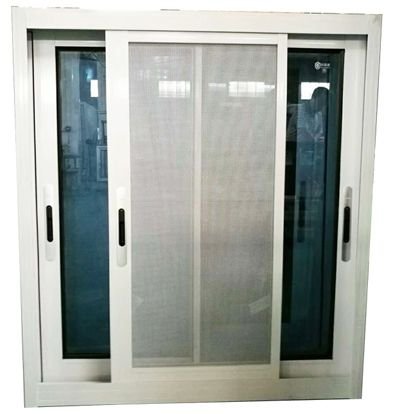
A window screen is one of the least glamorous things you will ever buy for a house, and one of the easiest to buy badly. The mesh all looks the same in a showroom. The frames all look straight. The price difference between a cheap screen and a good one is small enough that most people pick on price, and then replace the whole thing in eighteen months.
The difference is almost never the mesh you can see. It is the specification behind it and the way the frame is built.
What a window screen actually has to survive
Before comparing products, it helps to be clear about what the thing is up against.
Ultraviolet light is the main enemy. A screen sits in direct sun for years, and UV breaks down uncoated plastics, fades powder coating and makes adhesive tape brittle.
Thermal movement is next. A metal frame in full sun can be forty degrees hotter than the same frame at night. It expands and contracts every single day, and anything rigidly fixed at both ends eventually loosens or distorts.
Wind-blown dust does the slow damage. Fine grit works into roller mechanisms and pleated folds and into the weave of the mesh itself, which is why screens in dusty regions get visibly darker over time and why rollers start to stick.
Cleaning does the fast damage. More screens are destroyed by someone attacking them with a stiff brush or a pressure washer than by weather.
A screen that is specified for those four things lasts. One that is not will look fine for a season and then start to sag, stick or tear.
Mesh grades and what the numbers mean
Mesh is usually described by two numbers, such as eighteen by sixteen. These are strands per inch, horizontally and vertically. Eighteen by sixteen is the general-purpose standard and stops mosquitoes, flies and wasps.
Tighter weaves exist for smaller insects, and they work, but every additional strand reduces the open area of the mesh. Less open area means less airflow and slightly less light. If you do not have a problem with very small insects, a tighter weave is a downgrade, not an upgrade.
Strand thickness matters as much as the count. Two meshes with the same weave can use very different strand diameters, and the thicker one will be stronger but more visible.
The materials divide roughly like this. Fibreglass is coated, flexible and does not hold a dent, which makes it the most forgiving choice and the most common. Polyester is tougher and resists tearing better, which suits doors and anywhere people push against it.
Aluminium is rigid and spans wide openings without sagging, but dents permanently and can corrode at cut edges in humid or coastal air. Stainless steel mesh is the most durable and the most expensive, and is usually chosen for security rather than insects.
Aluminium vs PVC frames
This is where most of the real quality difference sits, and where most of the money is saved on cheap screens.
Powder-coated aluminium is the better frame in almost every case. It is dimensionally stable in heat, it holds mesh tension without bowing, it can be made in slim profiles that do not dominate the window, and the powder coating protects the metal from UV. The things to check are the coating quality and the corner joints.
PVC frames cost less and are fine indoors or in mild, shaded conditions. In sustained heat and direct sun they soften, and a softened frame loses mesh tension and starts to bow. White PVC also yellows under UV, which is not a structural problem but is a visible one.
On either material, look at the corners. A screen frame is four pieces of extrusion and four corners, and the corners are where it fails. Mitred corners with internal corner keys hold their square. Frames held together with nothing but a crimp or a screw through the face will eventually rack out of shape, and once a frame is no longer square the mesh loosens and it will never sit properly again.
Fixed, hinged, retractable or magnetic
The mesh and frame decide how long the screen lasts. This decides whether you actually like living with it.
Fixed panels sit permanently in the opening. They are the simplest, cheapest and most durable, with nothing to go wrong. The drawback is that they are always there, and cleaning the glass behind them means removing the panel.
Hinged screens are mounted on a side hinge and swing open like a second window. They suit casement windows and anywhere you need regular full access to the glass.
Retractable and pleated screens roll or fold into a slim cassette at the side of the opening, so when you are not using them they effectively disappear. This is the right answer for a window you want to look out of unobstructed, and for anything in a living area where appearance matters. They cost more and they have a mechanism, which means a spring or a cord that can eventually need servicing.
Magnetic screens sit on a light frame that lifts away entirely, which makes cleaning straightforward and suits windows you open seasonally rather than daily.
Most suppliers who make fly screens for windows to measure will walk through these options against the specific opening, because the right type genuinely does depend on how often that particular window gets used.
A sensible approach in a whole house is to mix them. Retractable on the windows that open every day, fixed panels on the ones that almost never move, and hinged or pleated on doors and anything that needs full access.
Fitting without drilling into the frame
This question comes up constantly and the answer is better than most people expect.
Tape fixing uses a high-bond double-sided tape to mount a slim sub-frame to the window frame. Done with the right tape on a properly cleaned surface it holds for years, and it leaves no holes. This is the usual solution for rented property and for aluminium or uPVC joinery that nobody wants to drill.
Tension or press-fit frames sit inside the reveal and are held by their own spring pressure. No fixings at all, and they lift out for cleaning.
Clip-in systems use small clips that engage the existing window bead.
Drilled fixing is the most secure and is the right choice for large or heavy screens and for anything on an upper floor. For a standard window it is usually unnecessary.
If a supplier tells you drilling is the only option on a normal-sized window, get a second quote.
What fails first, and why
If you want to predict how a screen will age, watch these five things.
Mesh tension goes first on badly made frames. Mesh is held in a channel by a flexible spline, and if that spline is undersized or the frame has racked, the mesh goes slack. A slack screen is not just ugly, it lets insects past at the edges.
Corner joints are next, and they are the single best indicator of build quality.
Roller mechanisms on retractable screens collect dust and stiffen. Most are serviceable if you can get at them, which is worth asking about before you buy.
Adhesive tape fails in heat if the wrong grade was used or the surface was not cleaned properly before fitting.
Coating fails last, and when the powder coat on an aluminium frame starts chalking, the metal underneath begins to go.
None of this is expensive to get right. It mostly comes down to asking for the mesh specification rather than accepting the word mesh, looking at how the corners are made, and being honest about how often you actually open that particular window.