
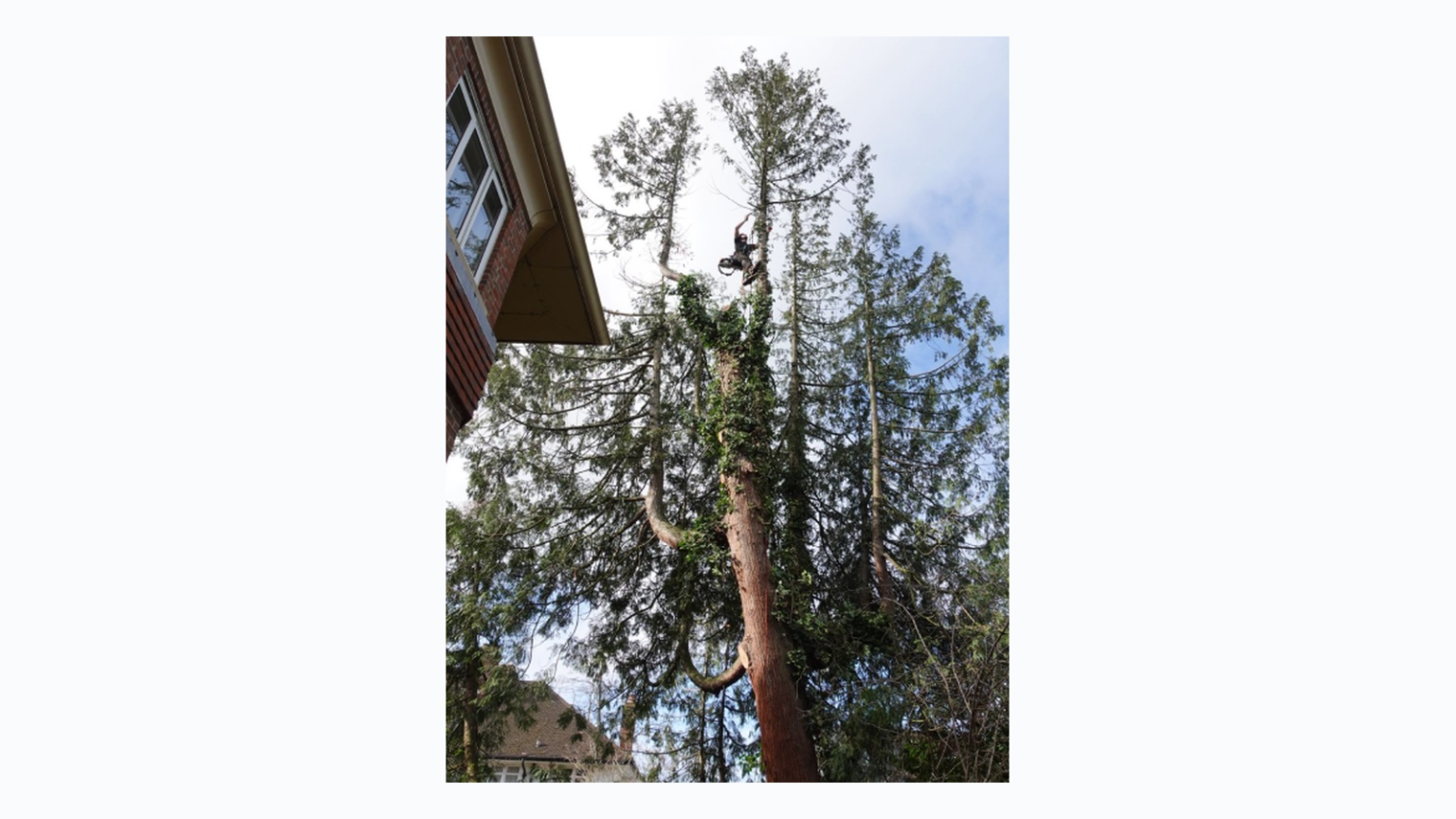
How to move from a vague concern to a lawful, safe and measurable tree-work specification without losing the character of the garden.
Tree work often begins with an ordinary observation: a branch is close to the roof, the garden has become too shaded, leaves are sparse on one side or a neighbour is worried about overhang. The temptation is to book someone to “cut the tree back” and decide the details on the day. That approach can lead to excessive pruning, unclear prices, avoidable disputes and work that solves the wrong problem. Responsible planning turns the concern into a defined project before any saw is started.
The process does not need to be complicated. It requires a clear objective, an informed assessment, checks for legal and ecological constraints, a written specification and a safe plan for access and waste. Each step protects the homeowner as well as the tree. It also allows contractors to quote for the same outcome, making price and quality easier to compare.
Write Down What You Want to Achieve
Begin with the outcome, not the cutting method. A homeowner may want more clearance above a conservatory, less end weight on a long branch, improved daylight at ground level or the removal of dead wood over a play area. Those are objectives. “Reduce by half” is a method request, and it may not be suitable for the species or structure.
List the areas affected and how they are used. A branch above a rarely entered shrub bed creates a different exposure from one above a doorway. Shade that is welcome in summer may be a problem only at one window or during one part of the day. Leaf fall, blossom and fruit are seasonal features, not necessarily defects. Defining the inconvenience precisely may reveal a smaller and better-targeted operation.
Take photographs from several fixed points and note when the concern first appeared. Include any known history of pruning, storm damage, building work or changes to the ground around the tree. This short brief gives an arborist a reliable starting point and helps the homeowner judge whether the final proposal answers the original concern.
Identify the Tree and Its Setting
Species influences growth pattern, tolerance of pruning, seasonal timing and response to wounds. Age and vitality also matter. A young tree may benefit from formative work that guides future structure. A mature tree may need selective intervention and longer intervals between operations. A veteran tree can possess significant habitat value and require specialist management.
The setting is equally important. Record nearby buildings, walls, roads, footpaths, overhead cables, sheds, glasshouses and neighbouring gardens. Consider the ground below the canopy: is it paved, frequently occupied or used for vehicle parking? Note changes in level, excavation or hard surfacing near the roots. These details help the assessor understand both the tree’s condition and the consequences of possible failure.
Avoid diagnosing from a single sign. Ivy can obscure the stem but does not automatically make the host tree dangerous. Lean is not necessarily instability if it developed gradually and the root plate is sound. Fungi, cavities and dead branches require interpretation in context. The purpose of the assessment is to distinguish manageable features from conditions that justify urgent action.
Arrange an Assessment Before Seeking a Fixed Treatment
An assessment should examine the concern and test whether the requested outcome can be achieved without disproportionate damage. The arborist may recommend pruning, monitoring, improving the root environment, changing how the area beneath the tree is used or, where necessary, removal. A responsible recommendation explains why the chosen option is proportionate.
When approaching a provider of tree care services, describe the outcome and invite a site-specific proposal. Ask which parts of the crown need work, how much live material would be removed and how the natural outline will be retained. If the tree is declining or structurally complex, ask whether a more detailed inspection or specialist report is required before operational work is priced.
The assessment should also establish urgency. A suspended branch or recent root-plate movement may require immediate exclusion of the area. A gradual clearance issue can be scheduled at an appropriate time. Separating urgent safety controls from elective improvements avoids rushed decisions.
Check Tree Protection Before Work Is Booked
Trees may be protected by a Tree Preservation Order, by their location within a conservation area or by a planning condition. Protection can apply even when the tree stands entirely on private land. The correct position should be confirmed with the local planning authority or the relevant official records before work begins.
If consent or notice is required, allow time for the process and make sure the description of proposed work is precise. Vague applications can create delay or permission that is difficult to interpret on site. Keep a copy of the submission, photographs, plans and decision. Give the operative contractor the approved description rather than relying on a verbal summary.
Do not assume that a tree is exempt because it appears dead, dangerous or small. Exceptions have defined conditions, and evidence may still be required. If immediate danger makes urgent work necessary, record the condition carefully and obtain professional and authority guidance as soon as practical. Planning ahead is safer than trying to justify avoidable work afterwards.
Consider Wildlife and Seasonal Constraints
Trees provide nesting sites, cavities, food and travel routes. The timing and method of work must account for active nests and protected species. Dense foliage, ivy, cracks and holes can conceal habitat features. A quick glance from the ground is not always enough where the likelihood of wildlife use is significant.
Ask how the contractor checks for ecological constraints and what will happen if evidence is found on the day. Work may need to pause, move to a different part of the tree or be rescheduled. For complex habitat features, specialist ecological input may be required. This is not an administrative inconvenience; it is part of responsible land management.
Season also affects the tree. Some operations are best timed around species-specific biology, weather, soil conditions and the intended result. Emergency safety work may not wait for an ideal season, but routine pruning usually allows more choice. The arborist should explain the practical reason for the proposed timing.
Convert the Recommendation into a Written Specification
A specification creates a common understanding between homeowner, contractor and anyone granting consent. It should identify each tree and describe the operation using measurable language. It may define a reduction in branch length or crown dimensions, identify a particular limb, state a minimum size for dead-wood removal or specify clearance from a structure.
The document should describe the intended finished form. Retaining a balanced natural outline, suitable live-crown proportions and appropriate pruning points are more meaningful than an instruction to remove an arbitrary percentage everywhere. Where the work is selective, a marked photograph or simple plan can prevent confusion.
Include associated tasks such as stump treatment, timber cutting, removal of arisings, replacement planting or follow-up inspection. If the quote excludes any of these, that should be clear. The specification is the basis of the price, method and final quality check, so ambiguity benefits no one.
Plan Access, Drop Zones and Property Protection
Tree work needs space. Branches may be lowered on ropes rather than dropped, but the team still needs a controlled operational area. Measure gates and side passages, identify steps and narrow turns, and disclose weak paving, drains, cellar lights or fragile roofs. Move vehicles, furniture, toys and pots before the agreed arrival time.
Discuss how machinery and arisings will pass through the property. A chipper may remain on the road while material is carried out. Large timber can be heavy enough to require mechanical assistance. If access crosses neighbouring land, obtain agreement rather than assuming the contractor will resolve it on the day.
The work zone must be separated from children, pets, residents and visitors. Where branches extend above a public footway or road, additional controls may be required. Ask who will manage the site boundary and communication between climbers and ground staff. A responsible plan treats public protection as a core part of the job.
Compare Quotations on the Same Basis
Three quotations are useful only when they describe the same work. Send each contractor the agreed specification and disclose the same access conditions. Check whether the price includes tax, waste removal, stump work, traffic control, permissions, specialist equipment and protection of surfaces. An attractive headline figure may exclude items that are unavoidable later.
Ask for evidence of suitable insurance and relevant competence for the planned operations. Find out who will supervise the site and whether subcontractors are involved. If climbing or chainsaw work is required, the contractor should have the people, equipment and arrangements appropriate to that risk. Customer feedback and reviews can inform a decision, but they do not replace a site-specific method.
When evaluating Kettlewell Tree Care or another contractor, focus on the clarity of the proposal. A professional who questions an excessive request, identifies a permission issue or explains a safer alternative is adding value before the physical work begins.
Decide What Happens to Wood and Arisings
Branches, woodchip and logs occupy more space than many homeowners expect. Agree whether everything will be removed, whether chip will remain for garden use and where logs should be stacked. Specify manageable log lengths if the timber is being kept. A large section left in the wrong place can be difficult and dangerous to move later.
Woodchip can be useful as surface mulch when applied appropriately, but it should not be piled against trunks or structures. Diseased material may require a particular disposal approach. If the tree contains habitat features, retained sections may be placed safely in the garden to provide ecological value, provided this fits the site and advice received.
Stump treatment is a separate decision. Grinding removes the upper portion and can make replanting or landscaping easier, but depth, access and underground services affect the method. Leaving a stump may be acceptable in a planted bed if it does not create a trip hazard or interfere with future use. Include the decision in the original scope.
Prepare Neighbours and Other Occupants
Advance notice reduces friction. Tell neighbours when the work will occur, how long it is expected to last and whether access or parking could be affected. If branches overhang a boundary, explain the professional recommendation and any permission obtained. Keep the conversation practical and avoid presenting the contractor with an unresolved dispute on arrival.
Within the property, agree who can authorise a change. Contractors sometimes discover hidden defects or access problems once work begins. One informed person should be available to receive the explanation and approve a revised scope if needed. Major changes should be recorded with an updated price and reason rather than accepted casually during a noisy operation.
If the property is rented or jointly owned, confirm who has authority to commission the work and who must be notified. Leases, management arrangements and covenants may contain additional requirements. Ownership of the garden does not always mean one person can act without reference to others.
Monitor the Job Without Entering the Work Zone
The site supervisor should review the specification with the homeowner before starting and confirm any sensitive areas. Once the work zone is active, observe only from a safe location. Do not enter to give instructions to a climber or ground worker. Route questions through the supervisor.
The tree may look temporarily uneven during a staged pruning operation. Judge the work after the team has completed the specified crown and cleared the site. If a necessary change becomes apparent, ask for the reason and how it affects the objective, price and tree. Good contractors can explain their decisions in plain language.
Before the team leaves, walk around the site with the supervisor. Check the agreed clearance, retained shape, stump arrangements and condition of surfaces. Confirm that hanging material, sharp stubs and operational debris have been addressed. Photograph the finished tree from the same points used before work.
Build an Aftercare and Review Plan
Tree work is not complete merely because the garden is tidy. Ask whether watering, mulching, support checks or temporary access controls are recommended. Avoid piling materials or parking vehicles over the root zone after the contractor has gone. If work was triggered by construction or soil damage, the cause of stress may still need attention.
Record any proposed inspection interval and the signs that should prompt an earlier review. A specified union, cavity or declining branch may need comparison over time. Store the quotation, permission, photographs and contractor details with property documents so future owners or managers can understand what was done.
Resist the urge to repeat pruning automatically every year. Frequency should respond to growth, objectives and condition. Young-tree formation, hedge management, veteran-tree monitoring and mature-tree clearance all have different rhythms. The plan should evolve with the tree and the garden.
Final Perspective
Responsible tree work is a small project with biological, legal and practical dimensions. The most important decision is often made before a contractor is appointed: defining the real outcome. From there, assessment, protection checks, wildlife considerations, a measurable specification and safe site planning create a reliable path to completion.
This approach does more than prevent mistakes. It can retain more healthy canopy, control cost, reduce neighbour conflict and give the homeowner a clear record of reasonable care. Trees take decades to develop but can be altered in a few hours. Careful planning ensures that those hours improve safety and function while respecting the living structure that gives the garden much of its character.