
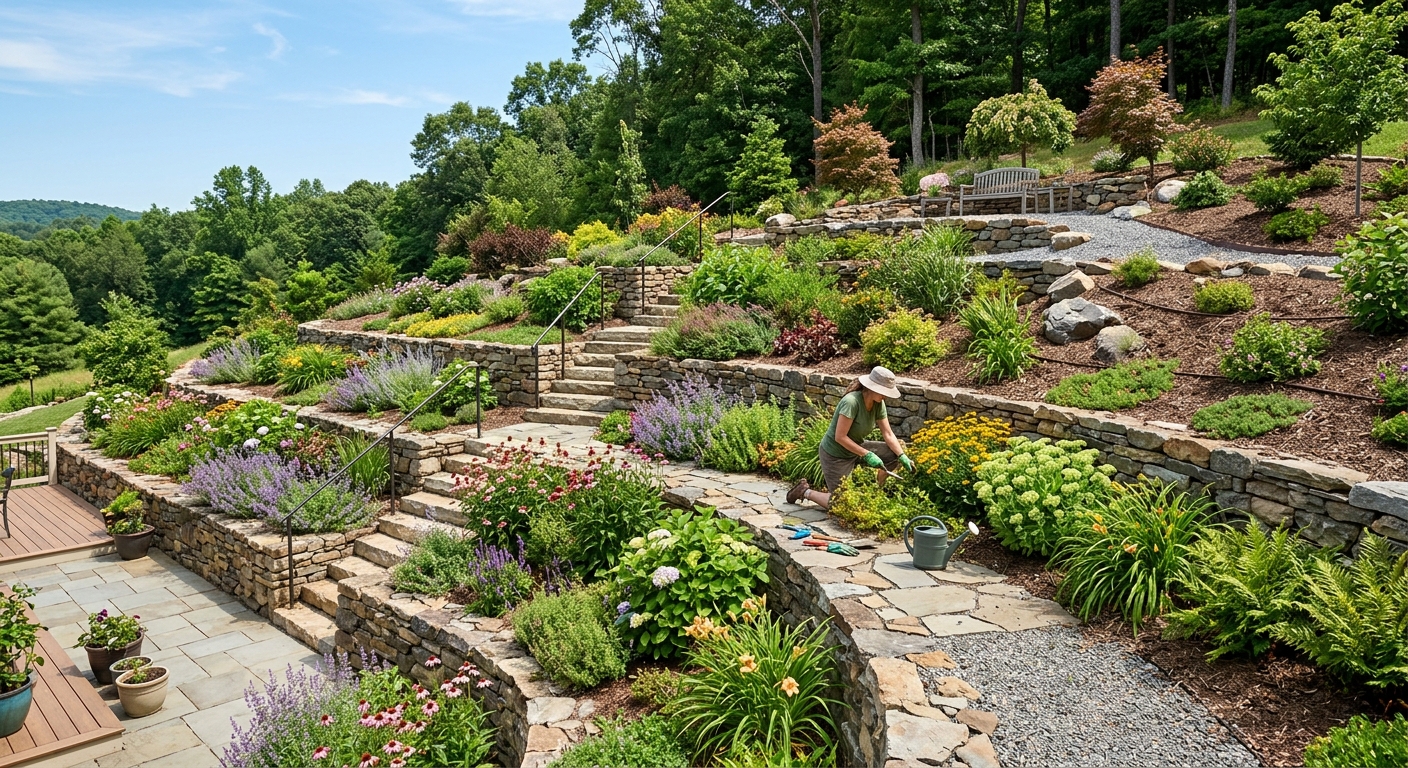
A sloped or hilly yard can be one of the most attractive features of a home. Changes in elevation add character, create natural viewpoints, and provide opportunities for layered planting, stone pathways, terraces, and eye-catching garden beds. However, a hillside garden also presents challenges that flat yards do not. Water can run quickly downhill, soil may erode, mowing can become difficult, and plants can struggle if the slope is exposed to strong sunlight or heavy rainfall.
With the right approach, even a steep or uneven garden can become a practical and beautiful outdoor space. The key is to work with the natural shape of the land instead of constantly trying to make it behave like a flat lawn.
Understand Your Yard Before Landscaping
Before adding plants, paths, retaining walls, or other features, take time to understand how water and soil move across the property. Walk around the yard after rainfall and observe where water collects, where it flows quickly, and which areas appear to lose soil.
The direction of sunlight is equally important. A south-facing slope may receive significantly more sunlight and dry out faster, while a shaded north-facing slope may stay cooler and retain moisture. These conditions should influence your plant choices.
It is also useful to consider how steep different sections are. A gentle slope may only require thoughtful planting and mowing practices, while a very steep area may benefit from terraces, ground covers, steps, or professional landscaping work.
Use Plants to Stabilize the Soil
One of the most important priorities when caring for a hilly garden is controlling erosion. Bare soil is particularly vulnerable because rainfall can carry loose particles downhill. Plant roots help hold the soil together while foliage slows the movement of rainwater.
Choose plants with strong, spreading root systems for areas that are difficult to maintain. Ground covers, ornamental grasses, shrubs, and suitable perennial plants can all help create a living layer of protection.
Avoid leaving large sections of a slope completely bare. If you are waiting for plants to become established, consider using temporary erosion-control materials such as mulch or erosion-control blankets where appropriate.
A mixture of plants is often more effective than relying on a single species. Combining ground covers with shrubs and taller plants can create several layers of vegetation, helping protect the soil at different heights.
Create Terraced Garden Areas
Terracing is one of the most useful landscaping ideas for steep gardens. Instead of treating the entire hillside as one continuous slope, terraces divide it into smaller, more manageable sections.
Terraced beds can be constructed using materials such as natural stone, timber, concrete blocks, or other suitable retaining-wall products. They can be used for flowers, herbs, vegetables, shrubs, or ornamental plants.
Besides improving the appearance of a yard, terraces can slow water movement and make gardening easier. They also provide opportunities to create distinct planting zones, giving a hillside garden a layered and structured appearance.
However, retaining walls need to be designed properly. Drainage is especially important because water pressure behind a wall can cause serious structural problems. For larger or steeper projects, professional advice can help ensure the design is safe and suitable for the property.
Choose Mulch Carefully
Mulch can be extremely useful on a sloped property, but not every type performs equally well on hillsides. Lightweight materials may move downhill during heavy rain or strong winds.
Heavier organic mulch, properly applied, can help reduce soil splash, conserve moisture, and protect plant roots. In particularly steep locations, consider methods that help keep the mulch in place.
Avoid piling mulch directly against tree trunks or plant stems. A moderate, even layer is generally more useful than creating excessively deep piles.
As mulch breaks down, it also contributes organic matter to the soil. This can improve soil structure over time, making it better able to absorb and retain water.
Build Practical Paths and Steps
A beautiful hillside garden should also be easy to navigate. Slopes can become slippery when wet, so a thoughtfully designed pathway can make a major difference.
Instead of creating one long, steep path, consider incorporating gentle curves, switchbacks, or short flights of steps where appropriate. Natural stone, pavers, gravel, and other outdoor materials can be used depending on the style of the property.
Steps should provide secure footing and be designed with drainage in mind. Handrails may also be appropriate for steeper sections or areas frequently used by children, older adults, or visitors.
Paths can do more than provide access. They can divide planting areas, lead toward seating spaces, and create attractive views across the garden.
Plan Your Drainage
Water management is one of the biggest concerns in a hilly yard. A slope naturally encourages water to move downhill, and uncontrolled runoff can wash away soil, expose plant roots, damage pathways, and contribute to flooding in lower areas.
Simple planting can help, but some properties require more deliberate drainage solutions. Depending on the landscape, these may include drainage channels, swales, French drains, strategically positioned rocks, or other water-management features.
The objective should not always be to eliminate water immediately. Good landscaping can slow runoff and encourage water to soak into the ground where appropriate.
If water consistently collects around your home’s foundation, driveway, retaining walls, or other structures, it is worth getting professional advice rather than attempting a major drainage project without understanding the underlying problem.
Select Low-Maintenance Plants
A steep garden can be harder to weed, prune, and water, so choosing plants that require less maintenance can save considerable time.
Native or well-adapted plants are often excellent choices because they are suited to the local climate and soil conditions. Look for varieties that tolerate the amount of sunlight and moisture available on your particular slope.
Evergreen ground covers can provide year-round visual interest, while shrubs can add structure. Perennials can bring seasonal color without requiring annual replanting.
Grouping plants according to their water requirements is another smart strategy. Plants with similar needs can share irrigation, reducing the risk of overwatering or underwatering.
Keep Grass Healthy on Slopes
Many homeowners prefer to maintain part of a hilly yard as lawn because grass creates a clean, open appearance. Keeping that grass neat, however, can be more difficult than maintaining a flat lawn.
Avoid mowing when the grass is wet. Wet slopes can become slippery, increasing the risk of losing control of a mower. Mowing across a steep slope can also present safety concerns depending on the equipment and terrain.
Keep mower blades sharp and avoid cutting grass excessively short. A slightly taller lawn can develop stronger roots and may tolerate dry conditions better.
For very steep areas, replacing some turf with ground covers, shrubs, ornamental grasses, or garden beds may be a better long-term solution than trying to maintain every part of the hillside as traditional lawn.
Robot Lawn Mowers Can Make Hillside Maintenance Easier
For homeowners who want to keep a sloped lawn looking tidy without spending hours pushing a mower uphill, a robot lawn mower can be an appealing option. These automated machines can mow according to a schedule, allowing the lawn to remain consistently maintained with less manual effort.
Not every robotic mower is suitable for every hill. Before purchasing one, check the manufacturer’s specifications for maximum slope capability, traction, navigation, lawn size, and terrain requirements. Features such as strong wheels, reliable sensors, boundary systems, and effective navigation can be particularly important on uneven ground.
Reading robot lawn mower reviews can also help homeowners understand how different models perform in real-world conditions. Reviews may provide useful information about traction, battery performance, navigation, noise levels, and how well a mower handles slopes.
When comparing the best robot mowers for hills, focus on more than price. A model that performs well on a flat lawn may not be the right choice for a property with steep inclines, uneven surfaces, narrow passages, or obstacles.
A robotic mower can be especially convenient when the lawn is large enough to require frequent mowing but still has relatively consistent grass coverage. It can handle routine cutting while you spend your time maintaining flower beds, pruning shrubs, or simply enjoying the garden.
Combine Lawn With Other Landscape Features
A hilly garden does not need to be entirely covered in grass. In fact, combining lawn with other landscape elements can make the property more attractive and easier to maintain.
Consider creating a small lawn area near the house and transitioning into planted slopes farther away. Large decorative rocks can provide visual structure while helping break up open areas. Trees and shrubs can create depth, while flowering plants can add seasonal color.
You can also introduce seating areas at natural points across the slope. A small bench overlooking the garden can turn an otherwise difficult section of the property into one of its most enjoyable features.
Lighting is another way to enhance a hillside after dark. Low-level path lighting can improve visibility, while carefully positioned landscape lights can highlight trees, walls, steps, and planting areas.
Maintain the Garden Throughout the Year
A hillside garden requires ongoing attention, but regular small tasks are usually easier than allowing problems to become severe.
After heavy rainfall, inspect the property for exposed roots, new channels, washed-out soil, damaged paths, or movement around retaining walls. Remove invasive weeds before they become established, replenish mulch when necessary, and prune plants according to their requirements.
Check irrigation systems regularly as well. Sprinklers that apply too much water too quickly can contribute to runoff, particularly on steep slopes. Drip irrigation or carefully positioned irrigation systems may provide better control in planted areas.
During autumn, fallen leaves can be useful as organic material, but thick layers should not be allowed to smother grass or plants. In winter, pay attention to drainage and areas where freezing and thawing could affect paths, walls, or soil stability.
Make the Slope Work for You
A hilly yard does not have to be a landscaping problem. With thoughtful planting, erosion control, practical pathways, good drainage, and appropriate lawn-maintenance equipment, a slope can become one of the most distinctive parts of a home.
The best approach is to divide the property into manageable zones. Use strong-rooted plants where erosion is a concern, terraces where gardening space is needed, paths where access is difficult, and lawn only where it can be maintained safely and effectively.
For grassy areas, modern tools such as robot lawn mowers can reduce routine maintenance and help keep the landscape looking consistently neat. Combined with smart plant selection and good water management, these strategies can turn even a challenging hillside into an attractive, functional garden that homeowners can enjoy throughout the year.