
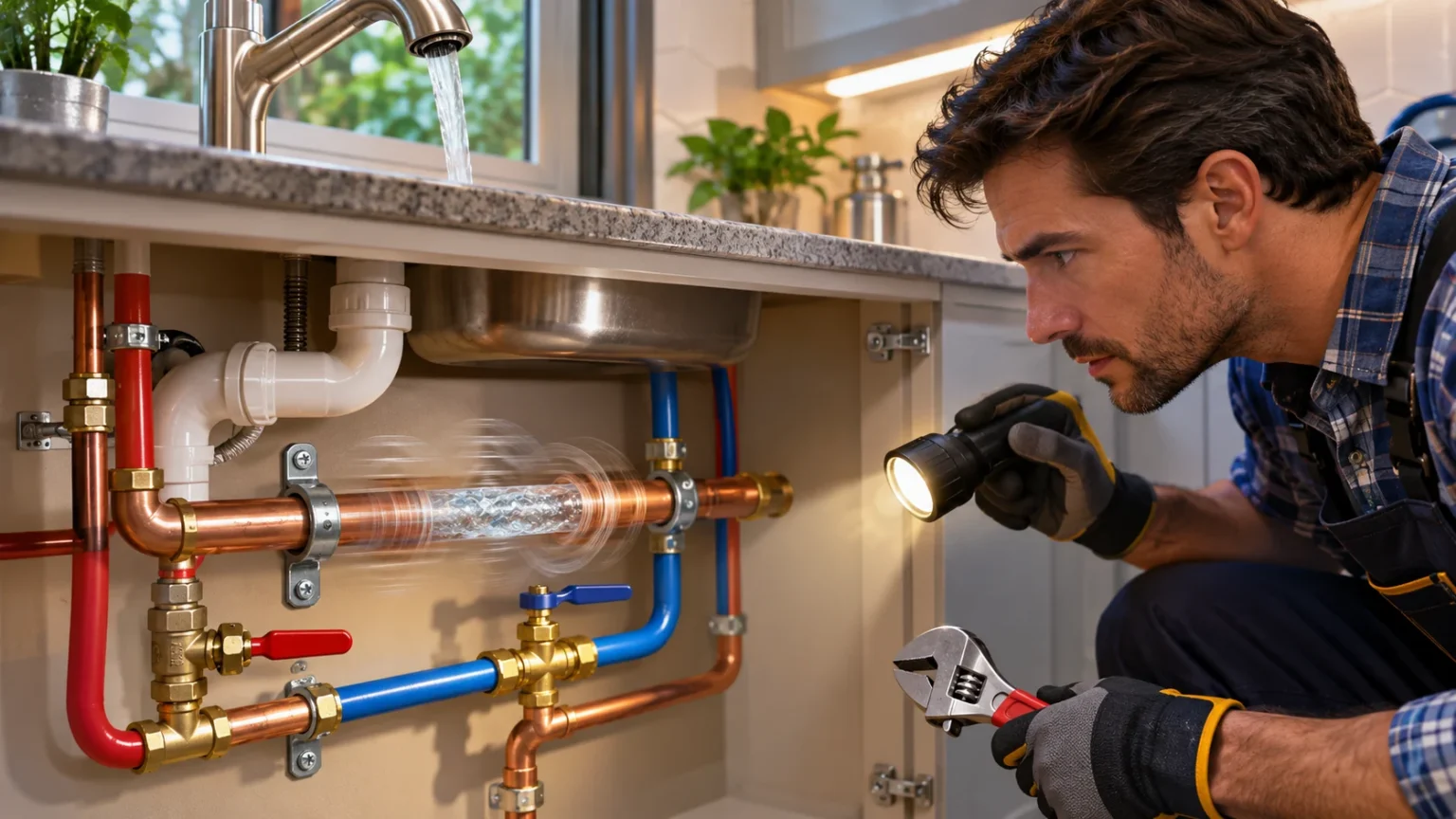
Have you ever heard a loud banging or knocking sound coming from your walls after turning off a faucet? This sudden noise can be surprising, especially when it happens repeatedly after using a washing machine, dishwasher, or other plumbing fixture. Many homeowners ignore these sounds, but they can indicate pressure changes that place unnecessary stress on pipes and plumbing connections.
Water hammer is a common plumbing problem that occurs when flowing water suddenly stops or changes direction, creating a pressure surge inside the pipes. Although some cases cause little more than noise, repeated pressure shocks can contribute to plumbing damage over time. Understanding its causes, warning signs, and practical solutions can help homeowners protect their plumbing systems and know when professional repairs are necessary.
What Is Water Hammer in Plumbing?
Water hammer is a hydraulic pressure surge that occurs when moving water is forced to stop or change direction suddenly. The resulting pressure wave travels through the plumbing system and may create a loud banging sound. This phenomenon is also known as hydraulic shock and can occur in residential, commercial, and industrial water systems.
The noise often becomes noticeable when a faucet closes quickly or an appliance stops filling with water. Because water has momentum while moving through pipes, stopping its movement abruptly creates a temporary pressure increase. This pressure wave can travel through the plumbing and interact with bends, valves, and other components.
Water hammer is not always accompanied by a loud sound, and not every pipe noise indicates hydraulic shock. Loose pipes, thermal expansion, and faulty plumbing components can produce similar symptoms. Understanding the difference is important because the correct solution depends on identifying what actually causes the disturbance.
What Causes Water Hammer in Household Pipes?
The most common cause of water hammer is a valve that closes faster than the flowing water can slow down. When the valve shuts suddenly, water momentum creates a pressure wave that travels through the plumbing system. Rapid-closing valves in washing machines and dishwashers are frequent sources of this problem.
Excessive water pressure can make hydraulic shock more noticeable and increase stress on plumbing components. Fast-moving water may also contribute to stronger pressure changes when flow stops abruptly. However, water hammer can occur even when normal operating pressure falls within acceptable limits, especially in systems with quick-closing valves.
Plumbing layout and installation conditions can also influence the severity of water hammer. Long pipe runs, insufficient support, and poorly positioned valves may increase vibration or make pressure changes more noticeable. In some homes, several factors contribute to the same noise, requiring a careful inspection before choosing a repair.
Common Signs and Symptoms of Water Hammer
A sudden banging sound after turning off a faucet is one of the most recognizable signs of water hammer. The noise may seem to come from inside a wall, beneath a floor, or near a plumbing fixture. It often occurs immediately after water flow stops rather than continuing throughout normal operation.
Some homeowners notice pipe vibration or movement when appliances operate. Washing machines and dishwashers may produce repeated knocking sounds as their internal valves open and close during different cycles. These symptoms can become more noticeable when plumbing pipes are loosely secured or located near wooden framing.
More serious situations may involve leaking connections or visible movement around exposed plumbing. However, these symptoms can also indicate unrelated plumbing defects. If banging sounds become stronger, leaks appear, or pipe movement seems excessive, a qualified plumber should inspect the system before further damage occurs.
Why Does Water Hammer Happen When Turning Off a Faucet?
Water hammer frequently occurs when a faucet is closed quickly because flowing water loses its normal path almost immediately. The sudden interruption creates a pressure wave that moves through the connected pipes. This effect is particularly noticeable when water is moving rapidly before the valve closes.
Different faucets can produce different results depending on their valve mechanisms. Some modern fixtures stop water flow very quickly, while others close more gradually. A rapidly closing valve may create a stronger hydraulic shock under certain conditions, although pipe layout and water pressure also influence the outcome.
If the noise appears only at one faucet, the problem may be associated with that fixture or its nearby plumbing. Sounds occurring throughout the house could indicate a broader pressure or pipe-support issue. Identifying which fixtures trigger the noise helps narrow down the likely cause before repairs begin.
Why Washing Machines and Dishwashers Cause Water Hammer
Washing machines commonly cause water hammer because they use electrically controlled valves to manage water intake. These valves can stop flowing water almost instantly when the appliance reaches the required fill level. The sudden closure may produce a noticeable pressure wave in the connected household plumbing.
Dishwashers operate through a similar process, opening and closing water inlet valves during their cleaning cycles. Homeowners may hear a sharp knocking sound when the appliance stops drawing water. The noise can travel along shared supply pipes, sometimes making it difficult to identify the original source.
Repeated banging during appliance operation does not automatically mean the appliance itself is defective. The problem may involve existing water pressure, pipe supports, or the absence of suitable surge protection. A plumber can assess whether a compatible water hammer arrestor or another plumbing correction is appropriate.
Can High Water Pressure Cause Water Hammer?
High water pressure can contribute to water hammer by increasing the force associated with sudden changes in flow. When water moves quickly through household pipes, rapid valve closure may create a stronger pressure surge. This can make banging sounds louder and place additional stress on plumbing connections.
Excessive pressure can also cause other plumbing problems, including leaks, valve wear, and unnecessary strain on fixtures. However, high pressure and water hammer are not the same issue. A home may experience hydraulic shock even when its water pressure is within the recommended operating range.
A licensed plumber can measure household water pressure and determine whether it exceeds appropriate limits. Many residential plumbing standards use approximately 80 psi as an upper pressure threshold, although local requirements vary. Pressure regulation may be necessary when readings are excessive, but it should not be assumed to solve every water hammer problem.
How Water Hammer Can Damage Your Plumbing System
Repeated hydraulic shock can place additional stress on pipe joints, valves, and fittings. Each pressure surge creates a temporary force that the plumbing system must absorb. Over time, frequent or severe pressure changes may contribute to leaks or damage, particularly where components are already weakened.
Loose plumbing pipes may also move when pressure waves travel through the system. This movement can cause pipes to strike nearby framing materials, creating loud knocking sounds. Repeated vibration may affect supports or connections, although the severity depends on installation quality and the strength of the pressure changes.
Not every minor water hammer event causes immediate damage, but persistent symptoms deserve attention. Ignoring strong banging or visible pipe movement may allow underlying problems to worsen. Identifying the cause and applying a suitable repair helps protect plumbing reliability and may prevent more expensive maintenance later.
How to Identify the Source of Water Hammer
Identifying the source begins with observing when the banging noise occurs. Note whether it happens after closing a faucet, when a toilet finishes filling, or during an appliance cycle. The timing provides useful clues because true water hammer typically follows a sudden change in water flow.
The location of the sound can also help narrow the problem. Noise near a washing machine may suggest an issue associated with its supply lines, while knocking throughout several rooms may indicate shared plumbing. However, sound travels through pipes and building materials, so the loudest location may not be the source.
Homeowners can also check exposed plumbing for obvious movement or loose supports without dismantling fixtures. Any visible leaks, damaged connections, or unusual vibration should be assessed professionally. If the cause remains uncertain, a plumber can evaluate pressure conditions, valve behavior, and the plumbing layout.
How to Fix Water Hammer in Your Home
Fixing water hammer requires addressing the condition responsible for the pressure surge or resulting pipe movement. Common solutions include installing suitable water hammer arrestors, correcting excessive water pressure, and securing loose pipes. The appropriate repair depends on whether the main issue involves valve closure, pressure conditions, or inadequate support.
A water hammer arrestor is designed to absorb sudden pressure changes before they travel through the plumbing system. These devices are often installed near quick-closing valves or appliances that trigger hydraulic shock. They should be properly sized, installed, and approved for the plumbing application to provide reliable performance.
Other repairs may involve replacing defective valves or correcting problems with existing plumbing components. Some homes require more than one solution when several factors contribute to the noise. Persistent or severe water hammer is best evaluated by a qualified plumber who can identify the cause without unnecessary modifications.
What Is a Water Hammer Arrestor?
A water hammer arrestor is a plumbing device designed to reduce pressure surges caused by sudden changes in water flow. It typically contains a sealed air or gas chamber separated from the water by a piston or diaphragm. This arrangement absorbs some of the pressure energy generated when a valve closes quickly.
Modern mechanical arrestors are designed to provide more consistent performance than older open air-chamber arrangements. They are available in different sizes and configurations for residential and commercial applications. Selecting the correct device depends on the plumbing system, fixture requirements, and applicable installation standards.
Water hammer arrestors are commonly associated with washing machines, dishwashers, and other fixtures containing fast-closing valves. However, installing one without identifying the problem may not eliminate every knocking sound. Proper diagnosis ensures the device addresses hydraulic shock rather than an unrelated source of plumbing noise.
Do Air Chambers Help Prevent Water Hammer?
Traditional plumbing systems sometimes use air chambers to cushion sudden changes in water pressure. These chambers contain trapped air that can compress when pressure increases. Because air compresses more easily than water, it can temporarily absorb part of the energy created by a pressure surge.
Over time, older open air chambers may become waterlogged as trapped air dissolves into the plumbing water. When this happens, their cushioning effect can decrease. A return of banging noises may indicate that the system no longer has adequate pressure-surge protection, although other causes are possible.
Modern sealed water hammer arrestors generally provide a more dependable alternative because their gas chambers remain separated from the water. Homeowners should not assume that draining household pipes will permanently correct a waterlogged chamber. A professional assessment can determine whether replacing outdated protection is the better long-term solution.
How to Reduce Water Pressure Safely
Reducing excessive water pressure may help limit plumbing stress and decrease the severity of some water hammer events. Homes with unusually high supply pressure may benefit from a properly functioning pressure-reducing valve. This component regulates incoming water pressure before it reaches household fixtures and appliances.
However, adjusting pressure equipment requires an understanding of the plumbing system and local requirements. Incorrect settings can create insufficient flow, affect appliance performance, or fail to address the actual problem. Homeowners should avoid making unfamiliar adjustments to pressure-regulating equipment without suitable guidance.
A plumber can measure pressure under appropriate conditions and inspect existing regulators for faults. They may also check whether a closed plumbing system requires additional thermal expansion protection. Addressing these related conditions helps maintain safe pressure levels while supporting reliable operation throughout the home’s water supply system.
Why Securing Loose Pipes Is Important
Loose pipes can make water hammer significantly louder because they move when a pressure wave passes through them. The resulting vibration may cause plumbing lines to strike nearby framing, cabinets, or other surfaces. Proper support reduces unnecessary movement and helps keep water pipes stable during normal operation.
Pipe supports must accommodate the material, size, and movement characteristics of the plumbing system. Copper, plastic, and other pipe materials may require different fastening arrangements. Improperly tightened supports can create additional stress or interfere with normal thermal expansion, making correct installation important.
Securing loose pipes may reduce banging sounds, but it does not necessarily eliminate the hydraulic pressure surge itself. If water hammer remains strong after movement is controlled, additional protection may be necessary. A plumber can evaluate whether pipe supports, arrestors, or pressure regulation should be addressed together.
Water Hammer vs. Other Plumbing Noises
Not every knocking or tapping sound in household plumbing is caused by water hammer. Pipes can produce noises when hot water causes them to expand against nearby surfaces. These sounds often develop gradually as temperatures change rather than appearing immediately after a valve closes.
A running toilet, worn valve, or loose washer can also create unusual plumbing sounds. Some systems produce humming, rattling, or repeated vibrations while water continues flowing. These symptoms may indicate different mechanical problems and require repairs unrelated to hydraulic shock.
The timing and character of the sound are important clues during diagnosis. Water hammer often creates a sharp bang following sudden valve closure, while thermal expansion may produce intermittent ticking. Understanding these differences helps homeowners describe the problem accurately and avoid purchasing ineffective plumbing accessories.
Can Water Hammer Occur in Hot Water Pipes?
Water hammer can occur in hot water pipes because the same hydraulic principles apply to both hot and cold water systems. Sudden valve closure can interrupt flowing hot water and create a pressure wave. The resulting noise may travel through connected plumbing, particularly where pipes have limited support.
Hot water systems can also produce sounds caused by thermal expansion. As water temperature increases, pipes may expand slightly and move against nearby structural materials. These noises are often mistaken for water hammer, especially when they originate inside walls or beneath floors.
Distinguishing between pressure shock and temperature-related movement is essential for selecting the correct repair. Water hammer arrestors address hydraulic surges, while thermal expansion noises may require different support or clearance arrangements. A professional inspection can help identify which condition is responsible for repeated sounds.
How to Prevent Water Hammer in the Future
Preventing water hammer begins with maintaining suitable pressure conditions and properly supported plumbing pipes. Sudden valve closure is a common trigger, so appropriate surge protection may be necessary around certain fixtures. A well-designed system can reduce pressure fluctuations while allowing normal water flow and appliance operation.
Regular plumbing maintenance also helps identify developing problems before they become severe. Homeowners should pay attention to new banging sounds, visible leaks, and unusual pipe movement. Early professional evaluation may prevent unnecessary damage and reduce the need for extensive repairs later.
When replacing appliances or renovating plumbing, consider whether additional water hammer protection is needed. Modern fixtures with fast-acting valves can create different pressure conditions from older equipment. Planning suitable pipe supports, pressure regulation, and arrestor placement during installation helps improve long-term plumbing performance.
When Should You Call a Professional Plumber?
Professional assistance is advisable when water hammer produces repeated loud banging, visible pipe movement, or signs of leakage. These symptoms may indicate significant pressure surges or weakened plumbing connections. A plumber can investigate the cause and recommend repairs appropriate for the home’s piping materials and system design.
A professional inspection is also useful when the sound affects several fixtures or continues despite previous repairs. The problem may involve pressure regulation, valve behavior, or multiple plumbing components. Identifying the underlying cause helps prevent repeated spending on accessories that do not address the actual issue.
Sudden leaks, damaged fittings, or rapid changes in water pressure deserve prompt attention because they may lead to property damage. If water is actively escaping, use the main shutoff valve if it is safe and accessible, and seek urgent plumbing assistance. Addressing serious symptoms quickly helps limit damage and restore normal water service.
Conclusion
Water hammer is a common plumbing problem caused by sudden changes in water flow that create pressure surges inside pipes. The resulting banging noise can occur after closing faucets or when appliances stop filling with water. Although some cases are mainly a nuisance, repeated hydraulic shock may place unnecessary stress on plumbing components.
The most effective solutions depend on identifying the underlying cause. Water hammer arrestors, properly secured pipes, suitable pressure regulation, and repairs to faulty valves can all help under appropriate conditions. Understanding the difference between hydraulic shock and other plumbing noises prevents unnecessary repairs and improves the likelihood of lasting results.
Regular maintenance and early attention to unusual sounds help protect a home’s plumbing system. Homeowners can observe when noises occur and check for visible problems, while qualified plumbers can diagnose more complex pressure-related conditions. With appropriate repairs and preventive measures, water hammer can often be reduced or eliminated, supporting quieter and more reliable plumbing.
Frequently Asked Questions
What Is the Main Cause of Water Hammer?
Water hammer occurs when flowing water suddenly stops or changes direction, creating a pressure surge. Rapidly closing valves in faucets, washing machines, and dishwashers are common triggers in household plumbing systems.
Is Water Hammer Dangerous for Plumbing Pipes?
Repeated or severe water hammer can place stress on pipes, joints, fittings, and valves. Although minor events may not cause immediate damage, persistent banging deserves attention to reduce potential plumbing problems.
Can Water Hammer Go Away on Its Own?
Water hammer may become less noticeable when water pressure or usage patterns change, but the underlying cause often remains. Persistent symptoms generally require proper diagnosis and suitable plumbing corrections.
Do Water Hammer Arrestors Really Work?
Properly selected and installed water hammer arrestors can effectively reduce hydraulic pressure surges. However, they may not resolve noises caused by loose pipes, thermal expansion, or unrelated plumbing problems.
How Much Does It Cost to Fix Water Hammer?
Repair costs depend on the cause, plumbing accessibility, and required components. Simple arrestor installations may cost less than extensive pipe repairs or pressure-regulation work, so professional estimates are useful.