
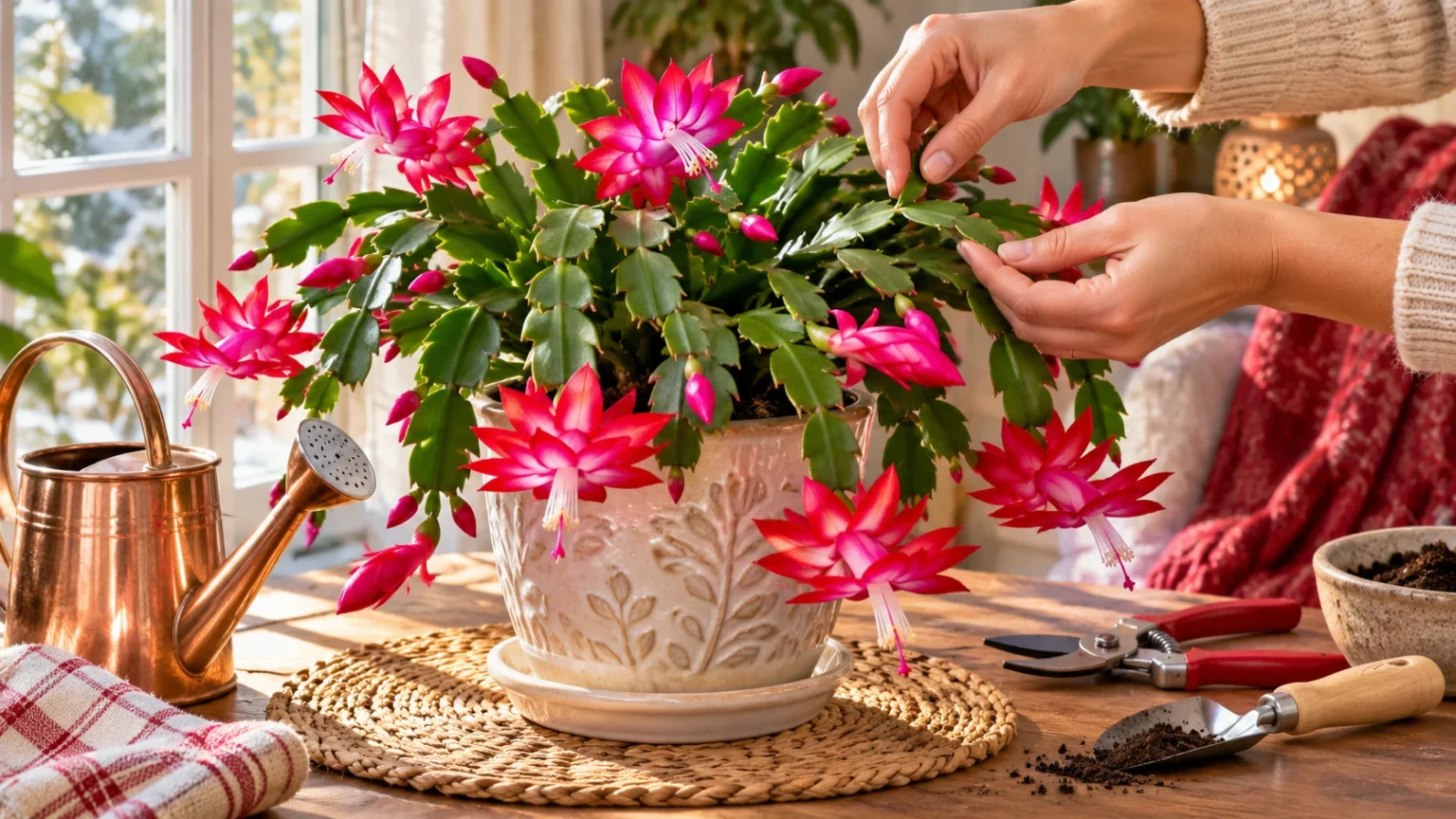
What Is a Christmas Cactus?
A Christmas cactus is a popular indoor flowering plant known for its colorful blooms and unusual segmented stems. Unlike traditional desert cacti, it naturally grows in humid forest environments and prefers different growing conditions. Its flowers commonly appear in shades of pink, red, white, purple, and orange, making it a favorite houseplant during the holiday season.
The Christmas cactus belongs to the Schlumbergera group, which includes several closely related holiday cacti. These plants naturally grow in parts of southeastern Brazil, often on trees or rocks in shaded environments. Their flattened green stems store moisture, while their flowers develop near the tips of mature stem segments under suitable environmental conditions.
Learning proper Christmas cactus care helps keep the plant healthy and encourages reliable flowering year after year. Light, watering, temperature, soil, and seasonal rest all influence its growth and blooming cycle. This guide explains how to care for a Christmas cactus, recognize common problems, and create the conditions needed to help it bloom again.
Understanding the Christmas Cactus Blooming Cycle
Christmas cactus plants follow a seasonal flowering cycle influenced by light exposure, temperature, and overall growing conditions. Unlike many flowering houseplants, they generally require a period of longer nights or cooler temperatures to initiate flower buds. Understanding this natural pattern makes it easier to encourage blooming without relying on unnecessary fertilizers or complicated treatments.
The flowering season usually occurs during late autumn and winter, although exact timing depends on the species, cultivar, and indoor environment. Thanksgiving cactus varieties often bloom earlier than true Christmas cactus plants. Because these plants are closely related and frequently sold under similar names, their flowering schedules can overlap.
After flowering, the plant normally enters a quieter period before producing new growth during warmer months. Providing suitable care throughout the year supports healthy stems and future flower development. Seasonal changes in watering, light, and temperature can help the plant follow its natural growth cycle while maintaining overall health.
Best Light Conditions for Christmas Cactus Care
Christmas cactus plants prefer bright, indirect light because their natural habitat provides filtered sunlight through surrounding vegetation. Indoors, a location near an east-facing window often offers suitable conditions. A bright room with gentle morning sunlight can support healthy growth without exposing the stems to excessive afternoon heat.
Direct sunlight is not always harmful, but intense exposure may cause discoloration, stress, or damaged stem segments. This problem is more likely near hot windows during summer. If the plant develops pale, reddish, or yellowish areas after strong sunlight exposure, moving it to a slightly more sheltered location may help.
Insufficient light can also affect plant development and reduce flowering potential. A Christmas cactus kept in a very dark corner may grow slowly and produce fewer flower buds. Aim for consistent, filtered brightness throughout the growing season, then adjust its evening light exposure when preparing the plant for its seasonal blooming period.
How Often Should You Water a Christmas Cactus?
Watering is one of the most important parts of Christmas cactus care because the plant needs moisture without remaining constantly wet. Its natural environment differs from the dry desert conditions associated with many other cacti. The soil should generally be allowed to dry slightly between waterings while avoiding prolonged periods of complete dryness.
Check the potting mix by placing a finger approximately one inch into the soil. When the upper layer feels dry, water thoroughly until excess moisture drains from the bottom of the pot. Empty any collected water from the saucer so the roots are not left standing in moisture for extended periods.
Watering frequency changes with temperature, light, pot size, and seasonal growth. A plant in a warm room may need moisture more frequently than one kept in a cooler environment. Rather than following a fixed weekly schedule, observe the soil and plant condition to determine when watering is actually necessary.
Choosing the Right Soil for a Christmas Cactus
Christmas cactus plants grow best in a loose, well-draining potting mixture that retains some moisture without becoming waterlogged. Their roots need access to both water and oxygen for healthy development. Dense garden soil or heavy potting mixes may stay wet too long, increasing the risk of root problems.
A suitable mixture can include standard indoor potting soil combined with perlite, fine orchid bark, or other materials that improve drainage. Commercial mixes designed for epiphytic cacti may also provide appropriate growing conditions. The goal is to create a balanced medium that supports moisture retention while allowing excess water to drain away.
Avoid using outdoor garden soil directly in indoor containers because it may compact and drain poorly. The potting mix should remain light enough for roots to grow comfortably through it. Refreshing old, compacted soil during appropriate repotting can improve drainage and create healthier conditions for continued plant growth.
Best Temperature for Healthy Christmas Cactus Growth
Christmas cactus plants generally grow well in comfortable indoor temperatures ranging from approximately 60°F to 75°F (16°C to 24°C). Stable conditions support healthy stem development and reduce environmental stress. Extreme heat, cold drafts, and sudden temperature changes may interfere with normal growth or affect developing flower buds.
During the growing season, ordinary room temperatures are usually suitable when light and moisture are adequate. Avoid placing the plant directly beside heating vents, air-conditioning outlets, or frequently opened exterior doors. These locations can create sudden environmental changes that affect both soil moisture and plant condition.
Cooler temperatures can help encourage flowering when the plant approaches its seasonal blooming period. Nighttime conditions around 55°F to 65°F (13°C to 18°C) may support bud formation, provided the plant is protected from frost. Temperatures should remain within a safe range, and the plant should never be exposed to freezing conditions.
How to Make a Christmas Cactus Bloom Again
Helping a Christmas cactus bloom again requires providing the environmental signals that encourage flower bud development. During early autumn, the plant benefits from a consistent routine involving longer uninterrupted nights or appropriately cool temperatures. These conditions signal seasonal changes and encourage the plant to shift from ordinary growth toward flowering.
One practical approach involves providing approximately 12 to 14 hours of uninterrupted darkness each night for several weeks. Keep the plant in a location where lamps and other artificial lights do not interrupt the dark period. During the day, provide suitable indirect sunlight so the plant continues receiving the energy needed for healthy development.
Flower buds may begin appearing after several weeks when conditions are appropriate, although individual plants respond differently. Once buds develop, maintain reasonably stable light, temperature, and watering conditions. Avoid sudden environmental changes because stressed plants may drop developing buds before the flowers have an opportunity to open.
Why Your Christmas Cactus Is Not Blooming
A Christmas cactus may fail to bloom when it does not receive the seasonal light or temperature conditions needed for bud formation. Bright artificial lighting during the evening can interrupt the natural darkness period. Consistently warm conditions may also reduce flowering signals, especially when the plant has experienced little seasonal variation.
Other possible causes include insufficient daylight, improper watering, and general plant stress. A Christmas cactus that has recently experienced root damage or severe dehydration may prioritize recovery over flower production. Excessive fertilizer can also encourage leafy stem growth without necessarily improving flowering, particularly when the plant already receives sufficient nutrients.
Before changing several care habits at once, examine the plant’s overall condition and growing environment. Check its exposure to evening lights, soil moisture, and temperature stability. Improving these basic conditions is often more useful than applying additional products or repeatedly moving the plant between different rooms.
How to Fertilize a Christmas Cactus Properly
Christmas cactus plants benefit from moderate nutrition during periods of active growth. A balanced, water-soluble houseplant fertilizer can provide nutrients that support healthy stems and future flowering. However, these plants generally do not require heavy feeding, and excessive fertilizer may damage roots or lead to unwanted salt accumulation.
During spring and summer, apply a suitable fertilizer according to its label instructions, often using a diluted concentration for sensitive houseplants. Reduce or stop feeding when the plant enters its seasonal resting and bud-forming period. Nutrient needs vary with potting mix, plant size, and overall growth conditions, so observation remains important.
Avoid fertilizing a plant that is severely stressed, dehydrated, or suffering from damaged roots. Correcting the underlying growing conditions should take priority over adding nutrients. Healthy plants growing in appropriate soil with suitable watering often require only occasional feeding to maintain consistent development.
When and How to Repot a Christmas Cactus
Christmas cactus plants do not need frequent repotting because they often grow comfortably in slightly snug containers. Repotting every few years may be sufficient, depending on root development and soil condition. The plant may need a new container when roots become crowded or the potting mixture loses its drainage quality.
The period after flowering, particularly during spring, is often a convenient time to repot. Choose a container only slightly larger than the previous one and make sure it has drainage holes. Carefully remove the plant, inspect the roots, and transfer it into fresh, suitable potting mix without damaging healthy stem sections.
After repotting, provide stable indirect light and avoid unnecessary environmental stress while the roots settle. Water appropriately according to the moisture level of the new soil. Oversized containers can retain excess moisture around a small root system, so increasing pot size gradually is generally preferable.
How to Prune a Christmas Cactus for Better Growth
Pruning helps maintain the shape of a Christmas cactus and encourages branching when performed at the appropriate time. The plant naturally develops jointed stems that can become long or uneven as it matures. Removing selected segments creates a more balanced appearance while providing opportunities to propagate additional plants.
The best time to prune is usually after flowering, when the plant begins preparing for its active growing period. Gently twist or remove one or two segments from selected stem tips at their natural joints. Avoid removing too much growth at once because the plant needs healthy stems to support energy production and future flowers.
Pruning can also remove damaged or unhealthy sections that affect the plant’s appearance. Use clean hands or suitable sanitized tools to reduce the risk of introducing pathogens. After trimming, continue normal care and allow the plant time to develop new branches before expecting another flowering cycle.
How to Propagate Christmas Cactus From Cuttings
Christmas cactus propagation is a simple way to grow new plants from healthy stem sections. Each cutting should contain approximately two to four connected segments taken from a mature plant. Propagation is often successful during spring or early summer, when active growth provides favorable conditions for root development.
Allow freshly removed cuttings to rest briefly so the cut end can begin drying before planting. Insert the lower segment into a small container filled with lightly moist, well-draining potting mix. Keep the cutting in bright, indirect light and avoid soaking the soil, as excessive moisture may encourage decay.
Roots generally develop over several weeks when temperature and moisture conditions remain appropriate. New stem growth can indicate that the cutting is becoming established, although rooting speed varies. Once the young plant develops a healthy root system, continue routine Christmas cactus care and allow it to mature gradually.
Why Christmas Cactus Leaves Become Limp or Wrinkled
Limp or wrinkled Christmas cactus stems often indicate that the plant is having difficulty maintaining adequate moisture. This can happen when the soil becomes excessively dry or when damaged roots cannot absorb water effectively. Because both underwatering and overwatering can create similar symptoms, checking soil conditions is essential before responding.
If the soil is completely dry, thorough watering may help restore hydration over time. However, soil that remains consistently wet can contribute to root damage and prevent normal moisture absorption. In that situation, adding more water may make the problem worse rather than improving the plant’s condition.
Inspect the drainage holes, potting mix, and root system if symptoms continue despite appropriate care. Healthy roots are generally firm, while severely damaged roots may appear soft or discolored. Addressing the underlying moisture or drainage issue gives the plant a better opportunity to recover than relying on repeated watering adjustments alone.
Why Christmas Cactus Flower Buds Fall Off
Christmas cactus bud drop occurs when developing flowers detach before fully opening. This problem can result from sudden environmental changes, irregular watering, or temperature fluctuations. Plants may also respond to changes in light exposure after being moved from one location to another during the sensitive budding stage.
Dry air and moisture stress can contribute to bud loss, especially when indoor heating changes the surrounding environment. However, excessive watering can also create problems by affecting root health. Maintaining consistent soil moisture and avoiding extreme conditions helps support developing buds without placing unnecessary stress on the plant.
Once flower buds appear, keep the Christmas cactus in a stable location with suitable indirect light. Avoid repeatedly changing its position or exposing it to cold drafts. Although occasional bud loss may occur naturally, repeated problems suggest that the growing environment needs closer attention before the next blooming season.
Common Christmas Cactus Pests and Diseases
Christmas cactus plants can occasionally develop problems involving pests such as mealybugs, scale insects, and spider mites. These pests may appear on stem joints, undersides, or sheltered areas of the plant. Early signs can include visible insects, sticky residue, discoloration, or unusual changes in stem condition.
Regular inspection helps identify infestations before they spread to nearby houseplants. Isolating an affected plant and gently removing visible pests may help manage minor problems. If additional treatment is necessary, choose a product specifically labeled for the plant and pest, following its instructions carefully to avoid unnecessary damage.
Root rot and other moisture-related diseases are also concerns when soil remains wet for extended periods. Poor drainage and excessive watering create conditions that can damage sensitive roots. Preventive care involves using suitable potting mix, allowing excess water to drain, and avoiding repeated watering when the soil is already moist.
Christmas Cactus Care During Different Seasons
Spring is generally a period of renewed growth for Christmas cactus plants after their winter flowering cycle. This is a suitable time for light pruning, repotting when necessary, and gradually resuming fertilization. Provide bright, indirect light and appropriate watering as new stem segments begin developing.
During summer, the plant may benefit from a sheltered outdoor location if temperatures are suitable. Avoid harsh direct sunlight, strong winds, and excessive rainfall that could leave the potting mix waterlogged. Check moisture regularly because warmer conditions and increased airflow may cause the soil to dry more quickly than expected.
Autumn is the most important preparation period for encouraging seasonal flowers. Longer uninterrupted nights and suitable cooler temperatures can help initiate buds. During winter flowering, maintain stable conditions, water according to soil moisture, and avoid sudden changes that might interrupt the blooming process.
Christmas Cactus vs Thanksgiving Cactus: Key Differences
Christmas cactus and Thanksgiving cactus are closely related plants that are frequently confused with each other. Both belong to the Schlumbergera group and produce colorful flowers during cooler months. Their similar appearance and overlapping flowering seasons make correct identification difficult for many houseplant owners.
Thanksgiving cactus, commonly associated with Schlumbergera truncata, typically has stem segments with more pointed, claw-like edges. True Christmas cactus, commonly identified as Schlumbergera × buckleyi, usually has smoother, rounded segment margins. Flower orientation and shape can also provide identification clues, although cultivated varieties may show some variation.
Both plants require broadly similar care involving indirect light, appropriate moisture, and seasonal conditions that encourage flowering. Their blooming schedules may differ, but temperature and lighting can influence exact timing. Understanding which variety you own can help establish realistic expectations rather than assuming every holiday cactus should bloom on the same date.
Conclusion
Christmas cactus care involves understanding the plant’s natural preference for filtered light, well-draining soil, and consistent moisture. Unlike desert cacti, these tropical plants generally need regular attention to soil conditions and humidity. Providing suitable growing conditions throughout the year supports healthy stems and creates a foundation for successful seasonal flowering.
Encouraging a Christmas cactus to bloom again requires attention to nighttime darkness, cooler temperatures, and environmental stability. Bud formation often begins when the plant experiences consistent seasonal signals during autumn. Once buds appear, avoiding sudden changes in watering, light, or temperature can help protect the developing flowers.
With proper care, a Christmas cactus can remain a beautiful houseplant for many years and produce colorful blooms across multiple seasons. Regular observation, occasional pruning, and appropriate repotting help maintain healthy growth. By following these practical Christmas cactus care tips, you can enjoy a thriving plant and improve its chances of flowering again.
Frequently Asked Questions (FAQs)
How often should I water a Christmas cactus?
Water a Christmas cactus when the upper inch of potting soil feels dry. Water thoroughly and allow excess moisture to drain, adjusting the frequency according to temperature, season, and growing conditions.
How do I get my Christmas cactus to bloom again?
Provide approximately 12 to 14 hours of uninterrupted darkness each night for several weeks or suitable cooler conditions during autumn. Maintain consistent watering and indirect daylight to encourage flower bud development.
Does a Christmas cactus need direct sunlight?
A Christmas cactus generally prefers bright, indirect sunlight. Gentle morning sun may be suitable, but intense direct afternoon sunlight can stress or damage the stems, particularly during hot weather.
Why is my Christmas cactus growing but not flowering?
Insufficient nighttime darkness, consistently warm temperatures, or unsuitable environmental conditions can prevent blooming. Excessive fertilizer, low light, and general plant stress may also contribute to limited flower production.
How long can a Christmas cactus live?
A well-maintained Christmas cactus can live for several decades under suitable growing conditions. Consistent watering, proper light, occasional repotting, and appropriate seasonal care support long-term growth and repeated flowering.