
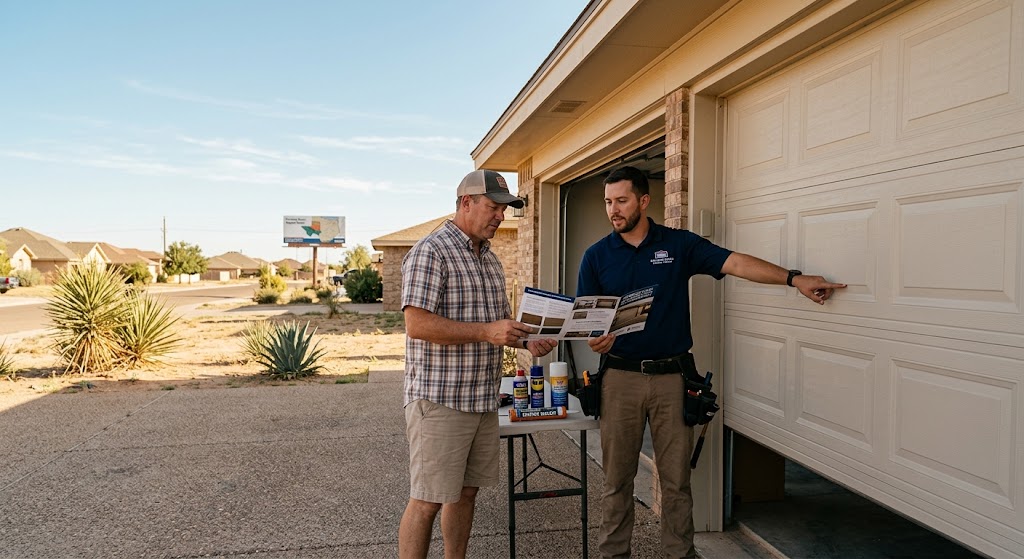
For homeowners in the Permian Basin, a garage door has to handle more than everyday opening and closing. The region’s hot, dry climate can expose garage doors to intense sunlight, high temperatures, blowing dust, strong winds, and rapid weather changes. Over time, these conditions can affect door materials, hardware, insulation, springs, rollers, and automatic openers.
Choosing the right garage door and following a consistent maintenance routine can help extend its service life, improve energy efficiency, and reduce the likelihood of unexpected repairs. Whether replacing an aging door or maintaining an existing one, homeowners should consider the local environment when making decisions.
How Heat Affects Garage Doors
High temperatures can accelerate wear on several garage door components. Direct sunlight can cause some exterior finishes to fade, discolor, or deteriorate, particularly when a door receives several hours of intense afternoon sun.
Heat can also affect lubricants, seals, electronic components, and other materials. While quality garage doors are designed to withstand outdoor conditions, prolonged exposure can gradually reduce the flexibility and effectiveness of weather seals.
The garage itself can become extremely hot during summer. An uninsulated metal door may transfer some of that heat into the garage, making the space less comfortable and potentially increasing the cooling load if the garage is connected to the home.
For these reasons, homeowners should consider both the door’s construction and its exposure to sunlight when selecting a replacement.
Why Insulation Matters
Insulation is particularly useful when the garage is attached to the house, used as a workshop, or regularly occupied. An insulated garage door can reduce heat transfer between the outside and the garage, helping the interior remain more stable during periods of extreme heat.
Polyurethane and polystyrene are two common insulation materials used in garage doors. The effectiveness of an insulated door is typically discussed in terms of its R-value, which measures resistance to heat flow. A higher R-value generally indicates greater insulating performance.
Insulation does not eliminate heat buildup entirely. The garage’s walls, ceiling, windows, and ventilation also influence indoor temperatures. Nevertheless, selecting an appropriately insulated door can be an important part of improving the overall thermal performance of the space.
Choosing Materials for a Harsh Environment
Durability should be a major consideration for homeowners in the Permian Basin. Steel garage doors are widely used because they provide strength and can be manufactured with different levels of insulation. However, the quality of the finish matters, especially in an environment where sunlight, dust, and occasional moisture can affect exterior surfaces.
Aluminum doors can offer corrosion resistance and a lighter operating weight, although their construction and insulation characteristics vary by model. Wood doors can provide a distinctive appearance but generally require more attention to finishing and maintenance.
Regardless of material, homeowners should inspect the door’s exterior periodically. Small scratches, exposed metal, damaged paint, or deteriorating finishes should not be ignored because they can eventually contribute to more extensive damage.
Dust and Weather Exposure
Dust is another important consideration in the Permian Basin. Fine particles can accumulate around rollers, hinges, tracks, springs, and opener mechanisms. Excessive buildup may contribute to friction or interfere with smooth operation.
Homeowners should periodically inspect the tracks and surrounding hardware for accumulated dirt. The tracks should remain properly aligned and relatively clean, but they should not be coated with excessive lubricant. In particular, avoid applying grease indiscriminately to the tracks because it can attract additional dust.
Weather seals at the bottom and sides of the door also deserve attention. These seals help limit drafts, dust, insects, and outdoor debris from entering the garage. If a seal becomes cracked, flattened, or separated from the door, replacement may improve the garage’s protection from the elements.
A Practical Maintenance Routine
Regular maintenance does not need to be complicated. Homeowners can visually inspect the door every few months and pay attention to changes in its operation.
Check whether the door moves smoothly and evenly. Listen for unusual grinding, scraping, popping, or squeaking sounds. Examine rollers, hinges, cables, springs, brackets, and weather seals for visible signs of wear.
The automatic opener should also be tested periodically. The door should reverse when its safety sensors detect an obstruction, and the sensors should remain properly aligned. Homeowners should also replace batteries in remotes and wireless keypads when necessary.
Lubrication should follow the manufacturer’s recommendations. Some moving components benefit from appropriate garage-door lubricant, but using the wrong product or lubricating components that should remain dry can create additional problems.
When Professional Service May Be Needed
Some garage door problems are suitable for basic homeowner maintenance, while others should be handled by a trained technician. Broken springs, damaged cables, bent tracks, significant alignment problems, and doors that suddenly become extremely heavy can present safety risks.
Torsion and extension springs are under substantial tension. Attempting to remove, adjust, or replace them without the appropriate equipment and knowledge can result in serious injury. Homeowners should also avoid attempting to repair severely damaged doors or structural components without professional guidance.
When specialized inspection or repair is necessary, homeowners can arrange garage door services in the Permian Basin to have the problem evaluated rather than attempting a potentially hazardous repair themselves.
Professional service can also be worthwhile when a door repeatedly develops the same problem. Recurring noise, uneven movement, premature component failure, or an opener that frequently stops working may indicate an underlying issue rather than a simple adjustment.
Repair or Replace?
Not every damaged garage door needs to be replaced. Minor issues such as worn weather seals, individual rollers, hinges, or certain opener components may be repairable.
Replacement becomes more practical when the door has extensive structural damage, severe corrosion, poor insulation, repeated mechanical problems, or outdated safety features. Homeowners should consider the door’s age, repair history, energy performance, appearance, and expected future maintenance before making the decision.
In the Permian Basin’s demanding climate, durability and thermal performance should be considered alongside appearance and initial cost. A well-selected garage door, combined with routine inspection and timely maintenance, can provide reliable operation while helping protect the garage from extreme outdoor conditions.
The key is to address small problems before they become major failures. Keeping hardware clean, monitoring weather seals, checking safety features, and seeking professional assistance for high-risk repairs can help homeowners get longer and safer service from their garage doors.