
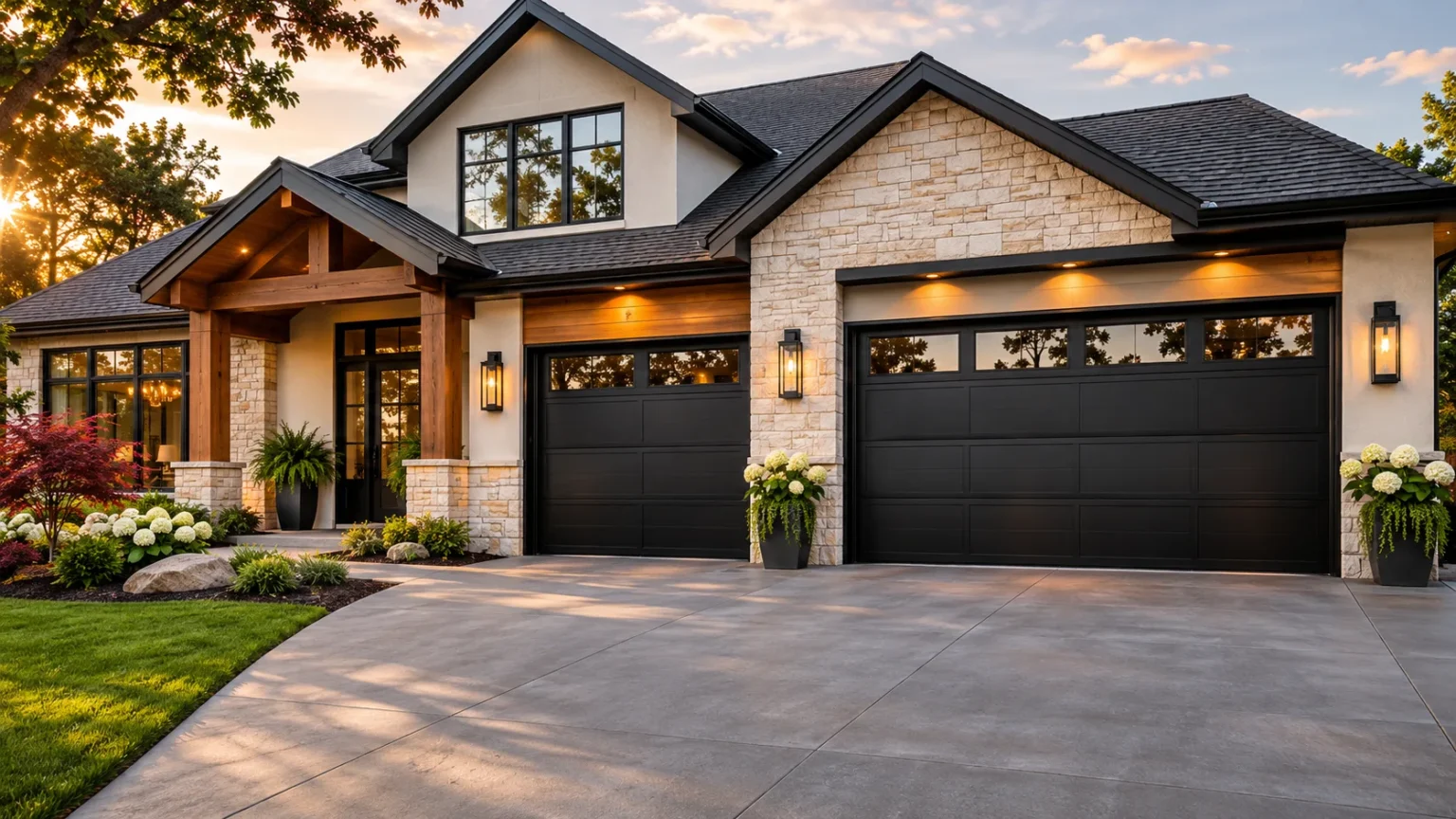
Black garage doors have become a popular exterior design choice for homeowners who want a bold, modern, and sophisticated appearance. Their dark finish creates striking contrast against lighter siding, brick, and stone surfaces while giving ordinary garages a distinctive architectural presence. Whether you own a contemporary property or a traditional family home, black garage doors can transform the overall appearance of your exterior.
However, choosing black involves more than following a popular design trend. Dark garage doors may absorb more sunlight, reveal certain types of dirt, and require thoughtful maintenance to preserve their appearance. The material, finish, insulation, and surrounding exterior colors also influence whether a black garage door is a practical long-term investment.
If you are planning a garage renovation or replacing an outdated door, understanding these factors can help prevent expensive regrets. This guide explores black garage door styles, materials, costs, maintenance requirements, color combinations, and practical buying considerations. It also explains how to choose a design that looks attractive while supporting everyday functionality and durability.
Why Are Black Garage Doors So Popular?
Black garage doors have gained attention because they create strong visual contrast and a clean architectural appearance. Unlike traditional white or beige doors, black finishes can make garage entrances appear more intentional and distinctive. This effect is especially noticeable on homes with light-colored siding, where darker doors provide definition without requiring extensive exterior renovations.
Another reason for their popularity is versatility across architectural styles. Black garage doors complement modern homes with simple lines, but they can also enhance farmhouse, industrial, and transitional properties. Depending on the panel design and finish, the same color can appear contemporary, traditional, or understated. This flexibility appeals to homeowners with different design preferences.
Black also coordinates well with common exterior details such as window frames, lighting fixtures, gutters, and entry doors. Repeating the color in selected architectural elements can create a cohesive appearance. However, excessive dark detailing may make some exteriors feel visually heavy. The most successful designs balance strong contrast with the surrounding materials and proportions.
Are Black Garage Doors a Good Idea?
Black garage doors can be an excellent choice when their appearance complements the home’s architecture and surrounding colors. They provide a distinctive focal point and may refresh an otherwise ordinary exterior. For homeowners interested in modern curb appeal, a black finish can create a noticeable improvement without changing the property’s entire design.
However, dark colors behave differently from lighter finishes when exposed to sunlight. Black surfaces generally absorb more solar energy, which can increase exterior panel temperatures during hot weather. The effect varies depending on sun exposure, door material, insulation, and finish characteristics. These conditions should be considered before choosing a dark-colored door for a sunny location.
Maintenance preferences also matter when deciding whether black is suitable. Dust, water marks, and scratches may become noticeable depending on the surface texture and lighting conditions. Choosing a durable factory finish and following proper cleaning practices can reduce some concerns. Ultimately, the decision should balance personal style with climate and everyday maintenance expectations.
Best Black Garage Door Styles for Modern Homes
Flush-panel black garage doors are particularly popular in contemporary residential design. Their smooth surfaces and minimal detailing create a streamlined appearance that complements modern architecture. Matte black finishes can enhance this effect by reducing reflections. These doors often work well with concrete, wood accents, large windows, and simple exterior landscaping.
Black garage doors with horizontal panels provide another modern design option. The horizontal lines can make a garage opening appear visually wider and create a balanced exterior composition. Some designs include narrow windows that introduce natural light without overwhelming the door’s appearance. Choosing appropriate panel proportions helps maintain a clean and organized architectural style.
For a more distinctive appearance, homeowners can consider black aluminum and glass garage doors. These designs often feature dark metal frames surrounding clear, tinted, or frosted glass panels. They can complement homes with large windows and contemporary exterior materials. However, privacy, glazing performance, maintenance, and installation costs deserve careful attention before purchasing.
Black Garage Doors for Farmhouse and Traditional Homes
Black garage doors can work beautifully with modern farmhouse architecture, particularly when paired with white siding and natural wood details. Carriage-house styles are especially suitable because they combine traditional panel designs with modern materials. Decorative hardware can reinforce the farmhouse appearance, while a restrained finish keeps the overall exterior from feeling overly ornate.
Traditional brick homes can also benefit from carefully selected black garage doors. Dark finishes often complement red brick, cream masonry, and neutral stonework by introducing visual contrast. Raised-panel designs may blend more naturally with classic architecture than completely flat contemporary panels. Matching the door’s proportions to existing windows and entrances helps maintain architectural consistency.
Homeowners with transitional properties can combine traditional door shapes with modern black finishes. For example, a classic sectional garage door with subtle panel detailing can create an updated appearance without changing the home’s character. This approach is useful when replacing older doors. The goal is to improve the exterior while preserving its established architectural identity.
Matte Black vs. Glossy Black Garage Doors
Matte black garage doors have a subdued finish that creates a modern and understated appearance. Their low-reflection surface can complement minimalist homes, contemporary landscaping, and natural building materials. Matte finishes may also make some surface irregularities less visually obvious. However, cleaning marks and certain types of residue can still become noticeable.
Glossy black garage doors produce stronger reflections and a more polished appearance. This finish can work well on modern homes with smooth exterior surfaces and metallic details. However, reflected sunlight may highlight dents, scratches, and uneven panels. Homeowners should examine finish samples under natural lighting before deciding whether a high-gloss appearance is appropriate.
Satin and semi-gloss finishes provide alternatives between these two extremes. They offer a subtle sheen without the strong reflections associated with glossy surfaces. For many homes, these finishes create a practical balance between visual appeal and maintenance. The best choice depends on architectural style, surrounding textures, available sunlight, and personal preferences.
Best Materials for Black Garage Doors
Steel is one of the most common materials used for black garage doors because it offers strength, design flexibility, and relatively manageable maintenance requirements. Steel panels can feature smooth, textured, or woodgrain finishes. Many models also include insulation for improved thermal performance. Protective coatings are important because damaged finishes may expose steel to corrosion.
Aluminum garage doors are another popular option, particularly in modern architectural designs. Aluminum resists rust and can support contemporary frames with glass panels. However, some aluminum products may be more vulnerable to denting than comparable steel models. Construction quality, panel thickness, and reinforcement influence how well a door withstands everyday use.
Wood and composite materials provide additional choices for homeowners seeking distinctive textures. Real wood can be painted black to create a traditional or contemporary appearance, but it generally requires more maintenance. Composite and fiberglass products may offer alternative moisture-resistance characteristics. Comparing material specifications helps determine which option best suits the local environment.
Black Garage Doors on White Houses
A white house with black garage doors creates one of the most recognizable exterior color combinations. The contrast highlights the garage entrance and gives the property a crisp, organized appearance. This pairing works across modern, farmhouse, and transitional architecture. However, the visual impact depends on the garage’s size and position relative to the rest of the home.
Black window frames, exterior lighting, and front-door hardware can help connect the garage design with other architectural features. Repeating a dark accent in selected locations creates consistency without requiring every detail to match exactly. Natural wood elements may soften the contrast. Landscaping can also introduce additional colors and textures that balance the overall appearance.
Homeowners should consider whether the garage door occupies a large percentage of the front exterior. A very wide black door can become the dominant visual feature on a small white house. Choosing a softer black finish or adding complementary accents may improve balance. Reviewing full exterior photographs before purchasing helps identify potential design issues.
Black Garage Doors on Brick and Gray Houses
Black garage doors can complement brick homes by emphasizing natural masonry textures. Red brick often pairs well with dark metal finishes, while lighter brick creates a more noticeable contrast. However, the undertones of the brick can influence how the black appears. Examining samples outdoors can help homeowners select a finish that complements the existing masonry.
Gray homes offer another attractive setting for black garage doors. Light gray siding creates a clear distinction between the door and exterior walls, while charcoal siding produces a more subtle effect. Warm gray tones may work well with bronze or natural wood accents. Cooler grays often complement black window frames and contemporary metal fixtures.
For homes featuring multiple exterior materials, black garage doors can help unify the overall design. A property with stone, wood siding, and painted surfaces may benefit from a consistent dark accent. However, too many competing textures can make the exterior appear busy. Keeping garage door detailing relatively simple often creates a more cohesive result.
Do Black Garage Doors Make Your Garage Hotter?
Black garage doors can become hotter than comparable light-colored doors when exposed to direct sunlight. Dark surfaces generally absorb more solar radiation, which can raise the temperature of the exterior panels. The degree of heating depends on sunlight intensity, surface finish, material properties, and the door’s orientation.
Higher exterior panel temperatures do not automatically mean the entire garage will experience the same temperature increase. Insulation can reduce heat transfer through the door, while ventilation and surrounding building materials also influence indoor conditions. However, an uninsulated black metal door facing strong afternoon sunlight may contribute to unwanted garage heating.
Homeowners in warm climates should consider insulated construction and appropriate weather sealing when choosing a black garage door. Light-colored surrounding surfaces and effective roof insulation may also support indoor comfort. In addition, manufacturers may specify limitations for certain dark finishes. Checking these requirements can help prevent performance problems related to excessive heat exposure.
Are Insulated Black Garage Doors Worth It?
Insulated black garage doors can offer practical benefits for attached garages and frequently used spaces. Their insulating cores help slow heat movement through the door panels, which may reduce some temperature fluctuations. This can be particularly useful when the garage shares structural surfaces with living areas or serves as a workshop.
Many insulated models use polystyrene or polyurethane foam within layered door panels. These materials provide different levels of thermal resistance depending on thickness and construction. Higher R-values generally indicate stronger resistance to heat flow under the stated measurement conditions. However, weather seals and surrounding garage insulation also affect overall performance.
Insulated doors may provide additional advantages beyond temperature control. Some multi-layer designs offer greater panel rigidity and reduced vibration compared with basic single-layer doors. These characteristics can contribute to quieter operation and improved durability. For homeowners seeking a long-term replacement, the added cost may be worthwhile when these benefits match their needs.
How Much Do Black Garage Doors Cost?
Black garage door prices vary according to size, material, design, insulation, and manufacturer. Basic steel models may be relatively affordable, while custom black aluminum, glass, or wood doors can cost considerably more. Decorative windows, specialized finishes, and additional hardware also influence the final purchase price.
For general budgeting in the United States, standard residential black garage doors may cost approximately $700 to $2,000 for the door itself. Premium insulated, custom-sized, or architectural models can exceed $3,000 or significantly more. These figures are broad planning estimates rather than current local quotes. Actual pricing depends on product specifications and market conditions.
Installation adds another expense, particularly when replacing an older system or modifying the opening. Labor, disposal, hardware adjustments, and opener compatibility may affect the total project cost. Homeowners should request detailed estimates from qualified garage door installers. Comparing complete installation packages provides a more accurate picture than evaluating door prices alone.
Black Garage Door Paint vs. Factory Finish
Painting an existing garage door black can provide a more affordable alternative to purchasing a completely new door. However, the existing material and surface condition determine whether painting is appropriate. Steel, aluminum, wood, and composite doors may require different preparation methods and coating systems to achieve durable results.
Factory-finished black garage doors are often produced using specialized coatings designed for the specific panel material. These finishes may provide consistent color and better resistance to certain environmental conditions. However, durability varies between manufacturers and product lines. Buyers should compare coating specifications and warranty terms instead of assuming that every factory finish performs equally.
Painting can also introduce warranty or heat-related concerns, particularly when changing a light-colored door to a very dark finish. Some manufacturers restrict repainting or require approved coatings. Before making changes, homeowners should review the door’s documentation and consult a qualified professional. This helps avoid premature coating failure or unintended damage.
How to Choose the Right Black Garage Door Size
Selecting the correct garage door size begins with measuring the existing opening and identifying the required clearance. Width and height are important, but side room, headroom, and backroom also affect installation compatibility. Different door systems may have specific space requirements, particularly when specialized tracks or openers are involved.
Single-car and double-car garage doors are available in several standard dimensions, although actual sizes vary by region and building design. Older homes may contain nonstandard openings that require special ordering or modifications. Homeowners should avoid choosing a replacement based only on approximate measurements. Professional evaluation can help prevent costly sizing mistakes.
The door’s proportions also influence its visual impact on the home’s exterior. Wide horizontal panels may complement contemporary architecture, while traditional panel arrangements can suit classic properties. Decorative windows and hardware should remain proportional to the opening. A properly sized door improves both everyday operation and the overall appearance of the garage entrance.
Black Garage Doors With Windows: Pros and Cons
Black garage doors with windows can introduce natural light and create a more decorative exterior appearance. Horizontal window arrangements are popular in contemporary designs, while small upper windows often complement traditional panel styles. The dark framing can emphasize the glass and establish a strong architectural feature.
However, windows introduce additional considerations involving privacy, insulation, security, and maintenance. Clear glass may allow people to see inside the garage, while frosted or obscured glazing can provide greater visual privacy. Insulated glazing may improve thermal performance, although the complete door assembly still determines overall heat transfer.
Window placement should also support the intended use of the garage. High-positioned windows can admit daylight while limiting direct views into the interior. Homeowners should compare glass specifications, cleaning requirements, and available safety features. Choosing an appropriate window design can improve appearance without sacrificing practical functionality.
Common Problems With Black Garage Doors
One common concern with black garage doors is the visibility of dust, pollen, and dried water marks. These deposits may become noticeable against dark surfaces, especially under direct sunlight. Regular cleaning can help maintain an attractive finish. However, choosing a suitable surface texture may also influence how easily dirt becomes visible.
Scratches and chipped coatings are another potential problem, particularly on frequently used doors. Some marks may reveal a lighter underlying material, making damage more noticeable. Steel doors with damaged protective coatings may also become vulnerable to corrosion. Prompt attention to finish damage can help prevent small cosmetic issues from developing further.
Heat-related concerns may arise when dark panels experience prolonged exposure to intense sunlight. Depending on construction and manufacturer specifications, temperature changes can influence material expansion or finish performance. Incorrectly installed tracks and hardware may create additional operating problems. Professional installation and suitable product selection reduce the likelihood of avoidable complications.
How to Clean and Maintain Black Garage Doors
Regular cleaning helps preserve the appearance of black garage doors and prevents dirt from building up on the surface. Use a soft cloth or sponge with mild cleaning products approved by the manufacturer. Rinse away residue when appropriate and avoid abrasive tools that could scratch the protective finish.
Different materials may require slightly different maintenance routines. Painted steel doors benefit from prompt attention to coating damage, while wood doors may require periodic refinishing. Aluminum and composite models have their own cleaning recommendations. Following manufacturer guidance helps preserve the finish and reduces the risk of accidental surface damage.
Mechanical maintenance is equally important for long-term performance. Rollers, hinges, tracks, and safety components should be inspected according to the manufacturer’s recommendations. Homeowners should never attempt to adjust high-tension springs or cables without appropriate professional training. Regular servicing helps maintain smooth operation and supports the overall safety of the garage door system.
Do Black Garage Doors Fade Over Time?
Black garage doors can experience color changes after prolonged exposure to sunlight and environmental conditions. Ultraviolet radiation, heat, and weathering may gradually affect certain coatings. The extent of fading depends on the finish formulation, exposure conditions, and manufacturing quality. Some products retain their appearance longer than others.
High-quality exterior coatings are designed to resist weather-related damage, but no finish remains completely unchanged forever. Powder-coated metal doors and factory-applied paint systems may offer different durability characteristics. Homeowners should review warranty details and manufacturer guidance when comparing finishes. A longer warranty may provide useful information, although coverage exclusions still matter.
Proper cleaning and maintenance can help preserve the appearance of black garage doors. Avoid harsh chemicals, abrasive pads, and cleaning practices that damage protective coatings. Where possible, choose products designed for the expected sunlight exposure and regional climate. Selecting suitable materials at the beginning is generally easier than correcting severe finish deterioration later.
Black Garage Doors vs. White Garage Doors
Black and white garage doors create very different visual effects, even when their panel designs are identical. Black doors provide strong contrast and a distinctive architectural appearance. White doors generally blend more easily with light-colored exteriors and can create a brighter, less dominant appearance. The best choice depends on the home’s existing design.
Temperature performance is another consideration because black surfaces generally absorb more solar energy than comparable white surfaces. This may influence exterior panel temperatures, particularly in sunny climates. However, insulation, construction, and air sealing affect the garage’s actual indoor temperature. Color alone should not determine the entire product selection.
Maintenance expectations may also differ between the two finishes. White doors can show dark stains and certain types of dirt, while black surfaces may reveal dust, water marks, and lighter scratches. Neither color is completely maintenance-free. Homeowners should choose a finish that complements the property and matches their willingness to perform routine cleaning.
Do Black Garage Doors Increase Home Value?
Black garage doors may improve curb appeal when they complement a home’s exterior architecture and surrounding materials. An attractive garage door can contribute to a positive first impression, especially when the garage occupies a prominent position. Modern finishes and updated panel designs may also make an older property appear more contemporary.
However, a black garage door does not guarantee a particular increase in resale value. Buyers have different design preferences, and regional housing markets influence the importance of exterior features. Some people appreciate bold dark accents, while others prefer neutral garage doors. The property’s overall condition and quality of installation remain important factors.
Homeowners planning to sell should prioritize broad architectural compatibility rather than following every design trend. A simple black garage door with a durable finish may appeal to more buyers than a highly customized design. Coordinating it with existing exterior details can also create a cohesive appearance that supports the property’s visual presentation.
Mistakes to Avoid When Buying Black Garage Doors
One common mistake is choosing a black garage door based entirely on photographs or online product images. Colors and finishes can appear different under natural lighting conditions. A matte finish may look lighter or darker depending on surrounding surfaces. Reviewing physical samples and full-size product displays can improve purchasing confidence.
Another mistake is overlooking insulation, hardware quality, and installation requirements. A visually attractive door may not provide the durability or thermal performance your garage needs. Buyers should compare complete specifications, including panel construction, finish warranties, and compatibility with existing equipment. Appearance should remain one consideration within the overall purchasing decision.
Ignoring long-term maintenance can also lead to disappointment. Black garage doors may require regular cleaning and occasional finish care to maintain their appearance. Choosing a low-quality coating simply to reduce initial costs may create future expenses. A thoughtful purchase balances design, durability, climate suitability, and the total cost of ownership.
Are Black Garage Doors Worth the Investment?
Black garage doors can be a worthwhile investment when their bold appearance enhances the home’s existing architecture. They offer a distinctive alternative to traditional garage door colors and work across several popular design styles. For homeowners who value curb appeal, the visual improvement may justify choosing a carefully finished black model.
However, the investment should be evaluated beyond appearance alone. Dark finishes may absorb more heat, and certain surface marks can become noticeable over time. Material selection, insulation, protective coatings, and professional installation all influence long-term satisfaction. These practical considerations are particularly important in regions with intense sunlight or challenging weather conditions.
The best approach is to choose a black garage door that combines suitable construction with a design you genuinely appreciate. Compare several manufacturers, inspect finish samples, and review warranty coverage before purchasing. With realistic expectations and proper care, a black garage door can remain an attractive feature of your home’s exterior for many years.
Conclusion
Black garage doors offer a bold and versatile way to improve a home’s exterior appearance. Their strong contrast can complement contemporary, farmhouse, and traditional architecture when paired with suitable colors and materials. From smooth flush panels to decorative carriage-house designs, homeowners have many options for creating an attractive garage entrance.
However, choosing the right black garage door requires careful consideration of material quality, sunlight exposure, insulation, cost, and maintenance requirements. Dark finishes may reveal certain marks and experience greater solar heating than lighter alternatives. Selecting durable coatings and compatible construction can help reduce these concerns while supporting long-term performance.
Ultimately, black garage doors are worth considering when their appearance fits your home and their practical characteristics match your needs. Review samples, compare complete product specifications, and choose professional installation for dependable results. A thoughtful decision can provide lasting curb appeal without unnecessary expense or regret.
Frequently Asked Questions
Are Black Garage Doors Going Out of Style?
Black garage doors remain a popular option for contemporary, farmhouse, and transitional homes. Their long-term appeal depends on architectural compatibility rather than trends alone. Simple designs and quality finishes often provide greater versatility.
Do Black Garage Doors Make a House Look Smaller?
Black garage doors can create strong visual contrast that changes how an exterior is perceived. On some homes, large dark doors may appear dominant, while balanced colors and proportions can create an attractive appearance.
Do Black Garage Doors Get Too Hot in Summer?
Black garage doors generally absorb more solar energy than comparable lighter doors. This can raise exterior panel temperatures, especially in direct sunlight. Insulation and suitable construction can help reduce heat transfer into the garage.
Are Black Garage Doors Hard to Keep Clean?
Black garage doors may show dust, dried water marks, and certain scratches more clearly than lighter finishes. Regular gentle cleaning and appropriate surface protection can help maintain their appearance without excessive maintenance.
Is It Better to Paint a Garage Door Black or Buy a New One?
Painting may be cost-effective when an existing door is structurally sound and its manufacturer permits dark coatings. Replacement may be preferable when the door is damaged, outdated, or lacks desired insulation and safety features.