
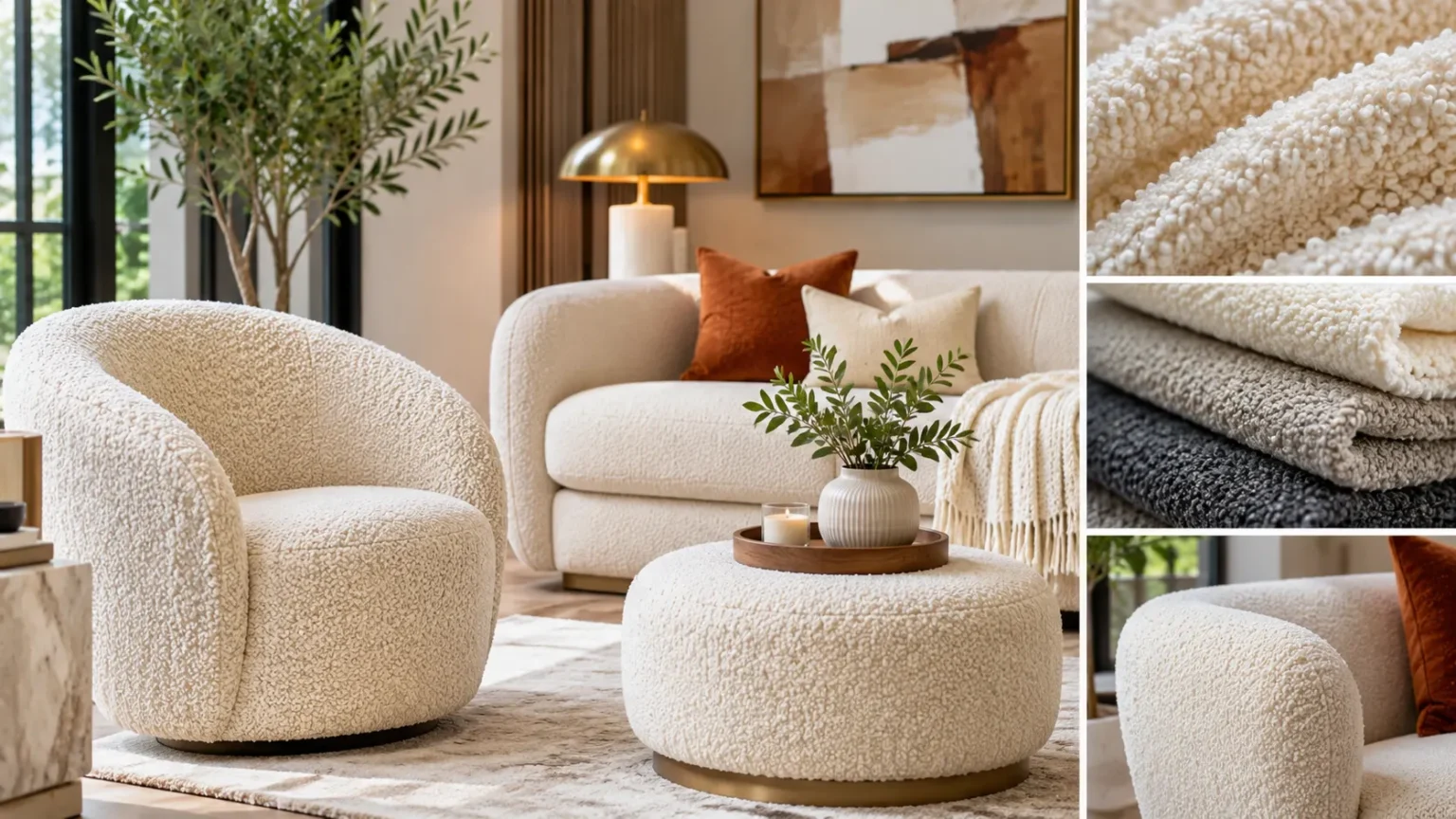
Boucle is one of the most popular textured fabrics used in modern furniture, clothing, and interior design. Its soft, looped surface gives sofas, chairs, jackets, and decorative accessories a warm and luxurious appearance. However, boucle is not always the best choice for every home or lifestyle. Understanding its texture, durability, maintenance requirements, and cost is important before making a purchase.
Whether you are considering a boucle sofa, an accent chair, or a stylish jacket, knowing how the fabric performs can help you make a better decision. Boucle comes in different fiber compositions, and each offers unique advantages and limitations. Some varieties are durable and easy to maintain, while others require careful handling. This guide explains everything you should know about boucle fabric before buying it.
What Is Boucle Fabric?
Boucle is a textured fabric recognized for its distinctive loops, curls, and uneven surface. The word bouclé comes from French and means curled or looped. Manufacturers create this appearance using specially constructed yarns that contain small loops or irregular twists. The resulting material has a soft, dimensional texture that makes it different from smooth fabrics such as cotton or satin.
Boucle is not a single fiber type but a fabric or yarn style created using various materials. It can contain wool, cotton, polyester, acrylic, or combinations of natural and synthetic fibers. The exact composition influences its softness, durability, cleaning requirements, and overall appearance. This explains why two boucle products may look similar but perform very differently during everyday use.
The fabric has become particularly popular in contemporary interior design because of its inviting appearance. Its textured surface adds visual interest without requiring bright colors or complicated patterns. Cream, ivory, beige, and gray boucle fabrics are especially common in modern furniture collections. However, boucle is also available in darker shades and colorful designs for different decorative preferences.
How Is Boucle Fabric Made?
Boucle fabric begins with specially constructed yarns designed to create irregular loops along their length. These yarns often contain multiple strands with different levels of tension. During manufacturing, one strand may form loops around another, producing the characteristic curled appearance. The loops create a raised texture that remains visible when the yarn is woven or knitted.
The manufacturing method influences how the finished fabric looks and feels. Some boucle materials feature small, tightly packed loops, while others have larger and more noticeable curls. Tightly constructed fabrics may provide better resistance to snagging in certain applications. However, durability also depends on fiber strength, fabric density, and finishing techniques rather than loop size alone.
Different fibers also change the final characteristics of boucle fabric. Wool can provide warmth and a naturally soft feel, while polyester may improve resistance to certain types of everyday wear. Cotton boucle often feels breathable and comfortable against the skin. Manufacturers sometimes combine fibers to balance appearance, cost, durability, and maintenance requirements.
Different Types of Boucle Fabric
Wool boucle is one of the traditional varieties used in jackets, coats, and premium upholstery. Its natural fibers provide warmth, texture, and a comfortable feel. Wool boucle is particularly suitable for clothing designed for cooler temperatures. However, some versions require professional cleaning or careful handling to prevent unwanted changes in shape and appearance.
Polyester boucle is commonly used in contemporary sofas, accent chairs, and other upholstered furniture. Synthetic fibers can provide useful durability and resistance to certain environmental conditions. Polyester varieties may also be more affordable than premium wool alternatives. Nevertheless, performance varies significantly according to fabric construction, finishing, and the quality of the upholstery material.
Cotton boucle and blended boucle fabrics provide additional choices for different applications. Cotton-rich materials may feel softer and more breathable, making them suitable for selected clothing and decorative textiles. Blended versions combine fibers such as polyester, wool, and acrylic to achieve particular characteristics. Checking the product label helps identify which composition best suits your intended use.
Is Boucle Fabric Durable?
Boucle can be durable, but its performance depends on the fibers and construction used. High-quality upholstery boucle may withstand regular sitting and everyday contact when designed for residential furniture. However, the looped surface can be more vulnerable to snagging than some tightly woven, smooth fabrics. This makes fabric selection particularly important for frequently used furniture.
One useful factor to consider is the fabric’s abrasion resistance. Upholstery manufacturers may provide testing results using methods such as Martindale or Wyzenbeek abrasion testing. These tests help indicate resistance to surface wear under controlled conditions. However, abrasion ratings do not measure every concern, including snagging, staining, seam strength, and long-term appearance changes.
Durability also depends on how the product is used and maintained. A decorative boucle chair may experience significantly less wear than a family sofa used every day. Pets, sharp objects, and frequent friction can also affect the material’s appearance. Choosing upholstery-grade boucle with suitable performance characteristics helps improve the chances of long-term satisfaction.
Is Boucle Comfortable for Everyday Use?
Boucle is often appreciated for its soft, cozy, and inviting texture. Its raised loops create a tactile surface that can feel warm and comfortable when used on furniture. This makes boucle sofas and chairs attractive choices for relaxing spaces. However, comfort varies depending on the fiber composition, loop structure, and quality of the underlying furniture.
Some boucle fabrics feel smooth and plush, while others have a slightly rough or nubby surface. Wool-based varieties may feel warmer than certain synthetic alternatives. People with sensitive skin may prefer softer, tightly constructed boucle materials. Testing a fabric sample against your skin is helpful before buying a product intended for frequent physical contact.
When evaluating a boucle sofa, remember that upholstery fabric is only one part of overall comfort. Cushion firmness, seat depth, back support, and frame construction also influence the experience. An attractive boucle covering cannot compensate for poorly designed seating. Sitting on the furniture before purchasing, when possible, helps determine whether it meets your comfort preferences.
Does Boucle Fabric Pill or Snag Easily?
Boucle fabric can develop pilling or snags depending on its fiber composition and construction. Pilling occurs when loose fibers collect into small balls on the surface through friction. Some materials are more susceptible than others, especially in frequently used areas. The appearance of pilling does not automatically mean the fabric is defective, although excessive pilling can affect its appearance.
Snagging is another consideration because boucle has a looped surface. Jewelry, sharp fingernails, pet claws, and certain clothing accessories may catch exposed loops. Pulling a snag can make the problem worse by disturbing surrounding yarns. Carefully following the manufacturer’s repair guidance is safer than cutting or pulling loose loops without understanding the fabric structure.
Before buying boucle furniture, ask whether the fabric has been tested for pilling and snag resistance. A tightly constructed upholstery material may perform better than a loosely textured decorative fabric. However, no boucle material is completely immune to damage. Considering how frequently the item will be used helps determine whether its texture is practical for your home.
Is Boucle Fabric Easy to Clean?
Boucle is not always the easiest fabric to clean because its textured surface can trap dust, crumbs, and debris. Dirt may settle between the loops, making regular maintenance important. Some synthetic boucle fabrics allow relatively straightforward spot cleaning, while natural-fiber versions may require specialized care. The correct cleaning method depends on the individual product.
Vacuuming with a suitable upholstery attachment can help remove loose dirt from boucle furniture. Use gentle suction and avoid aggressive brushing that might catch or disturb the loops. For spills, carefully blot the affected area with a clean cloth instead of rubbing. Rubbing can spread stains or damage the surface, particularly on loosely constructed materials.
Always check the upholstery cleaning code or manufacturer’s instructions before applying water or cleaning products. Some fabrics permit water-based cleaners, while others require solvent-based cleaning or professional treatment. Testing approved products on a hidden section can help identify potential discoloration. Never assume that every polyester or wool boucle fabric has identical cleaning requirements.
Is Boucle a Good Choice for Homes With Pets and Children?
Boucle can be used in family homes, but it may not be ideal for every household. Its textured surface can catch pet claws, particularly when animals scratch or climb furniture. Food crumbs and everyday debris may also settle between the loops. These factors can increase cleaning requirements compared with certain smoother upholstery materials.
Households with young children should consider stain resistance and cleaning instructions before selecting boucle furniture. Light-colored fabrics may show food spills, dirt, and other marks more visibly than darker alternatives. Performance-treated upholstery may provide additional protection against certain stains. However, stain resistance does not make a fabric completely stain-proof or resistant to snagging.
For homes with active pets, tightly woven performance fabrics or selected microfiber upholstery may be more practical alternatives. If you prefer boucle, choose an upholstery-grade option with appropriate testing information and manageable cleaning requirements. Removable, washable covers can also be useful when available. Balancing appearance with everyday maintenance needs is essential for a satisfying purchase.
What Should You Check Before Buying Boucle Furniture?
The first thing to check when buying boucle furniture is the fabric composition. A sofa made with wool-rich boucle may require different maintenance than one upholstered in polyester. Requesting material specifications helps you understand expected performance and cleaning needs. Product descriptions that simply say boucle may not provide enough information for an informed purchasing decision.
Next, examine upholstery quality, including fabric density, seam construction, and how securely the material is attached. Loosely constructed surfaces may be more vulnerable to snagging or premature wear. Ask about abrasion resistance, pilling performance, and the manufacturer’s warranty. These details are especially important when purchasing a sofa intended for regular daily use.
The furniture’s construction deserves equal attention because appearance alone does not determine quality. Check the frame material, cushion support, seat comfort, and available replacement parts. Review the return policy and delivery conditions before ordering. If shopping online, requesting a fabric sample can help you evaluate the actual color, texture, and feel under your home’s lighting.
How Much Does Boucle Fabric Cost?
The cost of boucle varies considerably depending on its fiber composition, manufacturing quality, and intended application. Synthetic boucle materials are often available at relatively affordable prices, while premium wool versions can cost substantially more. The fabric’s weight, construction, and finishing treatments also influence pricing. Therefore, boucle should not automatically be considered an expensive material.
Furniture prices depend on more than the upholstery itself. A boucle sofa with a hardwood frame, quality cushions, and detailed construction may cost more than a simpler model covered in similar fabric. Brand positioning, manufacturing location, and design also influence the final price. Comparing products based only on their boucle appearance can lead to misleading conclusions.
When establishing a budget, consider maintenance and long-term replacement costs alongside the initial purchase price. A cheaper product may not provide good value if its fabric wears quickly or its frame lacks durability. Conversely, an expensive item does not automatically guarantee superior performance. Comparing specifications, warranties, and construction quality helps identify better value.
How to Style Boucle Furniture and Clothing
Boucle furniture works particularly well in interiors that emphasize texture, simplicity, and comfortable materials. Cream and beige boucle chairs can complement wooden tables, neutral rugs, and warm lighting. The fabric’s dimensional surface adds visual interest even when the surrounding colors remain understated. This makes boucle useful in minimalist, Scandinavian-inspired, and contemporary interiors.
Combining boucle with contrasting materials creates a more balanced decorative appearance. Smooth leather, polished metal, natural wood, and linen can provide interesting differences in texture. A boucle accent chair may become a focal point without overwhelming the room. However, using too many heavily textured materials together can make a space feel visually crowded.
Boucle is equally popular in clothing, especially tailored jackets, coats, skirts, and matching sets. A textured boucle jacket can be paired with plain trousers, denim, or simple dresses for a balanced outfit. The fabric provides structure and visual interest without requiring elaborate accessories. Choosing comfortable linings and appropriate seasonal weights improves the practicality of boucle garments.
Conclusion
Boucle is a distinctive textured material that combines decorative appeal with a soft and inviting appearance. Its looped construction makes it popular for sofas, accent chairs, jackets, and home accessories. However, its durability and maintenance requirements depend heavily on fiber composition and manufacturing quality. Understanding these differences helps buyers choose products suited to their needs.
Before purchasing boucle furniture or clothing, consider comfort, cleaning requirements, and resistance to everyday wear. Homes with pets or young children may require more durable upholstery options. Checking fabric specifications, requesting samples, and reviewing care instructions can reduce purchasing uncertainty. A thoughtful comparison is more useful than selecting boucle solely because it is fashionable.
Boucle can be a worthwhile choice when its appearance and performance match your lifestyle. High-quality materials, suitable product construction, and proper maintenance can help preserve its attractive texture. Whether you prefer a cozy boucle sofa or a tailored jacket, choosing the right version is essential. With realistic expectations, boucle can provide lasting style and practical comfort.
Frequently Asked Questions
Is Boucle Fabric Good for Sofas?
Boucle can be an excellent upholstery choice when made from durable, furniture-grade materials. However, its looped surface may snag or collect debris. Check abrasion ratings, cleaning instructions, and fabric composition before buying.
Does Boucle Fabric Get Dirty Easily?
Boucle’s textured surface can trap dust, crumbs, and loose debris. Light-colored varieties may also show stains more visibly. Regular gentle vacuuming and prompt attention to spills help maintain its appearance.
Is Boucle Fabric Suitable for Summer?
Boucle comfort depends on its fiber composition and thickness. Lightweight cotton blends may feel comfortable in warmer conditions, while dense wool boucle can feel warmer. Choose the material according to its intended use.
Is Boucle More Expensive Than Regular Fabric?
Boucle prices vary according to fiber quality, construction, and manufacturing methods. Premium wool boucle may cost more than basic upholstery fabrics, while synthetic versions can be relatively affordable. Price alone does not determine quality.
How Long Does Boucle Furniture Last?
Boucle furniture can last for years when made with durable upholstery and quality construction. Its lifespan depends on fabric performance, frequency of use, cleaning habits, and exposure to snagging or excessive friction.