
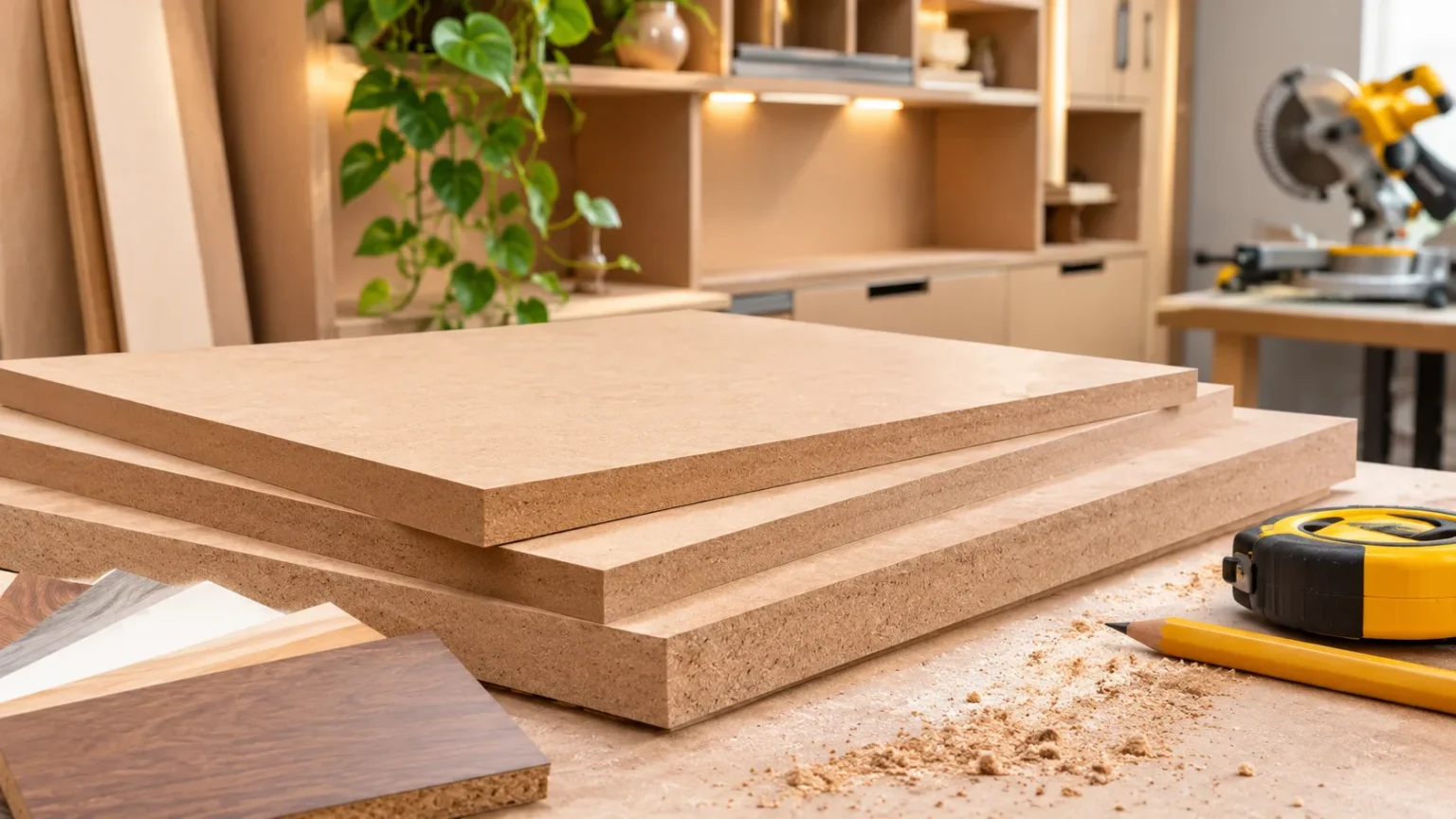
MDF is one of the most commonly used engineered wood products in modern furniture, cabinets, and interior decoration. Its smooth surface, consistent texture, and affordable price make it an attractive alternative to natural wood. However, choosing the right MDF board can be confusing because different types, thicknesses, and finishes are available.
Whether you are planning a home renovation, buying furniture, or working on a DIY project, understanding MDF can help you make better decisions. This versatile material can be painted, laminated, and shaped into decorative designs. However, it also has limitations related to moisture, weight, and structural strength.
This guide explains what MDF is, how it is manufactured, its main features, popular uses, advantages, disadvantages, and practical buying tips. You will also learn how to maintain MDF furniture and choose suitable boards for different home improvement projects.
What Is MDF?
MDF stands for Medium-Density Fiberboard, an engineered wood product manufactured from wood fibers, binding resins, and other additives. These materials are combined under heat and pressure to create dense, uniform panels. Unlike natural wood, MDF does not contain visible grain patterns or knots. Its consistent composition makes it suitable for furniture manufacturing and decorative woodworking.
MDF is commonly available in large sheets with different thicknesses and surface finishes. It can be cut, drilled, painted, laminated, and shaped into various designs. Manufacturers frequently use MDF for cabinets, shelving, furniture panels, and interior decorative elements. Its smooth texture makes it particularly useful for applications requiring painted surfaces.
Although MDF resembles solid wood in some applications, its performance characteristics are different. It is generally heavier than many plywood panels of comparable thickness and can be vulnerable to prolonged moisture exposure. Its strength also depends on thickness, density, and construction quality. Understanding these differences helps buyers select suitable materials for their projects.
How Is MDF Manufactured?
MDF manufacturing begins with wood chips and other suitable wood-based materials. These materials are processed into fine fibers that can be mixed with adhesives and performance-enhancing additives. The fibers are then prepared for panel formation under controlled manufacturing conditions. This process creates a more consistent structure than many traditional wood-based products.
During production, prepared fibers are formed into a mat and compressed using heat and pressure. The combination of pressure and binding materials creates a dense, relatively uniform board. Manufacturers control thickness, density, and other characteristics according to the intended application. The finished panels are cooled, trimmed, and sanded to achieve consistent dimensions.
Additional treatments may improve moisture resistance, surface properties, or other performance characteristics. Some boards are supplied with decorative laminates or protective coatings already applied. Others remain unfinished so furniture makers can customize their appearance. Manufacturing standards and material quality influence how well the finished boards perform during everyday use.
Main Features and Characteristics of MDF
One of the most important MDF features is its smooth and uniform surface. Unlike natural timber, it does not contain prominent grain patterns that can affect the appearance of painted finishes. This makes MDF suitable for decorative panels, cabinet doors, and furniture components. Its consistent texture also supports detailed cutting and shaping.
MDF is available in different densities, thicknesses, and grades to meet various construction and furniture requirements. Standard boards work well for many indoor applications, while specialized products offer additional performance characteristics. Some MDF grades provide improved moisture resistance or fire performance. Selecting the appropriate grade is essential for achieving reliable results.
Another notable characteristic is its ability to support several decorative finishes. MDF can be painted, veneered, or laminated to create different appearances. However, untreated edges are more absorbent than the main surfaces and require proper sealing. The material also produces fine dust during machining, making suitable dust control and protective equipment important.
Different Types of MDF Boards
Standard MDF is the most widely recognized type and is commonly used in furniture manufacturing and interior woodworking. It provides a relatively smooth surface and consistent composition at an accessible price. Standard boards are suitable for dry indoor environments when properly finished. They are generally not recommended for locations exposed to frequent moisture.
Moisture-resistant MDF is manufactured with additives and adhesives intended to improve its performance in humid environments. It is often considered for bathroom furniture, kitchen components, and other interior areas where humidity may fluctuate. However, moisture-resistant does not mean waterproof. Exposed edges and surfaces still require suitable protection against water penetration.
Other varieties include lightweight MDF, high-density fiberboard, and specialized fire-rated MDF products. Lightweight versions may be easier to handle in certain furniture applications, while denser boards provide different machining and performance characteristics. Fire-rated products are designed to meet specific fire-performance requirements. Buyers should check technical specifications rather than assuming every specialized board performs identically.
Popular MDF Furniture Ideas for Modern Homes
MDF is widely used in modern furniture because it supports clean lines, smooth finishes, and flexible designs. Manufacturers use it for wardrobes, television units, dressers, desks, and decorative storage furniture. Painted or laminated panels can imitate various materials and colors. This versatility makes MDF suitable for contemporary, minimalist, and traditional interiors.
An MDF television cabinet can provide organized storage while maintaining a polished appearance. Similarly, MDF wardrobes can feature smooth doors, decorative grooves, and customized compartments. Homeowners can choose neutral finishes for understated rooms or bold colors for modern interiors. Selecting appropriate hardware and panel thickness improves everyday functionality.
MDF is also useful for compact furniture designed for apartments and smaller rooms. Wall-mounted storage units, side tables, and modular shelving can be made using suitable boards and support systems. However, heavy furniture requires careful structural design and secure connections. Appropriate construction is especially important when shelves will hold substantial loads.
MDF Kitchen Cabinets and Storage Solutions
Kitchen cabinets are among the most common applications for MDF in residential interiors. Its smooth surface makes it suitable for painted cabinet doors and decorative panels. Manufacturers can create shaker-style doors, routed designs, and flat modern fronts. The material also provides a consistent base for various laminate and veneer finishes.
MDF cabinet doors offer flexibility in color and appearance without requiring expensive hardwood. White, cream, gray, and other neutral finishes are popular for contemporary kitchens. Decorative profiles can also create a traditional appearance. However, cabinet components near sinks and other wet areas need suitable sealing and moisture protection.
When choosing MDF kitchen cabinets, consider board quality, surface coatings, hardware, and installation methods. Exposed edges and poorly sealed joints can absorb moisture and become damaged. The cabinet’s overall durability also depends on hinges, fasteners, and construction quality. Selecting appropriate materials for each component can improve long-term performance.
Creative MDF Wall Panels and Home Decor Ideas
MDF wall panels are popular for adding texture and decorative detail to interior spaces. They can create geometric patterns, traditional wall molding, or modern feature walls. Because MDF is easy to machine, it supports many shapes and designs. Proper installation and finishing help achieve a clean, coordinated appearance.
Decorative MDF strips can be arranged to create board-and-batten effects in bedrooms, living rooms, and hallways. Painted panels may also provide a subtle architectural appearance without requiring solid timber. Homeowners can combine these features with suitable lighting and wall colors. The result can make a simple room feel more detailed and personalized.
Other decorative applications include picture frames, interior trim, cabinet accents, and custom display panels. MDF is especially useful when consistent dimensions and a smooth painted surface are important. However, installation methods should match the weight and location of the material. Proper sealing and secure fixing help maintain the finished design.
MDF vs. Plywood: Which Material Is Better?
MDF and plywood are both engineered wood products, but their construction methods are different. MDF consists of compressed wood fibers, while plywood contains thin layers of wood veneer bonded together. These structural differences affect strength, weight, moisture performance, and machining characteristics. Neither material is automatically better for every project.
MDF is often preferred for painted cabinet doors, decorative panels, and projects requiring smooth surfaces. Plywood can provide better screw-holding performance and strength for certain structural applications. It is also available in varieties designed for more demanding moisture conditions. However, performance varies according to product grade, thickness, and manufacturing quality.
For decorative indoor furniture, MDF may be an economical and practical option. For applications involving significant loads or demanding structural requirements, suitable plywood or other materials may be preferable. Project conditions should guide the decision rather than appearance alone. Comparing technical specifications helps buyers avoid choosing an unsuitable board.
Advantages and Disadvantages of MDF
One major advantage of MDF is its affordability compared with many solid hardwood products. Its uniform structure allows manufacturers to create consistent panels without natural wood defects. MDF also supports smooth painting, decorative routing, and many laminate finishes. These characteristics make it valuable for interior furniture and home improvement projects.
However, MDF has several disadvantages that buyers should understand. Standard MDF can swell or lose strength when exposed to excessive moisture. It is also relatively heavy, and unsupported panels may sag under significant loads. Screws placed too close to edges can cause damage when unsuitable fastening techniques are used.
The best way to evaluate MDF is to consider both its strengths and limitations. It performs well in many dry indoor applications when correctly designed and finished. Projects involving frequent water exposure or heavy structural loads may require alternative materials. Understanding these differences helps prevent unnecessary repairs and disappointing results.
How to Paint, Laminate, and Finish MDF
Painting MDF can create a smooth, attractive surface suitable for furniture and decorative woodworking. Proper preparation usually involves cleaning, suitable sanding, and applying a compatible primer. MDF edges often absorb more paint than the flat surfaces, so they require additional sealing. Using appropriate products helps achieve a more even finish.
Laminate finishes provide another option for creating durable decorative surfaces. They are available in solid colors, wood-look patterns, and different textures. Many furniture manufacturers use laminated MDF for wardrobes, cabinets, and storage units. The quality of edge banding and adhesives influences how well these surfaces withstand daily use.
Wood veneer can also be applied to MDF to create a natural timber appearance. This approach combines a decorative wood surface with the board’s consistent engineered structure. However, veneered panels still need suitable protection against moisture and damage. Choosing the right finish depends on appearance, maintenance requirements, and intended use.
Smart Buying Tips for MDF Boards and Furniture
Before purchasing MDF, identify the project’s requirements and the conditions where the material will be used. Consider moisture exposure, expected weight loads, desired finish, and available installation space. Standard MDF may be suitable for dry decorative applications, while specialized grades may be necessary elsewhere. Clear planning helps avoid unsuitable purchases.
Check the board’s thickness, density, surface quality, and manufacturer specifications before making a decision. Inspect sheets for visible damage, swelling, uneven surfaces, or poorly finished edges. For furniture, examine joints, hinges, and support structures rather than focusing only on appearance. Quality construction influences durability as much as the board itself.
Indoor air quality is another important buying consideration because some MDF products use adhesives that can release formaldehyde. Look for products meeting recognized low-emission requirements, such as applicable CARB Phase 2 or TSCA Title VI standards. Follow manufacturer guidance for cutting, handling, and installation. Comparing product certifications, warranties, and maintenance instructions helps make informed purchasing decisions.
How to Maintain MDF Furniture and Surfaces
Regular cleaning helps preserve the appearance of MDF furniture and decorative panels. Remove dust using a soft cloth and avoid abrasive cleaning products that may damage surface finishes. For sealed surfaces, use a slightly damp cloth when permitted by the manufacturer. Wipe away remaining moisture promptly to prevent water from collecting around edges.
Protecting MDF from prolonged water exposure is especially important for maintaining its condition. Spills should be cleaned quickly, particularly near joints, corners, and unfinished edges. Avoid placing standard MDF furniture directly against persistently damp surfaces. Proper ventilation can also help reduce moisture-related problems in indoor environments.
Inspect MDF furniture periodically for loose fittings, damaged coatings, and signs of swelling. Small surface scratches may be repairable depending on the finish, while severe moisture damage is often difficult to reverse. Avoid overloading shelves beyond their intended capacity. Routine care and suitable placement can help MDF products remain attractive and functional for years.
Conclusion
MDF is a versatile engineered wood material widely used in furniture, cabinets, wall panels, and interior decoration. Its smooth surface, consistent structure, and flexible finishing options make it practical for many residential applications. Understanding its characteristics helps homeowners and buyers choose appropriate materials for different projects.
Although MDF provides several advantages, it also has limitations involving moisture resistance, weight, and structural performance. Standard boards are best suited to suitable dry indoor conditions, while specialized grades provide additional options. Comparing MDF with plywood and solid wood helps identify the most practical solution.
Before purchasing MDF products, consider construction quality, board thickness, surface finishes, and maintenance requirements. Selecting suitable materials and protecting vulnerable edges can improve durability. With thoughtful planning and proper care, MDF can provide an attractive and cost-effective solution for many home improvement needs.
Frequently Asked Questions
What is MDF made of?
MDF is manufactured from wood fibers combined with binding resins and additives. These materials are compressed under heat and pressure to create dense, uniform boards commonly used in furniture and interior construction.
Is MDF better than plywood?
MDF is often better suited to smooth painted surfaces and decorative routing, while plywood may provide advantages in strength and screw holding. The better material depends on the project’s specific requirements.
Is MDF waterproof?
Standard MDF is not waterproof and may swell when exposed to excessive moisture. Moisture-resistant MDF offers improved performance in humid environments, but it still requires appropriate sealing and protection from prolonged water exposure.
Can MDF be used for kitchen cabinets?
Yes, MDF is commonly used for kitchen cabinet doors and other components. Proper finishing, quality construction, and moisture protection are important, especially near sinks and other areas exposed to water.
How long does MDF furniture last?
MDF furniture can remain functional for many years when manufactured properly and used in suitable conditions. Its lifespan depends on board quality, construction methods, moisture exposure, maintenance, and everyday usage.